

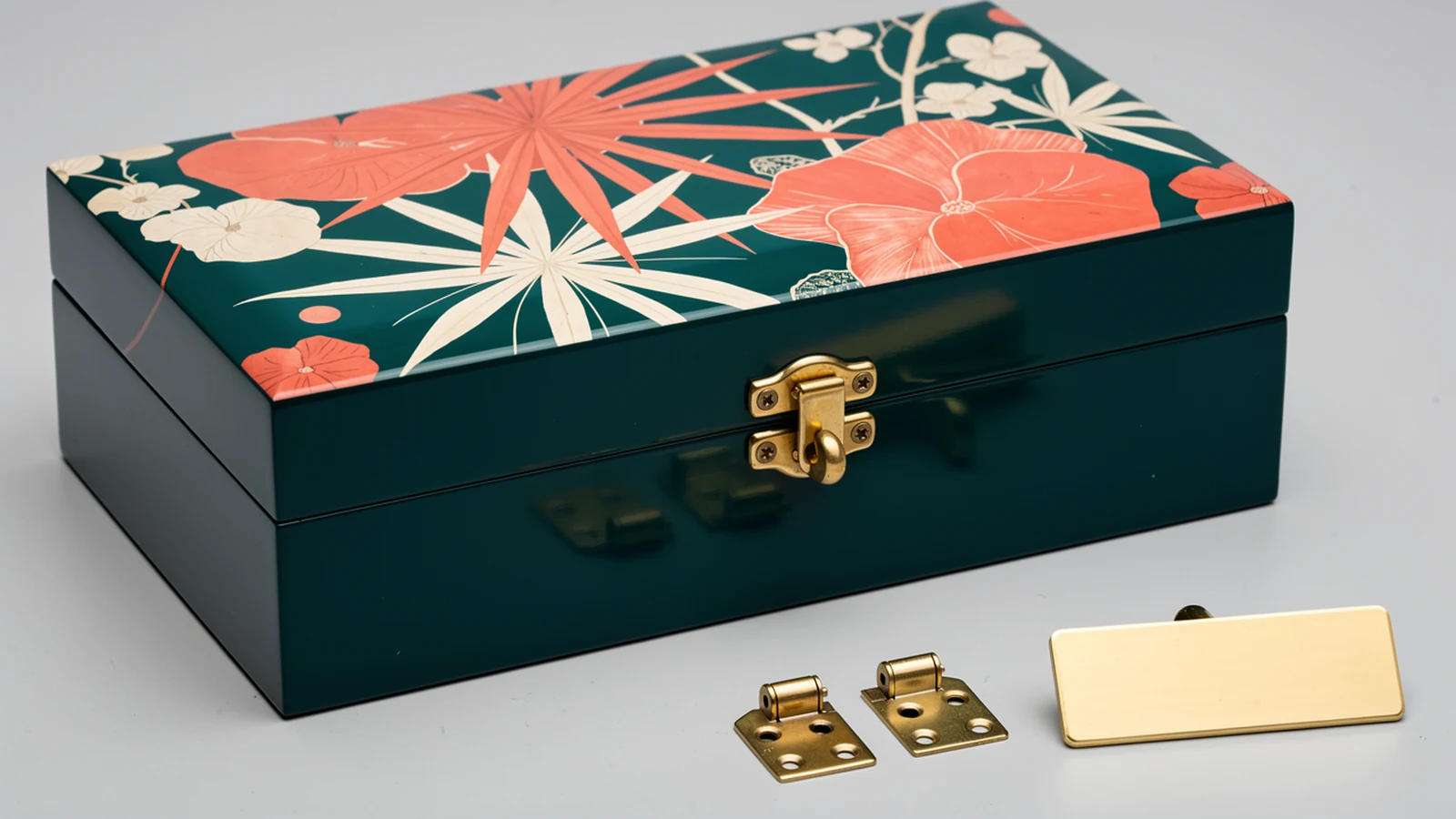

For a premium presentation box, begin with three questions: which metal surfaces will the customer see, what should those surfaces look like beside the finished wood, and what evidence is needed for their intended use? Answering these before sample approval makes the quotation clearer and gives both sides something specific to inspect.
What a hardware finish name actually tells you
A finish name is useful shorthand for appearance. It is not a complete bill of materials. Ask for the base material, the applied finish or coating, and any protective topcoat as separate entries. If the supplier has not confirmed a detail, keep it open rather than filling the gap from the photograph.
The architectural hardware industry makes this distinction explicitly: BHMA’s materials and finishes overview lists finish descriptions alongside base materials. That is a useful way to organize a box specification, although architectural hardware designations do not automatically certify miniature box fittings.
For example, requesting a brass-colored clasp does not establish that its body is solid brass. Conversely, specifying a metal substrate does not settle whether the visible surface should be polished, brushed or deliberately antiqued. Both decisions belong in the order details, and neither should be inferred from the other.
Keep functional selection separate too. A suitable appearance cannot resolve an unsuitable hinge geometry or opening arrangement. Choose the mechanism with the wooden box hinge guide, then coordinate its finish with the other visible parts.
Build a finish schedule around the assembled box
List the components that remain visible in the closed position and those revealed when the customer opens the lid. Include screw heads, hinge barrels, clasp backs and the edges of a decorative plate. These small areas are easy to omit from a render but can be noticeable on a light-colored box.
Use a compact schedule that connects every part to a physical reference. The following is a purchasing worksheet, not a universal finish specification.
| Component | Appearance to agree | Detail to confirm separately |
|---|---|---|
| Hinges and exposed screws | Color family, sheen and visible-face consistency | Base material, finish system and moving clearances |
| Clasp or latch | Front face, edges and appearance when opened | Part construction, closure action and coating coverage |
| Logo or decorative plate | Background texture, lettering contrast and edge finish | Plate material, attachment and artwork process |
| Other exposed metal | Deliberate match or deliberate contrast | Exact part reference and supplier finish designation |
Do not assume every component must have an identical texture. A brushed plate beside a polished clasp can be intentional. The problem is leaving the relationship undefined, then treating the difference as either acceptable or defective only after production.
For the broader presentation, compare this schedule with the box material, surface finish and branding options in the custom wooden packaging box range. A hardware sample viewed alone cannot answer how prominent it will look against a particular lid color or printed pattern.
Compare hardware finishes on representative parts
A flat metal sample is useful for choosing an initial direction. Next, request the actual hinge, clasp and plate proposed for the box. Curved barrels, recessed details and broad flat faces present different reflections. Turn the parts through several viewing angles instead of judging one bright highlight in a single photograph.
Place the components together beside the finished box surface. Use the same lighting and background for the comparison, and record those conditions with the approval. If the display environment matters, also inspect the assembled box there. This is a practical visual review; it does not replace an agreed instrument method where a project requires measured appearance limits.
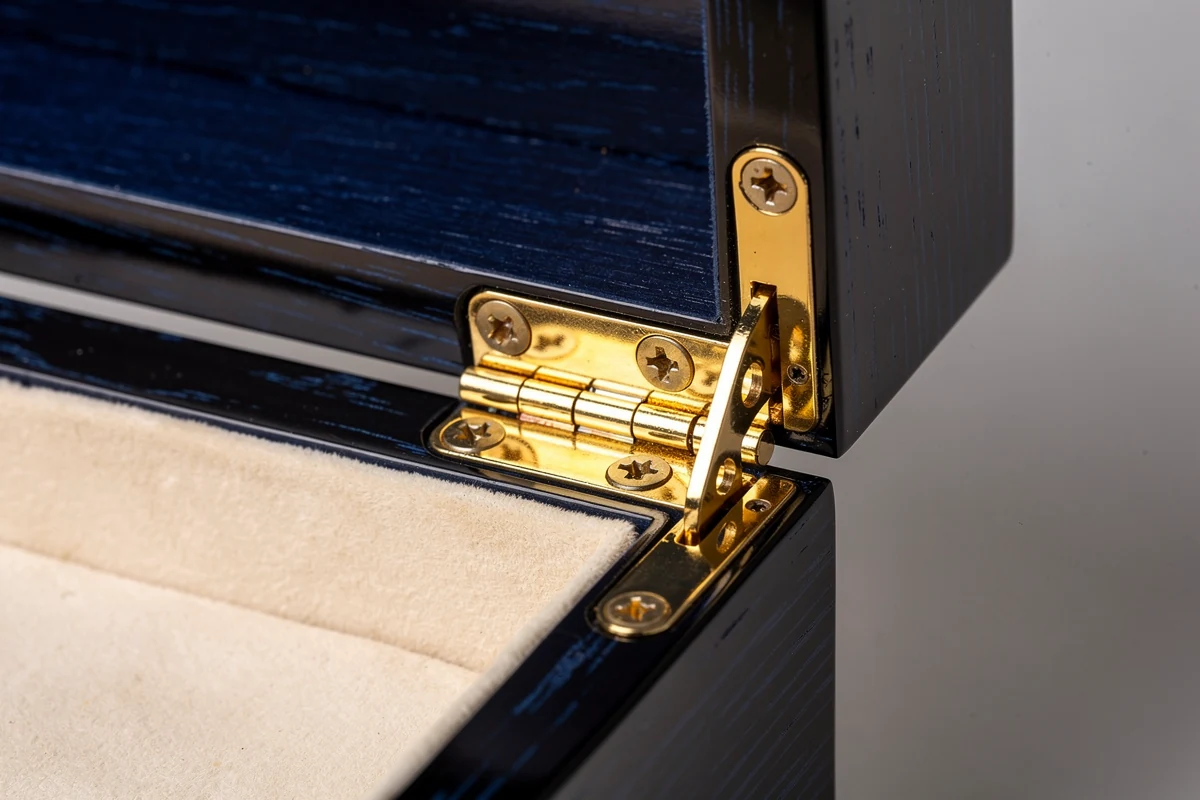
Check the closed and open views. A clasp can coordinate with the lid while an exposed hinge looks different against the lining. Look for scratches, uneven visible coverage and unwanted marks around fasteners, but describe acceptable variation in terms both parties can recognize. Avoid inventing a numerical color tolerance without defining how it will be measured.
Photographs help identify the sample and communicate observations. They should not become the sole metal-color reference: camera exposure, lighting and displays can change the apparent result. Keep an identified physical set wherever the final appearance decision is made, and ensure the factory is working from the same approved reference.
Make the logo plate part of the finish decision
The plate is often reviewed through artwork while the clasp is reviewed through hardware purchasing. Bring those decisions together before signing off the sample. A broad brushed plate can look quieter than a small reflective latch even when both have a similar overall tone.
Check the plate’s background, lettering, border and exposed edges. State whether contrast comes from engraving, printing or another confirmed process; do not let an attractive image imply a production method that has not been agreed. If the artwork needs a particularly subdued metal background, assess that requirement alongside the selected clasp rather than approving each in isolation.
Attachment is a separate question from appearance. For fixing choices and the effect on the wooden surface, use the metal logo plate attachment guide. A finish match does not establish that the plate is securely attached or that its edges sit correctly on the box.
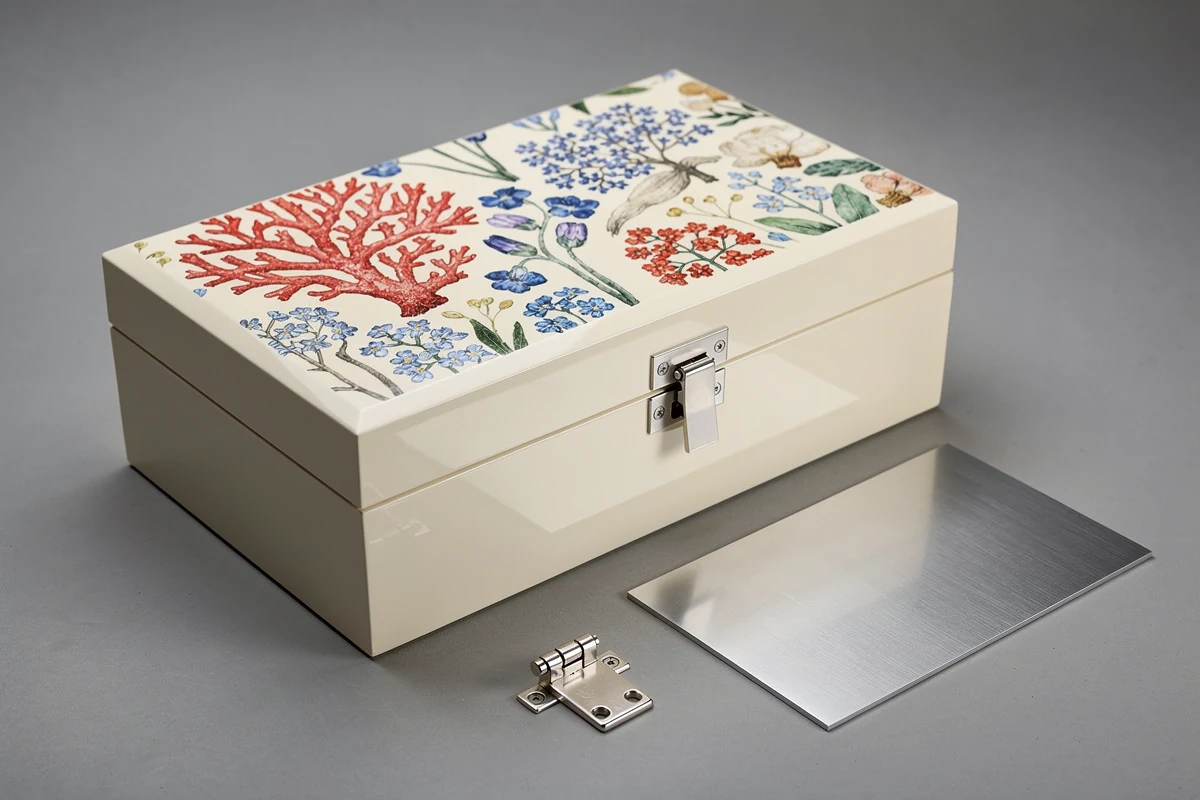
Ask what durability evidence actually covers
Appearance approval and performance approval answer different questions. If an order requires corrosion or wear evidence, ask which component, base material and finish system were tested. Record the method, exposure conditions and acceptance criteria, and establish whether the report represents the parts proposed for this order.
The public scope of ASTM B117 salt spray testing describes a controlled corrosive environment and cautions against using stand-alone salt spray results to predict natural exposure performance. The practice also does not supply a universal exposure period or product-specific interpretation. A quoted number of hours should therefore not be converted directly into years of service for a wooden box fitting.
A useful report discussion starts with the failure being evaluated. Visible corrosion, a color change and loss of closure function are different outcomes. Decide which matter for the intended box and ask how they will be assessed. Do not select a finish solely because one quotation contains a larger test-hour number than another.
Likewise, a polished appearance is not evidence of scratch resistance. Consider the way the clasp will be touched, the surfaces it may rub during opening, and the intended handling environment. Where performance is critical, obtain relevant evidence or arrange an agreed evaluation before making a claim to your customer.
Handle a proposed substitution before it reaches production
Consider a hypothetical order with an approved warm-colored clasp and matching hinges. Before production, a replacement clasp becomes available with the same catalog color name. Its face looks more reflective, and the supplier proposes using it without changing the quotation.
The decision should not be based on the name alone. Compare the replacement with the retained set, confirm its construction and finish details, and mount it on a representative box. Check the appearance and closure action separately. If accepted, give the revised component and approval a new reference so the original and replacement are not silently mixed.
A substitution may be perfectly workable. The essential point is to make the decision while the buyer can still compare alternatives, rather than asking receiving inspection to reconstruct what was intended. Preserve the approval date, affected component and order scope with the sample record.
This example is a proposed purchasing workflow, not a reported XRX production incident. Its value is that it identifies the decision owner and the evidence needed when a small component changes.
What to send with a hardware finish enquiry
Send photographs of the desired overall appearance, the box dimensions and opening style, and a list of visible metal components. Identify any supplied physical finish reference and explain whether a close visual coordination or a deliberate mixed-metal design is intended.
Ask the quotation to distinguish confirmed specifications from items that need sampling. Include the intended handling conditions and any performance requirement that will affect component selection. If several box sizes share a design, identify which parts are shared and which need separate samples; a larger clasp is not automatically represented by a small one.
To discuss a new project, send XRX your custom wooden box requirements with the proposed hardware set and finish direction. This gives the sampling discussion a concrete starting point while keeping material, appearance and performance decisions visible.
Frequently asked questions
Do gold-colored box hinges have to be solid brass?
No. Gold-colored describes appearance and does not establish the underlying metal. Ask for the base material and applied finish separately, then approve the proposed component rather than inferring its construction from a photograph.
Should every metal part on a wooden box have the same finish?
They should have an agreed relationship. Matching components can create a coordinated appearance, while deliberately different textures or colors can also work. Record the intended combination and review the assembled box before approval.
Can a photo approve a hardware finish?
A photo is useful for preliminary discussion and sample identification. Final appearance approval should use representative physical components under agreed viewing conditions, because lighting, reflections and screens can change how metal looks.
Does a longer salt spray result mean longer service life?
Not by itself. Review the tested component, finish system, method and acceptance criteria. Salt spray hours should not be converted directly into years of service or used as a universal ranking for different box fittings.
What should happen if a clasp changes after sample approval?
Compare the proposed replacement with the approved hardware set, confirm its construction and finish, and check it on the box. Record a revised approval before using it for the affected order, including any intentional appearance difference.