

 العربية
 Français
 Deutsch
 Italiano
 日本語
 한국어
 Português
 Español
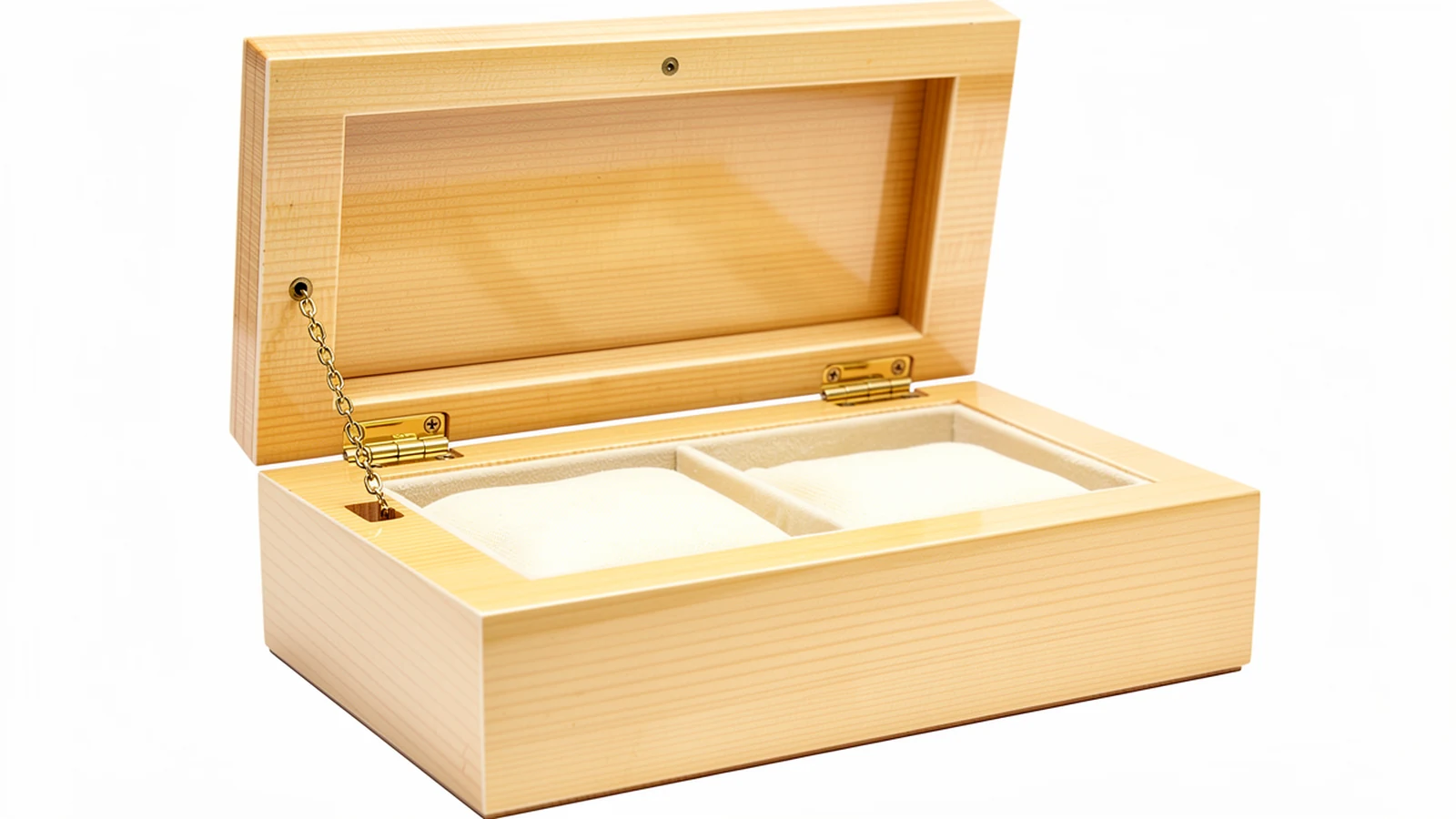

For a brand sourcing wooden presentation packaging, the useful outcome is a repeatable opening experience with an agreed installation. This guide turns that requirement into a motion brief, a clearance review and a finished-sample acceptance record.
Write the opening experience before selecting a part
Describe what the customer should do from first opening to closing. Will the box remain open on a counter? Must the user hold the lid while removing the product? Should closing be guided by hand throughout, or should a selected mechanism control part of the movement?
State the intended viewing position and available space behind the box. A lid may look attractive in a rendering yet obstruct access to a bottle or require more rear clearance than the display location allows. Review these requirements with the actual presentation layout.
Use the following brief to keep different functions visible during quotation. It is a list of questions for the proposed assembly, not a claim that every stay provides every function.
| Required behaviour | What to specify | What to observe on the sample |
|---|---|---|
| Opening limit | Intended maximum position and limiting arrangement | Where travel ends and whether adjacent parts contact |
| Hold-open | The position or range in which the lid must remain | Whether the agreed position is maintained during intended use |
| Controlled closing | Required direction and part of the movement | Whether motion matches the approved expectation |
| Product access | Viewing and removal path with final contents | Whether the lid and hardware obstruct handling |
Choose functions before choosing the visible metal finish. A matching brass-coloured component may suit the appearance while having different motion or mounting requirements. The finish reference and operating specification should remain separately identifiable in the order.
The guide to box hinge types for wooden packaging explains common pivot constructions. Here, the focus is the added support and the space it needs alongside that hinge.
Distinguish a travel restraint from holding and damping
A simple ribbon or chain can limit further opening when tensioned. That does not establish resistance to movement back toward the closed position. If the customer must use both hands to remove the product, assess the required hold-open behaviour explicitly.
Sugatsune’s technical explanation of damper stays distinguishes controlled motion from additional functions such as free-stop holding and lift assistance. Its selection guidance also warns that a mismatch between the stay and lid can produce unwanted movement. These are useful component-selection distinctions; they do not establish suitability for a particular wooden box.
Ask the manufacturer which functions are provided by the proposed stay, which are provided by the hinge and which remain unsupported. Request the exact component reference and installation drawing. If holding requires a release action, include that action in the customer-use review rather than discovering it after the sample is approved.
Do not describe a box as soft-closing from a photograph of an arm. The relevant evidence is operation of the specified assembly. Equally, do not infer a general safety claim from a demonstrated motion feature; this article concerns presentation-box selection, not certification for other uses.
Compare lid geometry as well as weight
A weight figure is incomplete without the position of that weight relative to the hinge. For a simple static comparison, torque equals force multiplied by its perpendicular lever arm, as explained in OpenStax’s introduction to torque.
Consider two hypothetical horizontal lids, each exerting a downward weight force of 1 N. With the centre of gravity 0.08 m horizontally from the hinge axis, the gravitational moment is 0.08 N·m. At 0.12 m, it becomes 0.12 N·m. The force is unchanged, but the turning effect is larger. These illustrative inputs are not recommended box specifications or hardware ratings.
The comparison explains why a deeper lid or a changed weight distribution deserves another review. It does not calculate the required force in a stay: mounting geometry, operating range and the selected mechanism still matter. Ask the component supplier to make the application-specific selection using its documented method and units.
Provide the completed lid dimensions and mass, including attached decoration, lining, mirror or other fitted parts. Identify the hinge axis and any uneven distribution. Do not assume that the centre of gravity lies halfway across a lid assembled from different materials.
Specification insight: a lid drawing revision can be a hardware revision even when the supplier keeps the same stay. If a design change adds weight or moves it farther from the hinge, record that change and ask whether the previously approved selection remains suitable.
Reserve space for lid stays for custom wooden boxes
Review the installation in the open, intermediate and closed positions. The visible footprint of an open stay is only one part of the space it uses. A folding arm, its pivots and mounting plates must also clear the insert, lining and box edges as the lid moves.
Ask for a section or motion drawing showing the hardware relative to the finished interior. Include lining thickness and the actual insert outline, not only the unfinished wooden cavity. Keep access to any adjustment or release feature visible in the review.
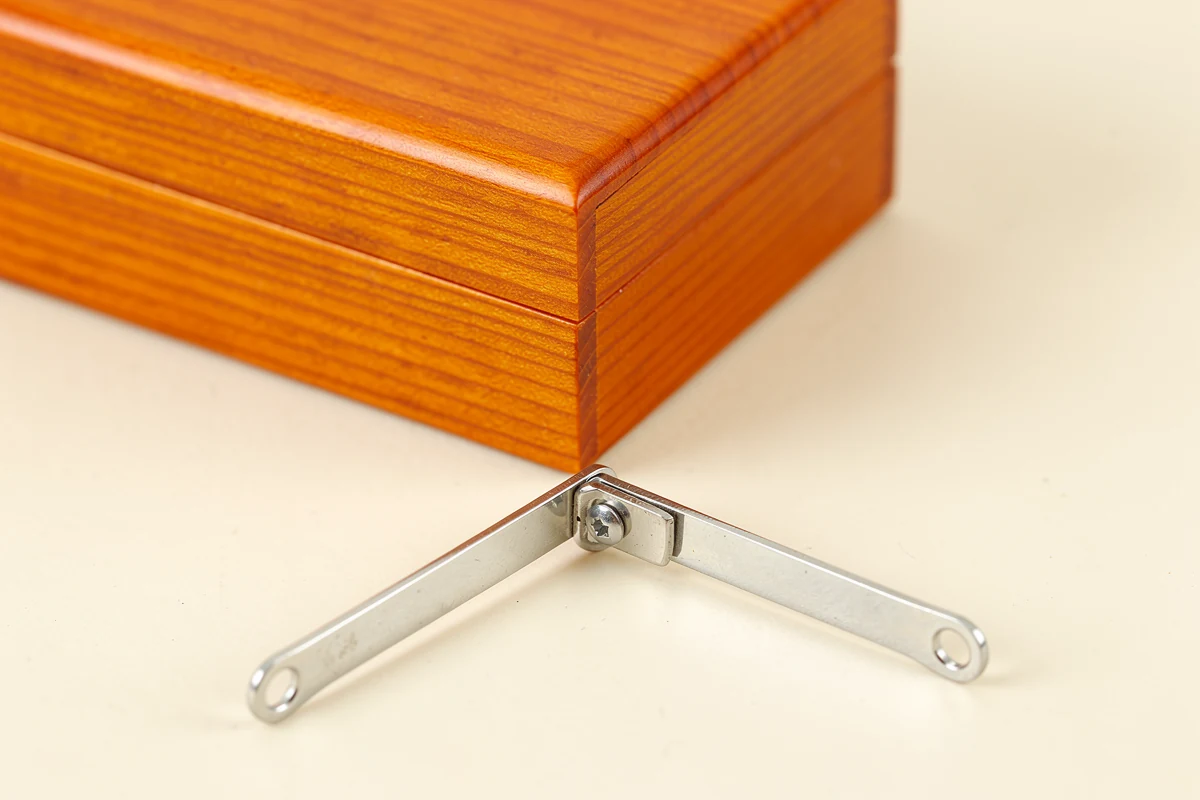
Pay attention to how the component attaches. The USDA Wood Handbook chapter on fastenings explains that wood joint design must account for material properties and dimensional changes. For a small presentation box, use this as a reason to review the actual mounting construction. It is not a screw-load formula for a veneered MDF wall.
Require the manufacturer to confirm the substrate, local thickness, fixing arrangement and any reinforcement. Check that the intended fixings do not damage visible surfaces or intrude into the contents area. The component drawing and the finished-box drawing must describe a compatible installation.
Specification insight: resolve a stay-to-insert conflict as a shared design issue. Moving the arm without reviewing its prescribed mounting position can change operation; cutting away the insert can change product support. Have the supplier revise both drawings together and identify what the new sample must demonstrate.
Review the sample through the complete handling sequence
Start with a representative finished box containing the proposed hardware, lining and insert. Identify the sample revision and note any temporary parts. If the lid is missing a planned decorative element, record that limitation before treating its operation as final.
Open the box using the intended customer action. Observe resistance, contact and the final position. Then carry out the product-removal task: check the sightline, hand access and whether the stay occupies the route used by the product or removable tray. Use the intended contents or an appropriately representative substitute and document any difference.
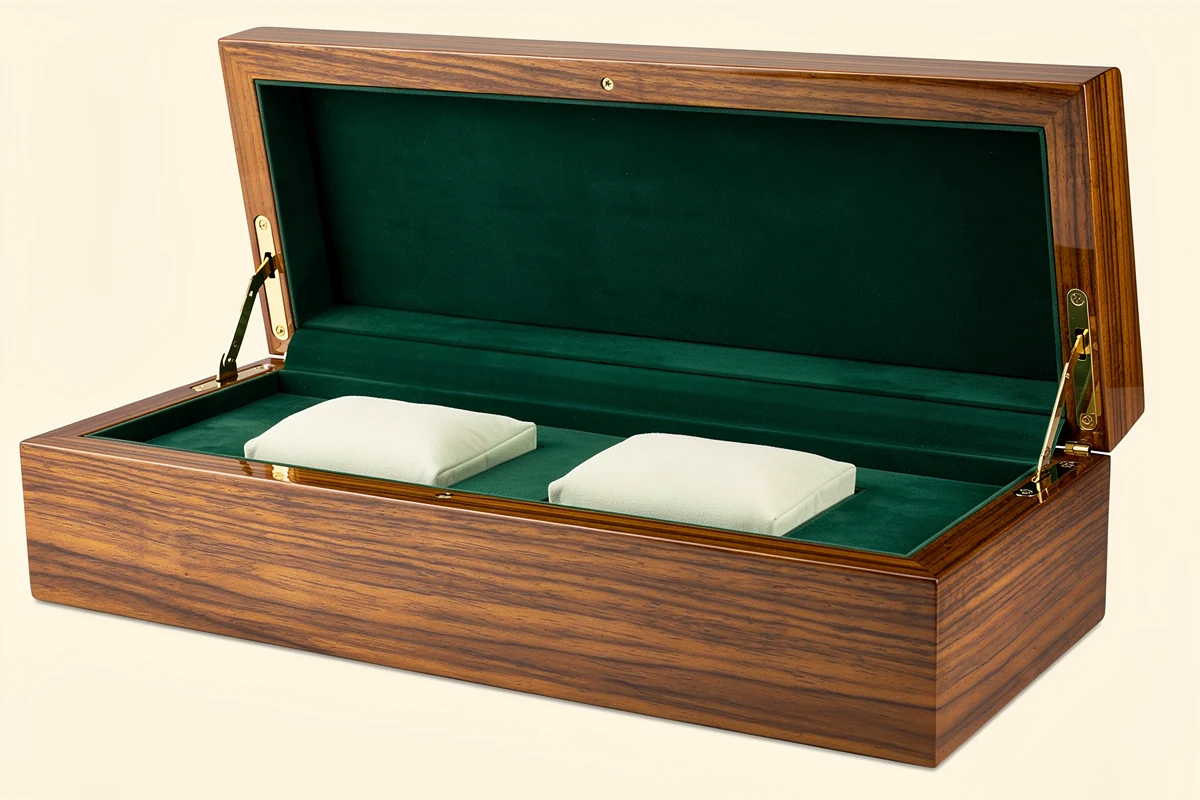
Where hold-open behaviour is required, have the supplier demonstrate it under the agreed use conditions. Observe whether the lid moves away from the selected position. Do not rely on someone holding the lid just outside a video frame. A continuous view of the box and operator’s hands makes the record easier to interpret.
Next, close the lid through its full intended path. Look for lining caught by the arm, contact with the insert, binding, unexpected resistance and a changed lid-to-base alignment. Record any required release action. Do not force a mechanism that is binding; ask the supplier to investigate before continuing the demonstration.
A brief opening video documents that sample and that sequence. It does not establish long-term durability. If repeated operation or exposure testing is needed, agree the configuration, method, number of operations, conditions and acceptance criteria separately. Keep the resulting evidence linked to the component and box revisions it actually represents.
Also review the box in its intended placement, including stability while the customer removes the product. Contents in the base affect the handling situation, but they should not be added to the lid mass when selecting hardware unless they are actually carried by the moving lid assembly.
Record approval in terms another inspector can use
Avoid a single “opens well” tick box. Record the intended opening position, required holding behaviour, closing action, clearance observations and any adjustments. Identify which features are approved and which require a revised sample.
For example, an approval note could state that the selected display position is acceptable but the left arm contacts the lining during closing. That separates the successful part of the design from the unresolved issue. It also prevents an appearance-only revision from being mistaken for a completed operating correction.
Keep the stay reference, quantity, left/right orientation, mounting drawing, fixings and adjustment settings together. A visually similar substitute should be reviewed against these requirements before use. The same applies when the hinge axis, lid construction, insert height or lining arrangement changes.
Attach this record to the approved wooden-box sample documentation. Where the project includes a separate shipment inspection, make clear which motion and installation checks should be included; approving a prototype does not inspect the production shipment.
Send an assembly brief with the quotation request
For comparable proposals, provide the box dimensions, finished lid construction, desired motion, opening position, product layout and available hardware space. Add the veneer and clear-coat appearance reference, metal finish, logo position, lining, quantity, sample requirements and protective packing needs.
Ask the supplier to state the proposed mechanism and any deviations from the brief. If an option requires more interior space, a different lid construction or a special release action, consider those effects alongside price. Confirm availability, minimum order conditions and sampling time for the actual proposal instead of assuming that every catalogue part can be used immediately.
For custom wooden packaging boxes, specify the opening experience as part of the package design. You can send XRX the box drawing and required lid movement for a review of the structure, interior layout and sample questions.
Frequently asked questions
Does a lid stay always hold the lid open?
No. Confirm the functions of the exact proposed component and installation. A travel limit, a holding function and controlled closing are separate requirements, although a mechanism may combine them. Approve the completed box against the motion brief.
Can a ribbon replace a metal lid stay?
That depends on the required behaviour. A tensioned ribbon can restrict further opening, but its presence does not prove hold-open or damping performance. If the customer needs the lid supported during product removal, require that behaviour to be demonstrated by the proposed assembly.
Is lid weight enough to choose a support?
No. The weight distribution, hinge location and operating geometry also matter. Supply the finished lid details and ask the component supplier to confirm selection using its documented method. A static torque example alone is not a hardware rating.
Should a wooden box have one stay or two?
Use the arrangement specified for the chosen component and box construction. Review mounting space, movement and the finished sample. Do not assume that adding a second stay automatically doubles the capacity or corrects an unsuitable installation.
What should be rechecked if the lining changes?
Review the space around the arm, pivots and fixings throughout opening and closing, along with product access and lid seating. If lining attached to the lid changes its mass or distribution, ask the supplier to review the hardware selection as well.