

 العربية
 Français
 Deutsch
 Italiano
 日本語
 한국어
 Português
 Español
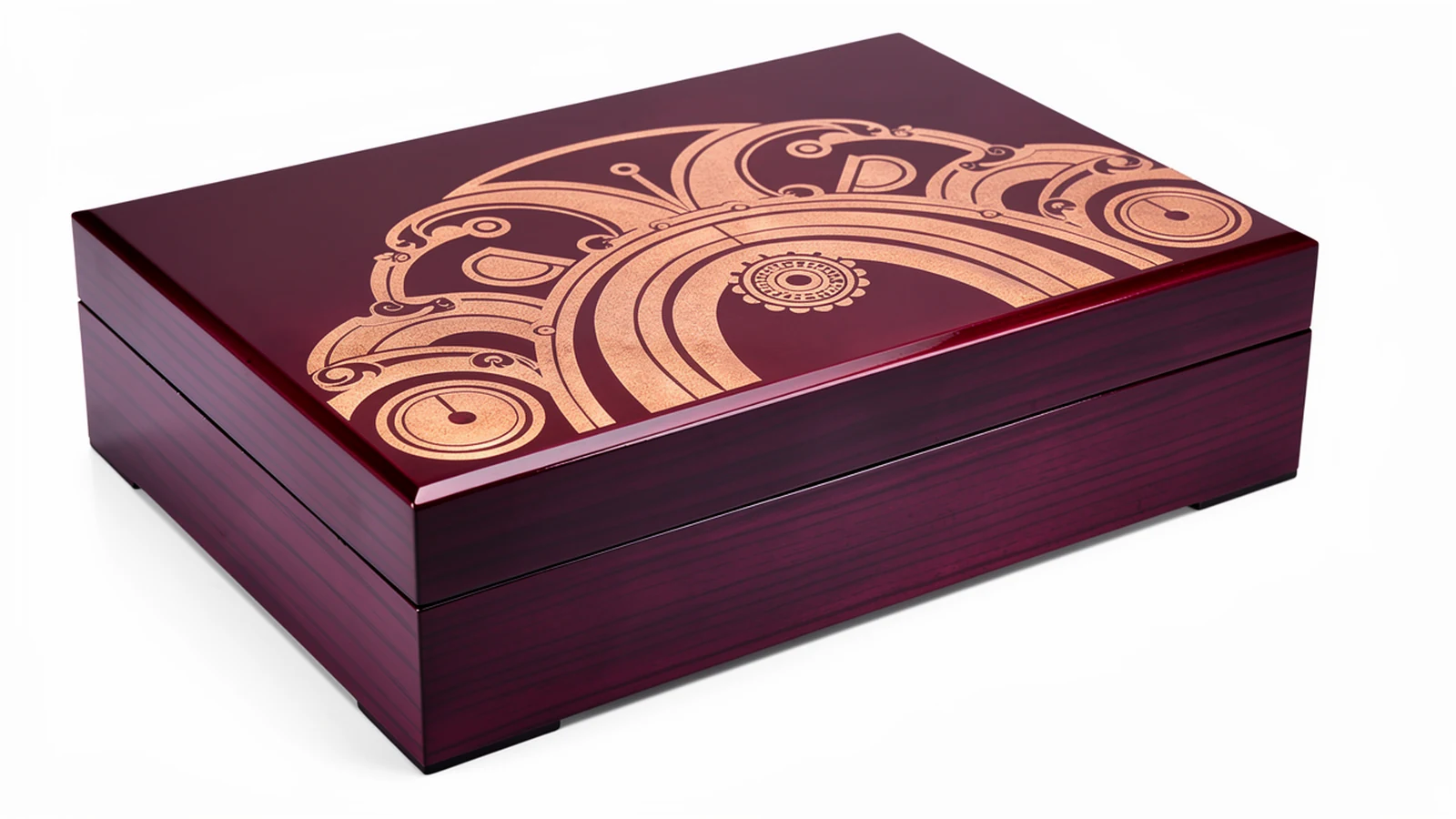

For brand teams, the common purchasing mistake is approving “gold logo” as if it were a complete specification. The same visual idea can involve different materials and processes. This guide focuses on what to ask and inspect when choosing hot-stamped decoration for a premium wooden presentation box.
Understand what is transferred to the box
In hot stamping, a heated tool and pressure transfer decorative layers from a carrier onto the receiving surface. The carrier is removed. KURZ’s hot stamping process overview illustrates this layered construction and transfer mechanism. It explains the process, rather than proving that a particular foil will adhere to every wooden box finish.
The decoration is different from an attached metal plaque. It is also different from printing metallic ink or cutting an engraved design into the surface. A reflective appearance in a rendering does not identify which of those processes is intended. Name the proposed method in the quotation so the sample can be assessed against the correct requirement.
Hot stamping does not automatically mean a raised design. If you want a tactile relief, specify and discuss that effect separately; do not assume a metallic motif will stand proud of the lid. Likewise, avoid assuming that a silver or gold appearance establishes the chemical composition of the transferred decoration.
Specify the receiving finish before choosing the foil
A veneered lid may show a wood-grain background while the foil contacts a clear coating. A painted lid presents another finish system. Identify the actual surface at the stamping stage, including any planned coating applied afterward. “Wooden box” describes the product but leaves the receiving surface unresolved.
KURZ’s metallic hot-stamping product guidance distinguishes applications involving coated, printed and lacquered surfaces and describes product-specific design ranges. The useful principle is that foil selection and surface selection belong together. Those product descriptions are not blanket compatibility approval for XRX boxes or a recommendation that every project use one foil grade.
Ask the manufacturer to confirm the proposed combination through a representative sample. If an earlier demonstration used paper, bare timber or a different lacquer, identify that limitation. It can help discuss appearance without establishing performance on the final box.
Specification insight: retain the finish reference alongside the foil reference. If the box color remains unchanged but the coating changes, the visible design may look identical in a proof while the receiving surface has changed. Review the affected decoration approval before treating it as an equivalent substitution.
Review fine details and solid areas independently
The smallest gap in a motif and the largest filled shape deserve separate attention. A stamp can appear complete at a glance while fine spaces have filled in, or fine lines can remain distinct while a broad area shows missing coverage. Review the artwork at its intended physical size, not only enlarged on a screen.
The FSEA designer’s guide to foil stamping and embossing flags mixed large solids and fine detail as a process-planning issue in print finishing, including the possibility of separate passes. Its paper-stock rules should not be copied into a wooden-lid specification. Instead, ask the stamper to review the actual artwork, tooling and finished surface before promising a single-pass result.

Mark the important areas on the proof: the smallest lettering, narrow gaps, isolated fine lines, broad filled shapes and any detail that must align with another decoration. Ask which features need adjustment or a trial. There is no useful universal minimum line width or stamping temperature to prescribe without the proposed production combination.
If a detail cannot be reproduced consistently in the sample, discuss an artwork change before approving it. Widening a gap, simplifying a dense motif or changing the allocation of foil can be more useful than requesting “higher quality” without identifying the failing feature. Have the designer approve any visual revision.
Give hot foil stamping for custom wooden boxes a clear placement reference
Specify which face receives the decoration and show its orientation on the box. Use a drawing reference that remains meaningful after finishing, such as the agreed front edge or lid centerline. The supplier should confirm the placement method and acceptable variation rather than interpreting the word “centered” independently.
A narrow border near a rounded edge is a different placement problem from an isolated motif in the middle of a flat lid. Mark the intended decoration boundary and ask whether the proposed tool can contact that area as required. Keep the artwork away from unconfirmed edge transitions until the manufacturer has reviewed them.
For production files, use the artwork handoff guide for custom wooden boxes. That package should identify the approved artwork revision and face map; this foil review adds the specific decorated features and physical appearance that need acceptance.
Specification insight: approve the decoration after the complete intended finishing sequence. A stamp inspected before a later coating or assembly step is an intermediate sample. Record that status so its appearance is not mistaken for the final reference.
Use a sample checklist that separates the decisions
The table below is a proposed buyer checklist. Agree the actual viewing conditions, evaluation methods and acceptance limits for the project; it is not a universal test standard.
| Decision | What to examine | What to record |
|---|---|---|
| Coverage | Missing areas, unwanted breaks and consistency in filled shapes | Locations and agreed appearance limits |
| Detail | Small lettering, open gaps and clean motif edges | Final-size artwork and critical features |
| Placement | Position, rotation and relationship to other decoration | Drawing references and agreed tolerances |
| Surface condition | Marks or changes around the decorated area | Finished sample and permitted appearance |
| Attachment and handling | Relevant adhesion evidence and response to intended contact | Agreed method, conditions and result |
Do not let one successful check stand in for another. A crisp-looking motif has not established adhesion. An adhesion result does not establish that the decoration sits in the right place. A brief hand inspection does not establish performance through shipping or repeated use.
When a sample has incomplete coverage, describe the symptom before assigning the cause. Supply a photograph and identify the region, finish and artwork version. Surface contact, foil selection and process setup may need review, but the buyer should not diagnose the exact failure from appearance alone or prescribe more heat as an automatic remedy.
Coordinate foil with printed artwork
A design can combine printed color with metallic accents. In that case, inspect their relationship on the finished lid: an accent intended to sit inside a printed shape should not be judged in isolation from that shape. Define which alignment differences would be noticeable or unacceptable.
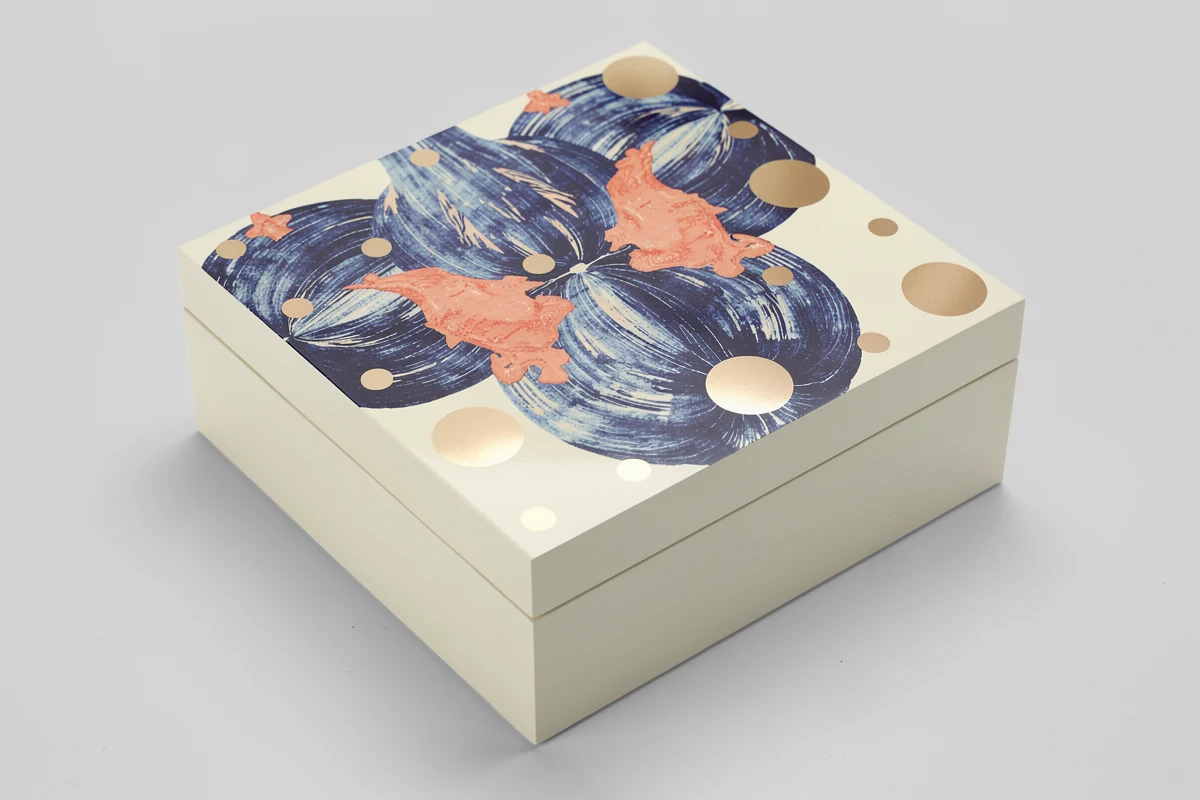
Consider a hypothetical lid with a broad metallic crescent and several fine decorative lines beside a printed illustration. The sample shows acceptable alignment and an even crescent, but two fine gaps close up. Approving the crescent alone would leave the detail issue unresolved. Mark the affected gaps, agree an artwork or process revision, and review the revised result before releasing that design.
This is a decision example, not a report of an XRX production failure. It shows why coverage, detail and placement need separate approval entries even when they appear in one design.
If the priority is a printed color treatment rather than a transferred metallic effect, compare the screen-printing approach for finished wooden boxes. Neither process should be declared better without the actual design, receiving finish and intended result.
Ask for relevant handling evidence and a comparable quotation
Tell the supplier how the decorated surface will be handled and packed. Identify whether a sleeve, cloth or another packaging component contacts the lid. If abrasion or adhesion performance matters, agree an appropriate evaluation with the relevant suppliers and record its scope. Avoid importing a test threshold from an unrelated substrate.
Keep the approved decorative sample separate from any sample used for a damaging evaluation. Record which specimen was checked and which material combination it represents. A successful result supports the conditions evaluated, not an unrestricted scratch-proof or permanent-finish claim.
For quotation comparison, provide the same artwork size, faces, foil appearance, box finish, quantity and sampling requirements to each bidder. Ask what tooling and setup are included and whether the proposed design involves separate operations. Obtain project-specific pricing instead of assuming foil is always cheaper or more expensive than another decoration.
Review the decoration as part of the complete custom wooden packaging box specification. The box structure and finish remain relevant to whether the intended appearance can be produced and inspected.
To start sampling, send XRX your wooden box and foil artwork brief with the finished-surface reference, decorated dimensions, target appearance and critical details. That is a clearer starting point than a metallic rendering alone.
Frequently asked questions
Can hot foil stamping be used on a lacquered wooden box?
It may be suitable, but the selected foil, coating, artwork and tooling must be checked together. Approve a representative sample on the intended finished surface rather than treating a successful stamp on paper or another lacquer as proof.
Is hot foil stamping the same as embossing?
No. Hot foil stamping transfers decorative layers, while embossing creates relief. If a raised or recessed effect is required, specify it separately and confirm the proposed construction and process on the wooden box sample.
What is the minimum line width for a foil design on a wooden lid?
There is no universal value for every finished wooden lid. Ask the manufacturer to review the final-size artwork with the proposed foil, surface and tool. Identify narrow gaps and fine lines as specific sample approval points.
Does a complete-looking foil design prove good adhesion?
No. Coverage is an appearance check. Adhesion and handling performance require relevant, agreed evaluation on the actual finish-and-foil combination. Keep those results separate from the visual approval and record their conditions.
What should a hot foil stamping quotation include?
Include the box finish, decorated faces, artwork size and revision, foil reference, placement requirements, quantity and sample scope. Ask the supplier to identify tooling, setup and proposed operations so quotations describe the same intended result.