

Start with the face you want the buyer to notice
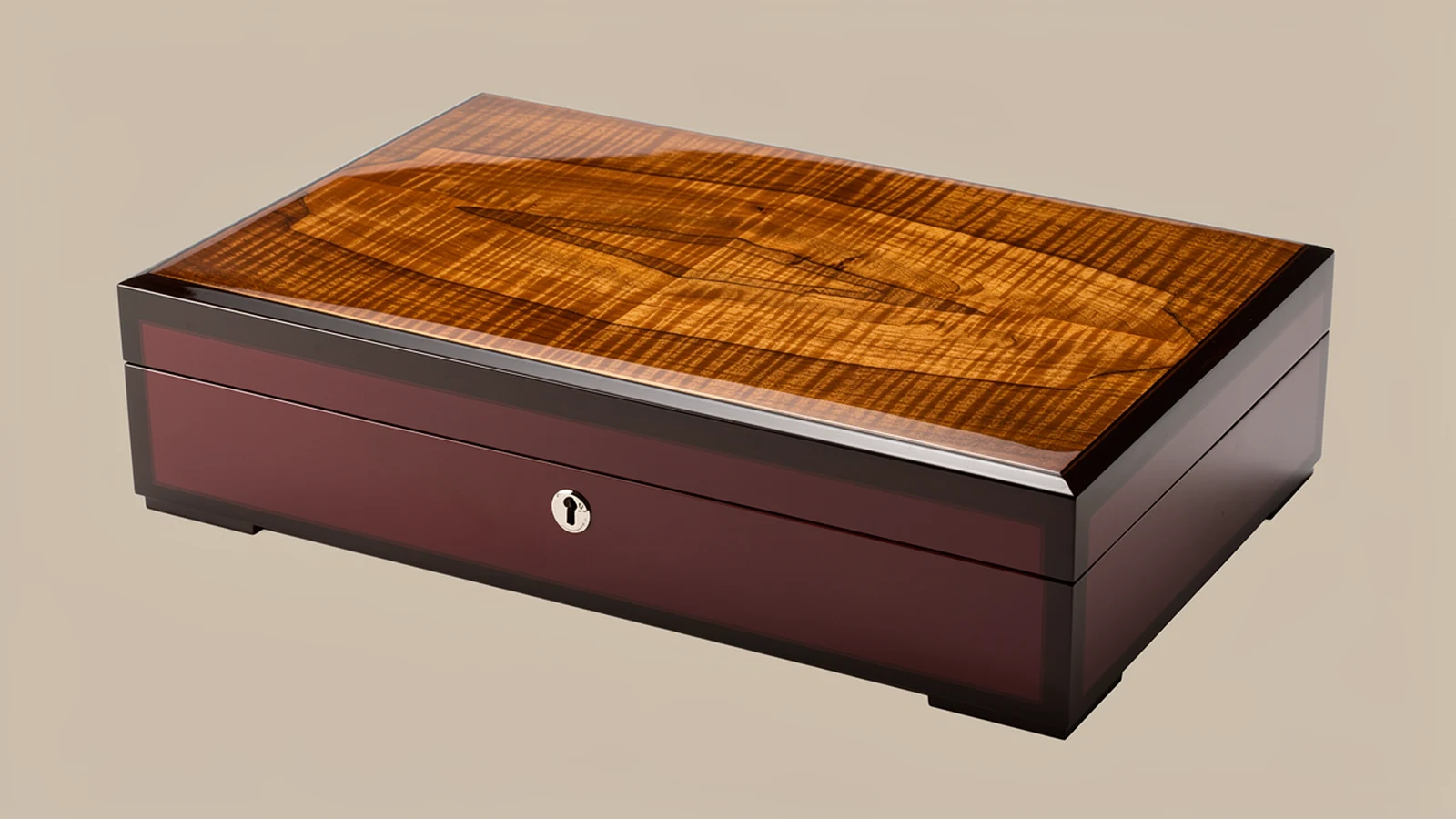
Choose the main viewing face before selecting a matching pattern. On a closed jewelry box, that may be the top lid. On an upright perfume case, it may be the front doors. On an open watch box, the inner lid and exterior sides may remain visible together.
Mark those faces on the drawing and rank their visual importance. A dramatic paired grain on the top does not require the same treatment everywhere. You may prefer a matched lid, independent side grain and an opaque lacquer border. Another design may depend on continuity across the front opening. Treat each as an explicit design choice.
If the material itself is still undecided, first review the broader guide to wood veneer for wooden boxes. The checklist here begins once a real-veneer appearance has been selected and the remaining decision is its layout.
Book match and slip match describe adjacent pieces
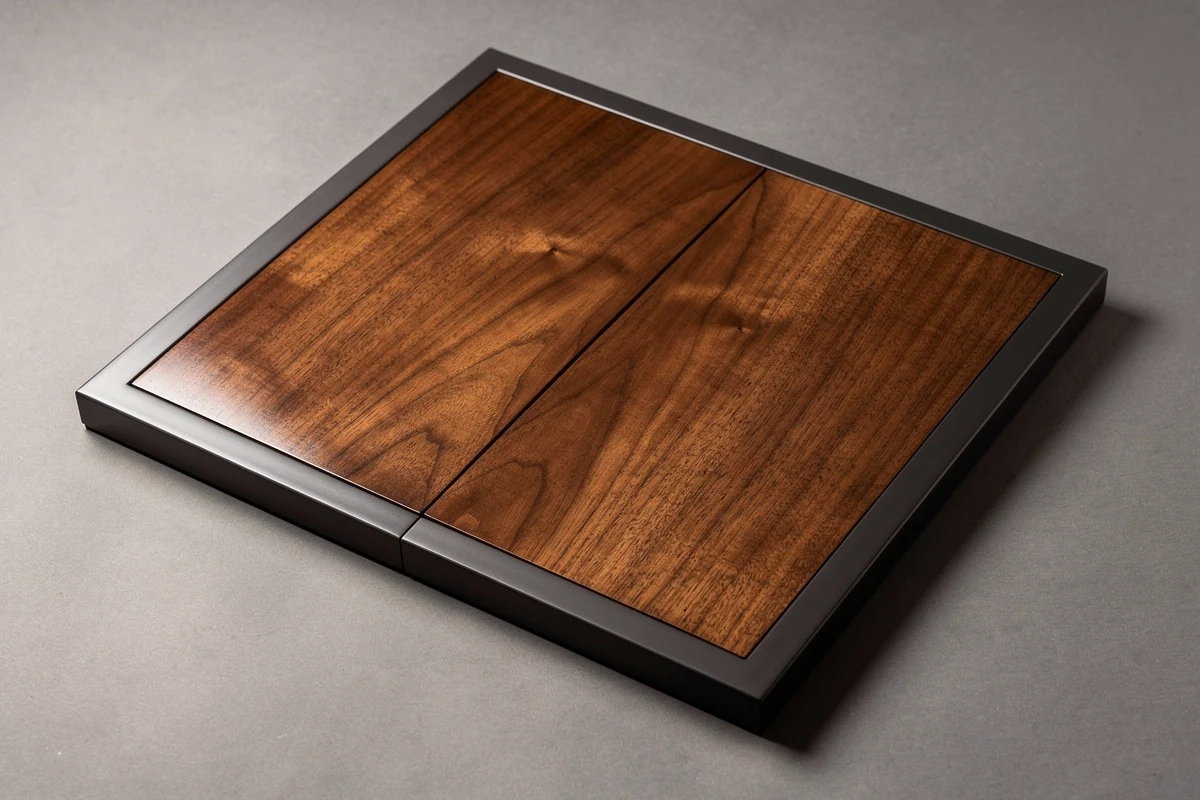
The Timber Veneer Association of Australia describes book matching as turning consecutive veneer pieces like pages, creating paired grain. Slip matching places successive pieces alongside one another to repeat the figure. These are different assembly arrangements, as shown in its veneer joining guide.
For your approval drawing, show the intended direction and pattern rather than relying only on the term. A small lid might use a paired composition around one joint; a larger face might contain several repeated pairs. A slip-matched face calls for a different visual rhythm. Neither name tells the supplier which edge of the finished box is the front.
| Design priority | Layout to discuss | Instruction still needed |
|---|---|---|
| A paired composition on a prominent lid | Book match | Joint position and orientation relative to the front |
| Repeated directional grain | Slip match | Direction of the repeat and acceptable joint appearance |
| A central joint within a symmetrical face | A specifically drawn centered layout | Leaf widths, border and visible veneer-field dimensions |
| A coordinated group of boxes | Matching requirements for the group | Which relationships matter between individual units |
Do not use this table as a promise that a particular veneer supply can achieve every layout. Send the face dimensions and desired appearance so the supplier can confirm the available material and proposed arrangement.
Separate leaf matching from the finished face layout
There are two questions: how neighboring pieces are arranged, and how that arrangement sits within the finished face. The 2014 Architectural Woodwork Standards distinguishes balance matching, using uniform-width leaves before trimming, from balance-and-center matching, which uses an even count with a central joint. Its panel-face matching illustrations provide useful terminology, rather than a mandatory packaging specification.
For a box with a contrasting border, define the visible veneer field separately from the overall lid size. The center of that field is the relevant reference for a centered grain composition. Also show any inset plate, lock or decorative feature that occupies part of the face.
Ask for a layout drawing or marked photograph before finishing the sample. It should show the proposed joints and the visible area after trimming and framing. That makes it easier to resolve an unwanted narrow strip or an off-center composition before approving the finished appearance.
Define matching at three different scales
Use separate instructions for the face, the assembled box and the order. This proposed specification structure helps expose assumptions that a single finish description can leave unresolved.
Within one face
Identify the matching arrangement, intended joint line, grain direction and border. Mark whether a centered composition is essential or whether the supplier may propose another arrangement for approval. Retain the chosen layout with the sample reference.
Between faces on one box
State which surfaces must coordinate. A matched top does not, by itself, instruct the supplier to continue grain over the rim, around a corner or across the opening seam. Show each requested continuation on an assembled drawing and ask the supplier to confirm what the construction permits.
Independent faces are a legitimate design choice. For example, a veneered lid with colored lacquer sidewalls can make the boundary deliberate. If grain continuity is required instead, review the relevant corner or opening in the assembled sample, not just separate flat panels.
Between boxes in a set or order
Define whether boxes must share a general appearance range or form an intentionally coordinated set. If two sizes will be displayed together, show their viewing orientation and the relationship you want between them. Do not let “matching collection” stand in for an approval drawing.
For ordinary repeat units, agree which characteristics must remain consistent and where natural differences are acceptable. Name the characteristics to compare, such as the overall tone, prominence of the figure and placement of joints, instead of approving only a species name.
Review appearance from more than one angle
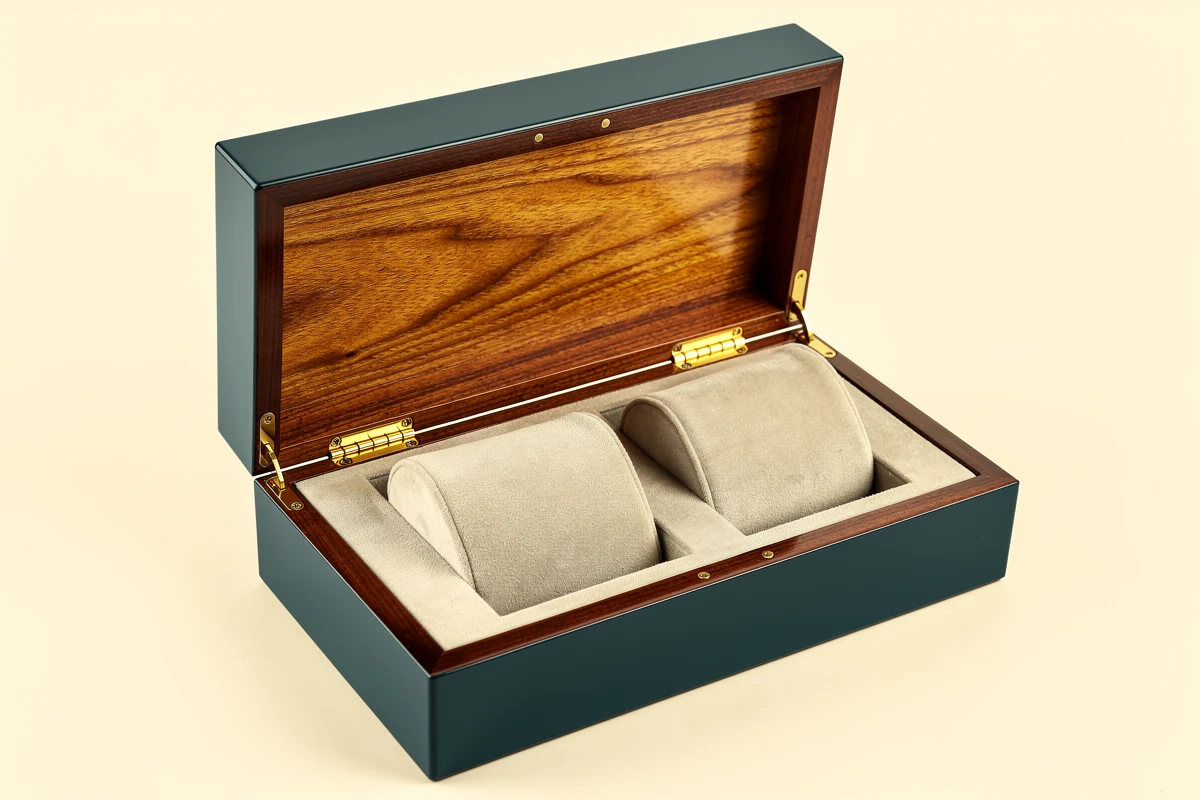
Bookmatched veneer can show alternating light and dark areas because adjacent tight and loose faces reflect light differently. The Architectural Woodwork Institute defines this optical effect as barber pole in its woodwork glossary.
That explanation is useful during review, but it should not become a reason to dismiss every visible mismatch. Compare the finished sample with the agreed appearance reference. Ask whether the concern is the grain arrangement, the viewed tone, the coating appearance or an actual surface defect before requesting a correction.
Turn the sample under consistent lighting and inspect it in its intended display position. Record the viewing direction when taking approval photographs. A photograph taken from one angle should not be treated as a complete record of how a reflective finished surface appears.
If you prefer a quieter directional effect, request a slip-matched alternative for comparison. Approve the actual proposal rather than assuming that changing the matching term removes every difference in color or figure. The separate guide to wood color variation in custom boxes covers the broader appearance discussion.
Example: a matched lid with independent sides
Consider a hypothetical presentation-box brief: a paired wood-grain lid, a narrow dark border, plain colored sides and a fabric-lined interior. The box has not yet been sampled. Instead of writing only “bookmatched walnut finish,” the buyer could request:
- A drawing showing the visible veneer field, its centerline and the proposed joint.
- Grain orientation referenced to the front closure, with the border shown at its finished width.
- Independent sidewalls with no implied continuation of lid grain.
- A finished sample showing the selected veneer appearance, border and sheen together.
- A recorded appearance range for subsequent units, with exceptions submitted for review.
This is a specification example, not a record of an XRX customer project. Its value is that the supplier can identify feasibility questions before a sample is treated as approved.
If the design changes to a larger lid or a wider border, review the layout again. The overall dimensions may have changed even though the material name and matching term remain identical. Mark the accepted revision clearly so the old face arrangement is not carried into the new order by assumption.
Plan replacement parts and reorders before approval
Discuss what a later replacement must match: the original unit beside it, a retained sample, or an agreed appearance range. Ask whether retaining related material or making spare matched components is feasible, and have any commitment documented. Do not assume material reservation is included in the initial quotation.
Keep the approved drawing, sample identification and dated photographs together. For a reorder, ask the supplier to review the current material proposal against that record before authorizing production. A previous approval should not silently approve an unspecified new face layout.
For your next wooden packaging box project, provide the face dimensions and the matching scope alongside your reference images. You can contact XRX to discuss a proposed layout and sampling plan before fixing the order specification.
Frequently asked questions
What is bookmatched veneer?
It is an arrangement of consecutive veneer pieces in which alternate pieces are turned over to form paired, mirrored grain. For a box, the brief still needs to identify the face, orientation and intended joint positions.
Is slip matching the same as book matching?
No. Slip matching places successive pieces alongside one another without the alternating turn used for book matching. Ask for a proposed face layout so you can approve the intended directional or paired effect.
Does bookmatched veneer require a joint in the center of the lid?
The term alone does not specify the finished lid layout. If a central joint matters, draw it within the visible veneer field and confirm the proposed piece arrangement, border and finished dimensions.
Does a bookmatched lid guarantee matching grain around the box?
No. Continuity between the lid, sides, corners and opening seam needs a separate instruction. Mark the requested relationships and review them on an assembled sample before approval.
Can a later order be approved from the original finish name alone?
The finish name is not enough to define the face layout and appearance range. Retain the approved drawing and sample record, then review the proposed material and arrangement for the reorder against them.