
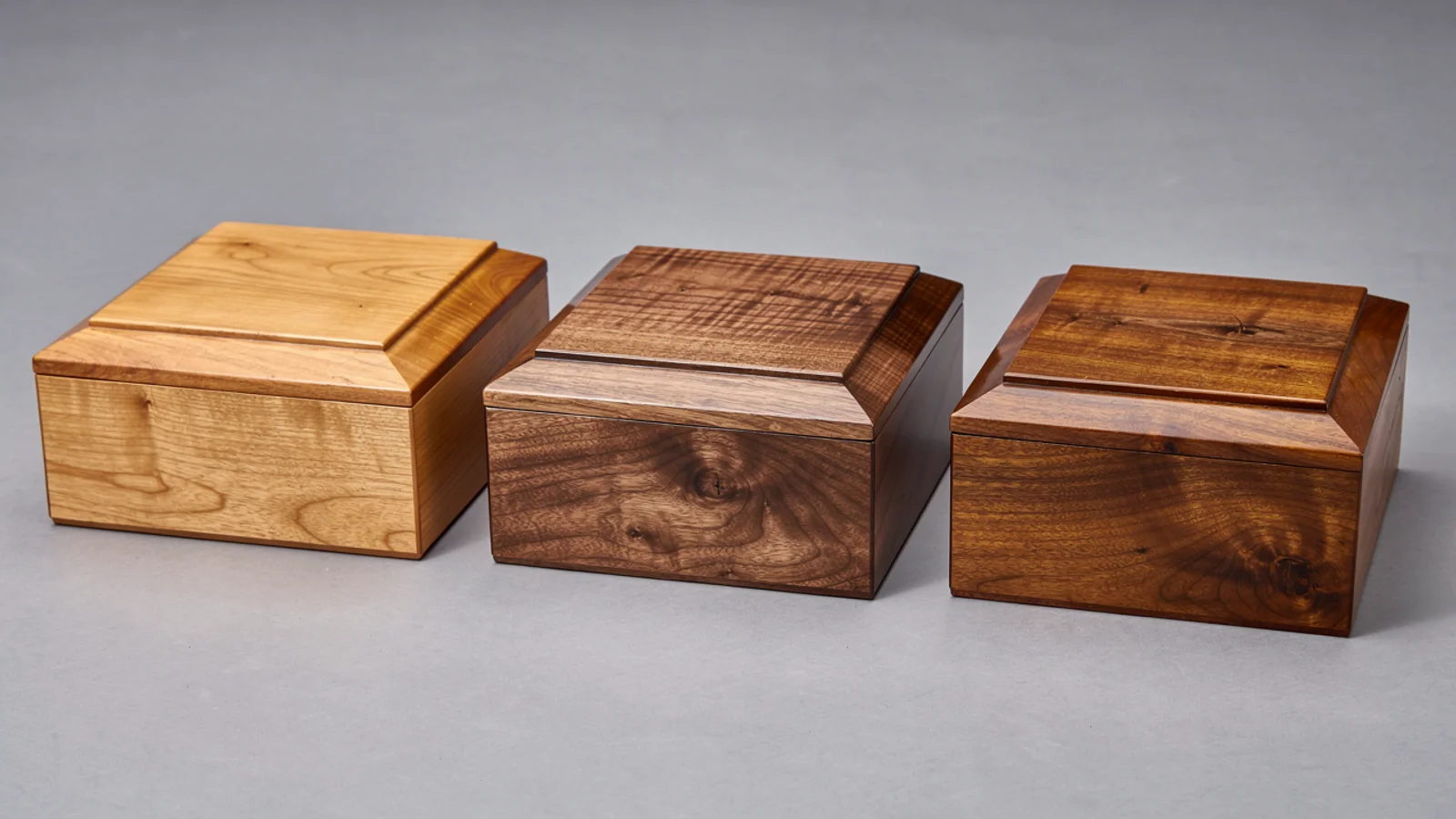

Describe the wood color variation before judging it
“The color is wrong” gives a supplier little to investigate. State where the difference appears and what it is relative to: the retained reference, another box, an adjacent panel or a photograph. Note whether it affects the whole surface, follows the grain or occupies a local area.
For example, “the front rail is lighter than the lid under the agreed comparison light” is more useful than “poor color matching.” It identifies a relationship that both parties can examine without assuming a cause.
| Observed difference | First comparison | Question to resolve |
|---|---|---|
| One box looks warmer or darker overall | Current box against the correct finished reference | Is the overall appearance within the agreed range? |
| Lid and side appear different | Those surfaces in comparable light and orientation | Was their relationship approved, and does it remain different when viewed consistently? |
| A localized patch stands out | The affected area, its grain and its surface condition | Is this an accepted wood feature, a finish concern or an unresolved observation? |
| Only the photographs seem different | The physical pieces together | Does the mismatch persist outside the image comparison? |
This is a proposed investigation sequence, not a defect-classification standard. None of these observations alone identifies the manufacturing cause.
Separate the wood underneath from the finish above it
The USDA Wood Handbook’s chapter on wood structure explains that heartwood color depends on extractives and can vary within a species. A species name therefore does not define one exact color. That is a material fact; it does not determine which variation your project must accept.
Staining adds another variable. The handbook’s interior finishing discussion notes that unequal absorption across the grain can accentuate color differences. It also identifies surface blemishes that can become more apparent after finishing. Consequently, a stain code is not a substitute for approval of the finished material.
Keep the appearance requirement clear. A natural wood-grain brief permits the wood to remain part of what the customer sees. A uniform opaque-color brief is a different design requirement. If the expected result is unclear, resolve it before asking the supplier to make natural grain look identical across every box.
The wood veneer guide covers cuts and matching layouts. Here, the task is narrower: assess a delivered or proposed appearance against the selected design, rather than reopen every material choice.
Make the comparison repeatable
Bring the production piece and the retained reference into the same comparison setting. Identify the reference revision, check that both represent the intended finishing stage, and avoid comparing a raw wood swatch with a fully coated lid as though they were equivalent.
ASTM D1729-22 addresses visual color appraisal of diffusely illuminated opaque materials. Its published scope supports a controlled comparison approach; it does not prescribe a universal wooden-box acceptance range. The scope also distinguishes effects requiring directional illumination, so a single viewing setup should not be assumed to describe every appearance effect.
For the project, agree the light source, background, viewing position and orientation used for the decision. Then observe both the overall tone and the surface reflections. If the apparent difference changes when the parts are turned, record that observation rather than immediately diagnosing uneven stain.
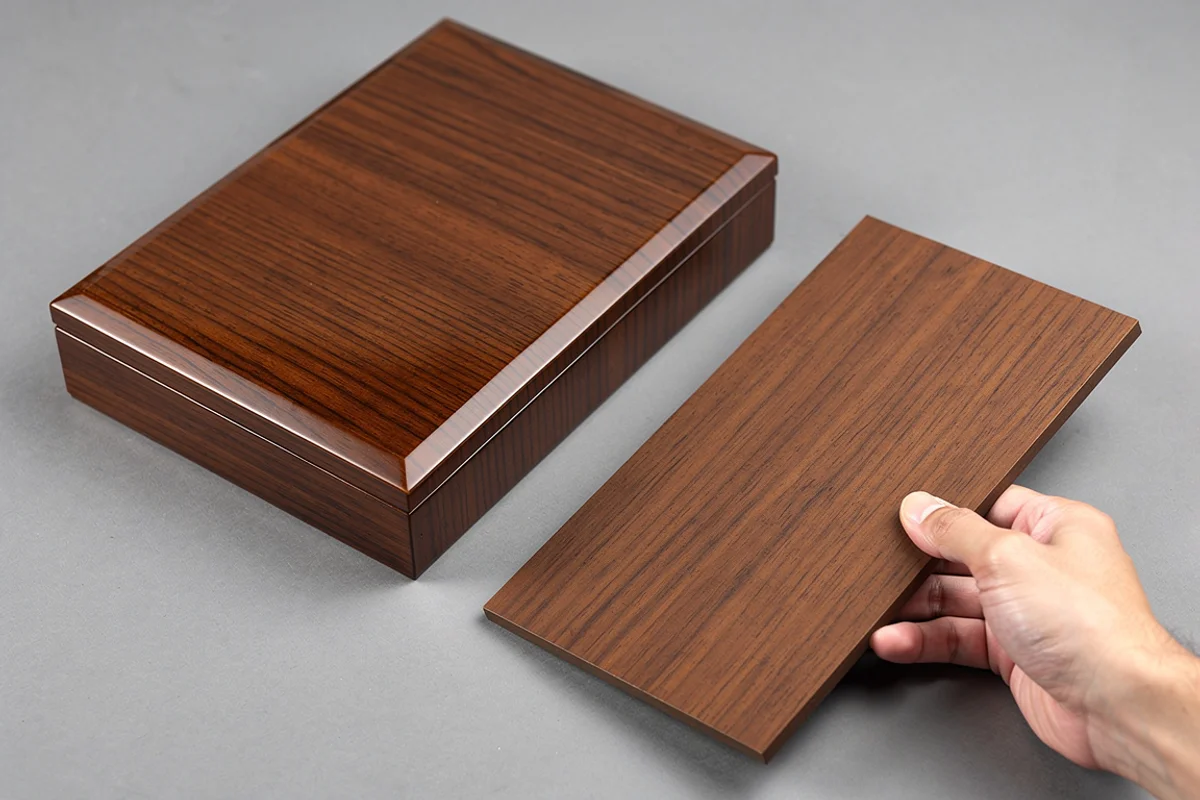
Keep photographs as location and communication records: include the reference identifier, show the affected face and keep useful close-ups. If separately taken photographs conflict, return to a physical comparison. A buyer’s screen and a supplier’s screen are not an agreed physical appearance reference.
Also ask whether the reference and the inspected item have had different storage or display histories. Record what is known; do not promise that a mismatched box will naturally become the right color after an arbitrary waiting period.
Define acceptable variation without hiding workmanship problems
A single attractive sample may establish a preferred direction without showing the boundary of acceptance. Where natural variation matters, ask for representative finished pieces that make the acceptable spread understandable. The number and selection should follow the project; there is no universal requirement for a particular sample count.
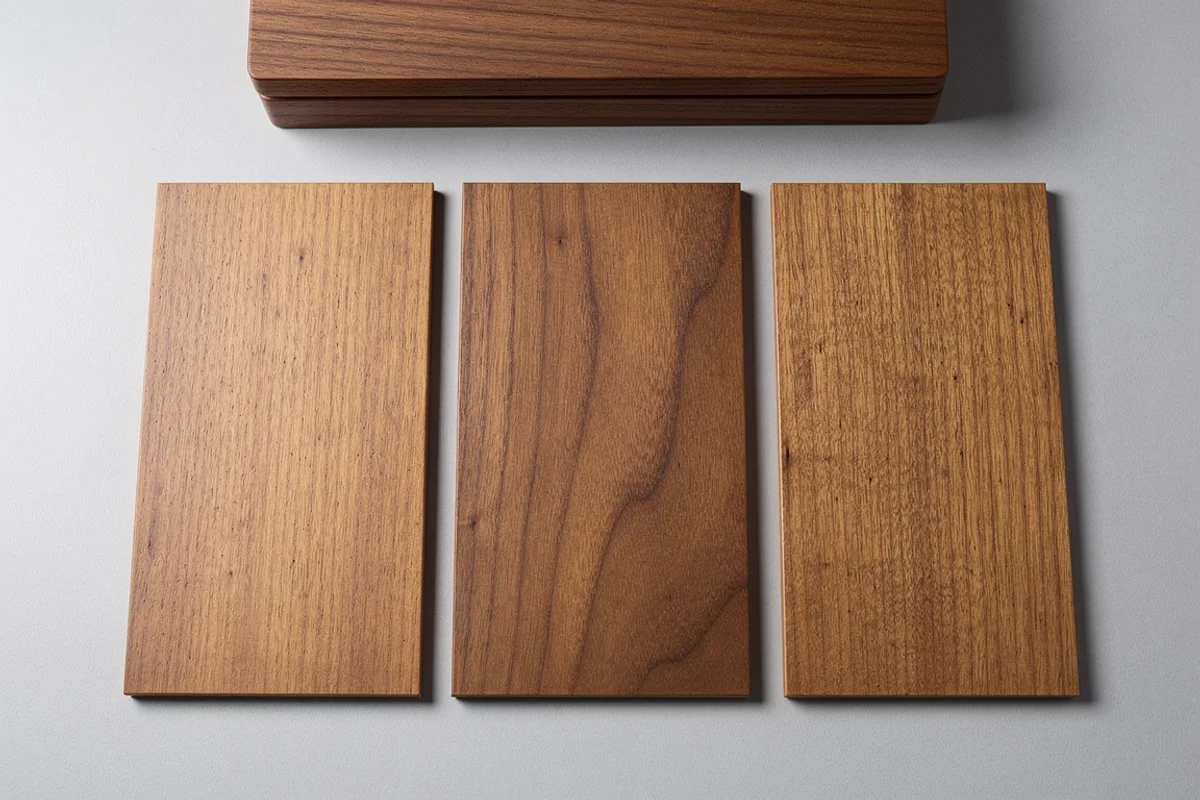
Define the characteristics separately. A lighter piece might be acceptable in overall tone while still showing an unacceptable mark. Conversely, flawless coating application does not make an unapproved color acceptable.
- Overall tone: identify the preferred direction and the limits illustrated by the references.
- Grain and natural features: state which visible patterns or contrasts are accepted on the specified faces.
- Surface quality: define unacceptable marks or finish irregularities separately from wood variation.
- Relationships between parts: specify expectations for the lid, sides and trim when seen together.
Prioritize surfaces explicitly. The lid seen at presentation may need a different review from the underside. Do not assume a hidden-face allowance also applies to a visible front panel.
Practical buyer recommendation: label each range reference by the characteristic it demonstrates. A darker boundary sample should not silently become permission for a different sheen, a scratch or an unrelated grain feature. Keep those decisions distinct in the approval record.
Use a color measurement only with its method
A request such as “keep delta E below the limit” is incomplete unless the limit and method are defined. Delta E is a numerical expression of color difference, but different calculation systems are not interchangeable.
The official scope of ASTM D2244-25 says purchaser and seller must agree the permissible tolerance and calculation procedure. It also notes that gloss, texture and other appearance factors affect how a measured difference relates to commercial acceptability.
If instrumental control is needed, ask a qualified supplier or testing provider to define the appropriate setup and measurement locations for the surface. On a patterned lid, document which areas are compared and how results will be interpreted. Do not invent a single threshold and present it as an industry rule for all wooden boxes.
Keep numerical color control alongside the relevant visual requirements. A measurement of a selected area does not, by itself, approve the grain layout or every workmanship detail of the finished box.
Choose the next action from the evidence
After a consistent comparison, the buyer and supplier should be able to describe what remains unresolved. Use that description to decide the next step:
- Within the agreed appearance range: record acceptance against the identified reference and retain the comparison record.
- The reference is ambiguous: clarify the range and affected scope before treating the ambiguity as either blanket rejection or blanket approval.
- A finish concern remains: ask the supplier to review the relevant preparation and finishing information, then propose an appropriate check or correction.
- The appearance falls outside the agreed range: document the difference and agree disposition of the affected pieces before release.
A darker coating should not be the automatic response to every mismatch. Ask how a proposed correction will affect the overall tone, grain visibility, sheen and adjacent parts, then review a representative corrected sample. The wooden-box finishing guide provides the broader process context.
For repeat orders, retain the reference identity and record any approved material or finish change. Connect appearance acceptance with the golden sample record rather than relying on a message that says only “same brown as last time.”
For a custom wooden packaging project, send XRX the finish reference and the surfaces that matter most. Include the appearance you want to preserve and any differences you would reject, so the sample discussion starts with a usable brief.
FAQ
Is wood color variation always a defect?
No. Natural wood can vary in color, including within a species. Whether a finished box is acceptable depends on the agreed appearance range and workmanship requirements. Natural variation does not automatically excuse coating defects or an unapproved appearance.
Will the same stain produce identical color on every wooden box?
Do not assume it will. The underlying wood and its response to staining contribute to the final appearance. Approve the complete material-and-finish combination rather than relying on the stain name alone.
Can I approve wood color from a phone photograph?
Use photographs to identify samples and locate the concern, but do not make an unresolved color judgment from separately photographed items alone. Compare the physical references under agreed viewing conditions and record the decision.
What delta E tolerance should buyers specify for wooden boxes?
There is no universal value for every wood surface and project. If instrumental color control is required, agree the calculation method, measurement conditions, locations and acceptance limit, and relate the results to visual appraisal of the finished product.
What should I do when a delivered box looks different from the sample?
Confirm the sample and finish revision, compare both items under the same conditions, and record the location and type of difference. Ask the supplier to review the relevant material and finishing records before agreeing acceptance, further checks or rework.