


Define the damage you are trying to prevent
Begin with the purchasing concern. Is the printed graphic losing definition? Is color transferring onto a sleeve? Is a glossy area becoming visibly dull? Is the coating wearing through? These observations call for clear reporting, even when they occur during the same evaluation.
Describe the surface and the contact situation before selecting a test. A large flat decorated lid, a narrow edge and a curved box wall present different sampling questions. The laboratory or supplier should explain which area its proposed evaluation represents.
Keep the requirement specific. “No unacceptable visible scuffing on the main display face under the agreed inspection conditions” can become an approval criterion once those conditions and a reference are defined. “Scratch proof” is a much broader claim and should not be inferred from one rub result.
Distinguish rub, abrasion and adhesion methods
The method name matters. ASTM D5264-98(2019), listed as active when checked in September 2026, describes a Sutherland-type practice for comparing abrasion resistance of printed materials. Its scope includes applied graphics on flat packaging substrates, using standardized rubbing receptors. The official ASTM D5264 scope does not provide a universal wooden-box acceptance threshold.
ASTM D4060-25 concerns abrasion of organic coatings on a plane, rigid surface using a Taber Abraser. That is a different setup, not an interchangeable name for a printed-material rub evaluation. See the official ASTM D4060 description when reviewing a coating abrasion proposal.
ASTM D3359-23 addresses tape adhesion. Its published scope focuses on metallic substrates and notes limitations when extending use to non-metallic surfaces such as wood. A tape-test rating should therefore not be presented as a rub-resistance result. The ASTM D3359 scope and limitations explain the distinction.
| Report description | Question it helps address | What it does not establish alone |
|---|---|---|
| Printed-material rub evaluation | How the defined graphic surface responds to specified rubbing contact | Performance against every packing material or handling condition |
| Coating abrasion evaluation | How the identified coating specimen responds to the selected abrasion setup | An equivalent result under a different method |
| Tape adhesion evaluation | How the coating responds to the stated adhesion assessment | Resistance to repeated surface rubbing |
For the separate adhesion decision, use the guide to cross hatch adhesion testing for wooden boxes. Keep the two results as distinct lines in the approval record.
Confirm that the specimen represents your finished box
Ask for the specimen identity before looking at the result. A useful record describes the substrate, surface preparation, decoration, any clear finish, and the stage at which the specimen was tested. Request a sample or batch reference that connects those details to the proposed order.
A flat panel may be useful where a complete box will not fit the selected apparatus. Have the laboratory explain which features it represents and which it excludes. Record the excluded features explicitly: the box’s corners, hardware contact and movement inside its outer packaging may need separate review.
If the method needs adapting for a thick, rigid or curved component, require the deviations to be reported. Distinguish testing performed to a named standard from a modified comparison based on it. The standard number should not conceal a change in specimen mounting or contact arrangement.

Also record the interval between finishing and testing, along with the preparation and conditioning required by the chosen procedure. This is a request for traceable conditions, not a recommendation for a universal waiting time. The appropriate preparation depends on the finish and agreed method.
Read the conditions before comparing the outcome
Ask the tester to provide enough information for the buyer and supplier to understand what “passed” means. Use the following as a report-request checklist; the governing procedure may require additional fields.
- Method and revision: identify the standard or internal method, apparatus and any deviations.
- Specimen: identify the material, finished surface, test area and sample reference.
- Contact material: name the receptor, cloth, paper or other rubbing surface and how it was prepared.
- Exposure conditions: record the loading, repetitions or cycles, speed where relevant, and whether the evaluation was dry or used another stated condition.
- Preparation: record conditioning and the specimen’s finishing/test dates or agreed equivalent traceability.
- Assessment: state what was evaluated, how it was observed or measured, and which acceptance reference was used.
If two suppliers quote different results, compare these fields first. A larger repetition count does not by itself demonstrate a better surface when the contact material, loading or endpoint differs. Ask for a common comparison basis or have the differences explained before ranking the options.
Request the outcome even when the conclusion is “pass.” Depending on the agreed assessment, that might include photographs of the tested surface and receptor, a stated visual rating or the measured result. The report should connect the conclusion to the criterion rather than leaving the buyer to guess what damage was allowed.
Agree how scuffing and transfer will be judged
Define the inspection area and viewing conditions before testing. For a patterned lid, identify whether the entire image is assessed or whether a critical mark or fine detail has its own requirement. For a glossy finish, decide whether a visible change in sheen is part of the acceptance decision.
Use photographs to document the agreed result, but keep the physical reference when surface appearance is important. Record how the sample was positioned and lit. Avoid comparing one photograph taken in diffuse light with another taken under a strong reflected highlight as though they were the same observation.
Treat visible transfer onto the contact material and visible change on the box as separate observations. Ask the tester to describe both where relevant. A mark on a white pad alone should not be used to diagnose which layer caused it without further assessment.
For measured sheen requirements, the gloss-unit report guide explains why measurement details matter. A gloss reading can support a defined appearance assessment, but it should not replace the rest of the agreed rub-test report.
Check the actual packaging contact separately
The box may touch tissue, a fabric sleeve, an insert or the inside of an outer pack. Identify those contact materials in the packaging specification. If a standard test uses a different receptor, ask whether an additional comparison with the proposed packing material would answer a practical concern.
Label that additional work accurately. A supplier’s internal rubbing check against a sleeve is not automatically a compliant result under a named standard. Record its conditions and use it within the scope agreed by the parties.
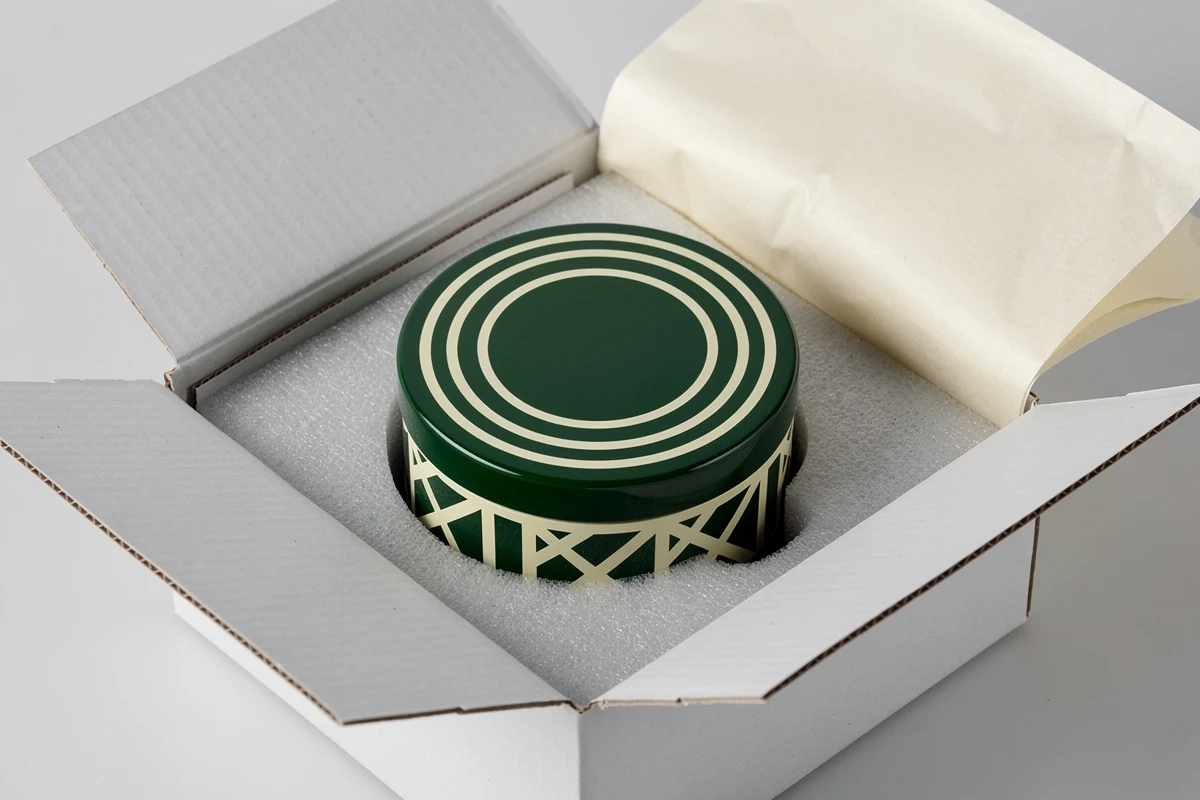
Rub screening also does not replace evaluation of the packed product for its distribution route. ISTA distinguishes screening and simulation procedures, with its general simulation series addressing transport-related motions, forces and conditions. Use the ISTA procedure guide with a qualified testing partner to choose an appropriate distribution evaluation rather than assuming a surface test covers the shipment.
Turn the result into an order requirement
Before releasing the order, connect the approved surface, test method and acceptance criteria to the sample record. Identify which specification changes need review: for example, a different decoration system, finish sequence, protective sleeve or packing contact material. The list should reflect the approved evaluation’s scope.
If a result fails, keep the original specimen and report. Ask the supplier to propose a change and identify which comparison must be repeated. Avoid approving a new finish solely because it produces a better number under a different setup.
For an XRX wooden packaging box project, send the decoration reference and intended packing arrangement along with any customer test requirement. You can contact the team to discuss the sample and reporting scope before agreeing to an acceptance plan.
Frequently asked questions
What does a rub resistance test tell a wooden-box buyer?
It provides a result for a defined surface under specified rubbing conditions. The buyer needs the specimen, method, contact material, exposure conditions and acceptance criteria to judge whether the result applies to the order.
Does passing a tape adhesion test prove rub resistance?
No. Tape adhesion and rubbing evaluations address different responses. Keep their methods, specimens and acceptance criteria separate instead of treating one result as a substitute for the other.
Can a flat panel be tested instead of the complete box?
A representative panel may be appropriate for the selected apparatus. Have the laboratory document the surface it represents, any method modifications and the box features the panel does not evaluate.
How many rubbing cycles should a wooden box pass?
There is no single count specified here for all wooden boxes. Agree the procedure and acceptance requirement for the intended application; a count without the other test conditions is not a complete specification.
Does a passed rub test replace shipping evaluation?
No. A surface result does not evaluate the complete packed product under distribution conditions. Review the actual protective materials and select any necessary transport evaluation for the intended shipping route.