
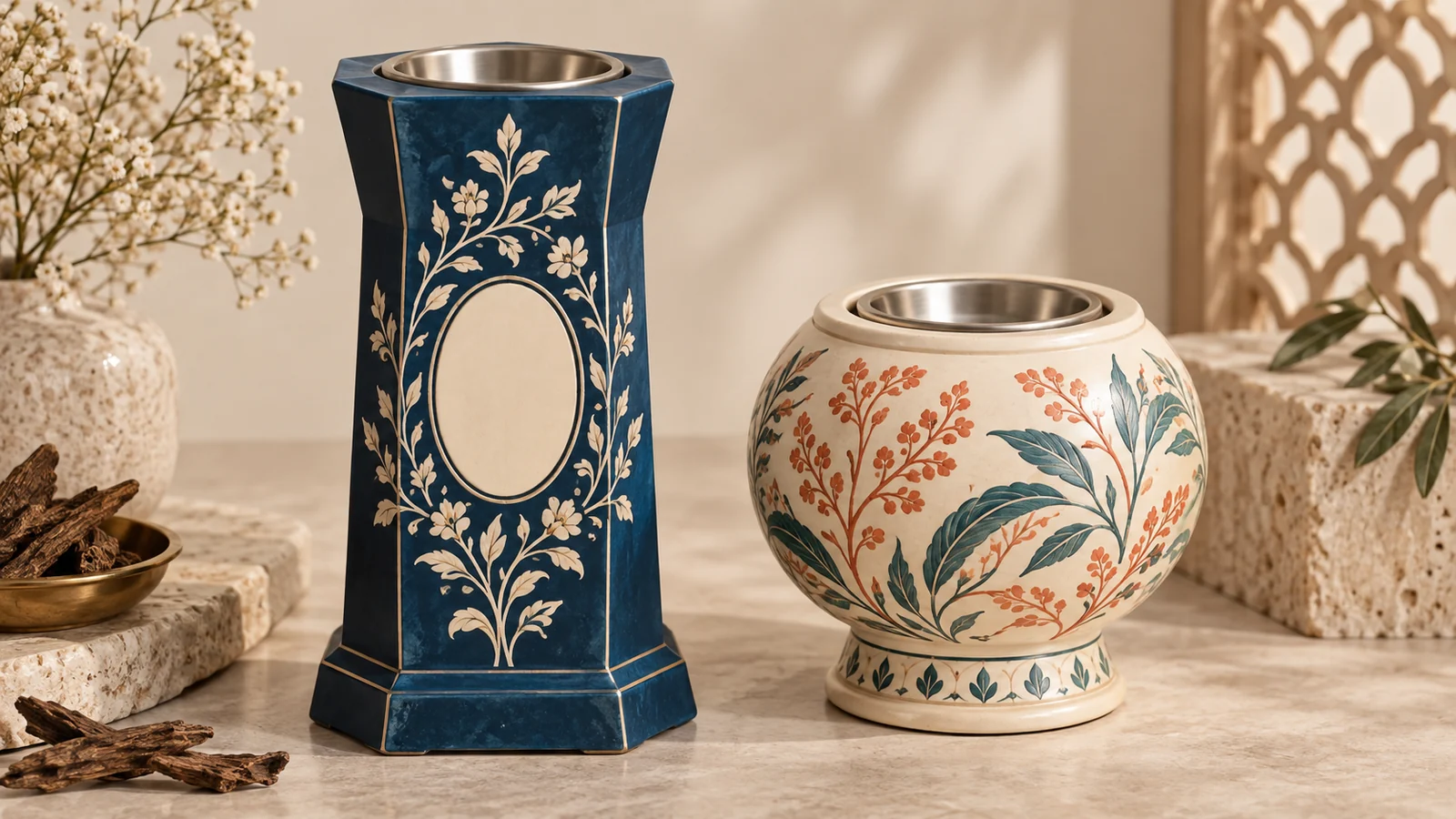

Bakhoor burner artwork should be approved as a combination of correct wording, a defined position and a result on the actual finished surface. For Arabic names, a visually attractive mockup is not enough: the buyer needs an approved language version and a production proof that preserves it. Freeze the wording first, map it to the burner, then review a physical sample before releasing the design for an order.
This guide is for brands and gift-project buyers commissioning decorated wooden burners. It focuses on artwork handoff and approval, rather than choosing the heating system or explaining every decoration process. XRX’s wooden bakhoor burner page provides the broader customization scope.
Start with an Approved Text Master
Assign one person on the buyer’s side to approve the wording and one to release the design. They can be the same person, but the approval should say what has been checked. A designer approving the layout is not automatically confirming spelling or meaning in another language.
Request the final Arabic text from the brand or its qualified language reviewer. Keep the original editable text alongside the visual proof. For a recipient’s name, use the recipient-approved spelling rather than asking the factory to reconstruct it from an English name or a blurred photograph.
The W3C’s Arabic and Persian layout guidance explains that Arabic runs right to left, while numbers and embedded left-to-right text follow their own direction. It also describes context-dependent letter joining. These are reasons to review the rendered wording as a whole, including mixed-language lines, rather than checking isolated letters or reversing a string manually.
Treat the language review as a separate sign-off. The manufacturer can reproduce a supplied design, but that does not make a production sample a translation service. If the name, date or phrase changes, issue a revised text master before updating the physical decoration.
Define Where the Artwork Belongs
A burner may have several faces that look similar in a flat drawing. Identify the front relative to a stable feature such as a drawing view or an agreed component orientation. Do not rely only on “put the logo in the middle,” particularly on a faceted housing or a round body.
Mark the decoration area, its dimensions and its location from agreed reference edges. Ask the manufacturer which surface region can be decorated with the proposed method. Reserve space around openings, joins, removable parts and any information that must remain readable.
| Artwork item | What the buyer should specify | What to approve |
|---|---|---|
| Arabic name or phrase | Final approved text and visual arrangement | Wording, orientation and appearance together |
| Position | Drawing view, named face and reference edges | Placement on the complete object |
| Size | Overall artwork width and height | Legibility and balance at the actual size |
| Decorative pattern | Coverage area, border and repeat direction | How it ends at corners, edges and joins |
| Color and surface | Agreed color reference plus actual finish | Contrast and appearance on a physical sample |
| Variable version | Unique artwork reference tied to an item or recipient code | Correct file-to-product assignment |
Keep functional openings fixed while reviewing decoration. If a proposed pattern becomes a cut-through feature, it is no longer only a graphic decision. Refer the change back to the product designer; the burner design guide covers the separate questions around the housing and internal assembly.
Prepare a Production File and a Readable Proof
Ask the manufacturer which file format its workflow accepts. Supply the agreed production file plus a proof that clearly shows the intended appearance. Include the artwork reference, revision, overall dimensions and the face it belongs to. Avoid sending several files called “final” without stating which one is released.
If text is converted to vector outlines, keep an editable master as well. Adobe’s lettering tutorial demonstrates converting text into shapes with Create Outlines. That changes the representation of the text; it does not correct the wording. Compare the exported proof against the approved text master before sending it for production.
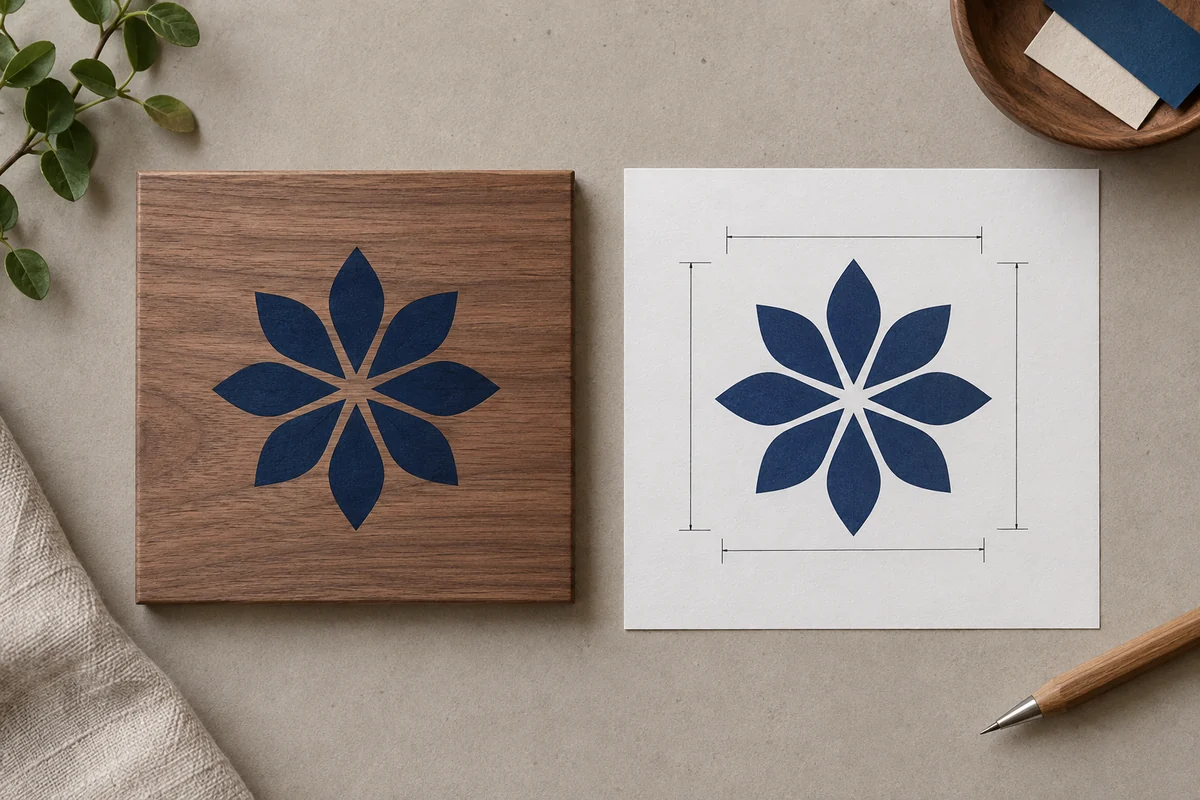
Do not let the factory’s need for a different file format become an unrecorded design change. If paths are simplified or a detail is enlarged for production, request a revised proof. The buyer should be able to identify what changed and approve the new appearance before it reaches the sample.
For a name-and-date design, check the entire combination. Approving a name on one proof and a date in a separate message leaves the final arrangement unapproved. A compact proof showing the complete decoration is easier to compare with the finished item.
Choose the Method Around the Finished Surface
XRX’s confirmed branding options include laser engraving, screen printing, hot stamping and metal logo plates. These are available process directions, not a promise that every artwork can be reproduced by every method on every burner surface.
Ask for a sample using the proposed surface and process together. A graphic on unfinished scrap does not show its appearance on the specified painted or veneered product. Review contrast, small details, edge definition and positioning on the intended finish. Establish acceptable appearance with the sample instead of assigning a universal minimum text size.
Where a design contains a large pattern and a small name panel, evaluate them separately and together. The pattern can look attractive while making the name difficult to read. Conversely, enlarging a name can crowd the border or move it outside the agreed decoration area. Both changes should return to the same approved layout.
For method details, use the existing laser engraving guide. The decision here is whether the resulting decoration preserves the approved artwork on this product, not whether one process is universally better.
Coordinate the Burner and Presentation Box
Matching artwork does not have to mean identical dimensions on every component. A tall burner face and a wide box lid have different proportions. Give each its own placement proof while keeping the approved wording and agreed design elements consistent.
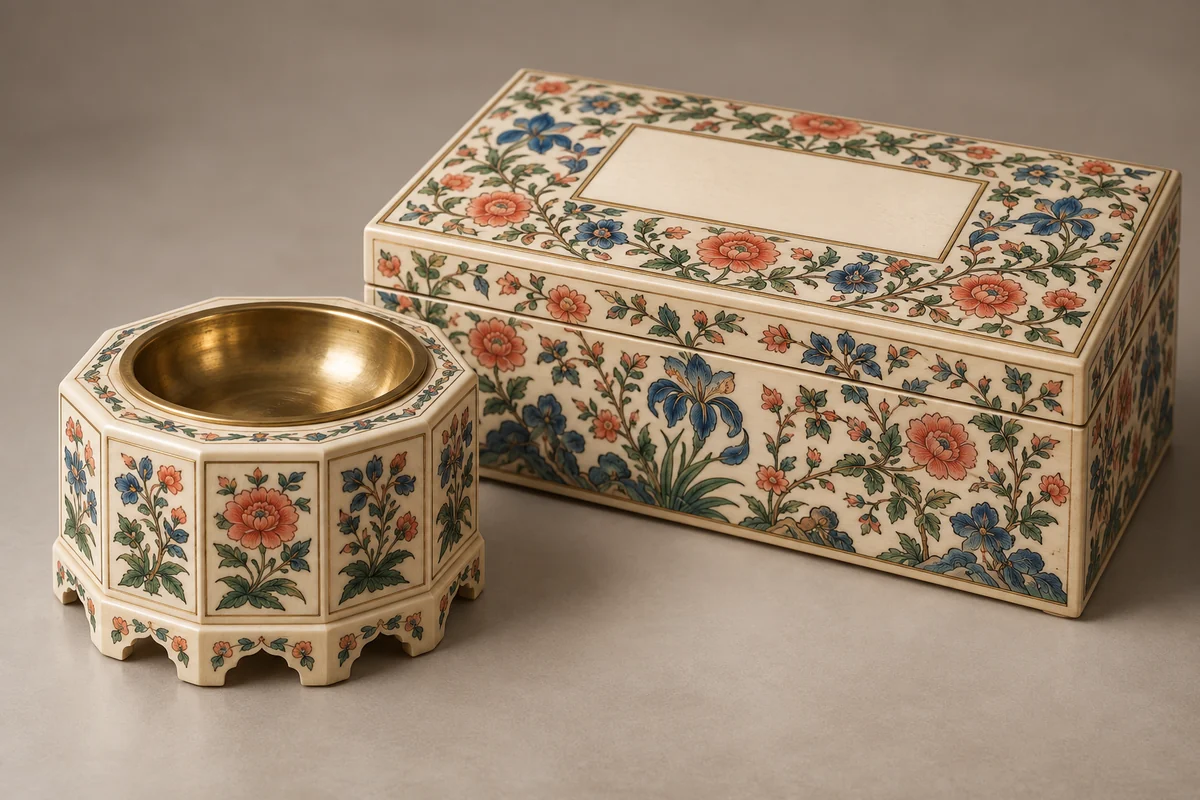
When a motif continues around several faces, show each face and the intended relationship at the edges. If the design is meant to stop at a border, make that explicit too. A perspective rendering alone can conceal where a repeat ends or how a corner is treated.
Keep the consumer-facing information separate from decorative personalization in the approval record. A recipient name on the burner should not accidentally replace the product identification or instructions assigned to the packaging. The final packed sample should show the complete arrangement.
Control Personalized Versions Before Releasing the Order
For variable names, maintain a list that maps one approved artwork reference to one item or recipient code and a quantity. Avoid relying on file order in an email attachment list. If a customer changes a name, update that row and withdraw the superseded production file from the active release set.
Approve every unique wording version, then agree how representative physical samples will cover differences in length and layout. A short name fitting neatly into a panel does not establish that a much longer one will fit at the same size. Do not automatically shrink every long version without a proof showing the result.
Before release, confirm five things: the wording owner has approved the text; the exported proof matches it; the placement is defined; the physical appearance is accepted; and the quantities match the version list. These are separate checks, even when recorded on one approval sheet.
XRX’s general manufacturing practice is to align structure, finish and branding before bulk production. Send the burner drawing and approved artwork brief to XRX with the required versions identified, so the decoration method and sample scope can be reviewed against a clear design.
FAQ
Who should approve Arabic names on a custom bakhoor burner?
The buyer should assign a qualified language reviewer or obtain the recipient’s approved spelling. Keep that wording approval separate from layout and manufacturing approval. The factory should reproduce the approved master rather than invent a spelling from a photograph or another language.
Is a screenshot enough for production artwork?
A screenshot can communicate an idea, but ask the manufacturer for its accepted production format. Supply a readable proof with dimensions, location and revision information so the intended result remains clear across file handoffs.
Does converting Arabic text to outlines make it correct?
No. Outlining changes text into shapes; it does not verify meaning, spelling or layout. Keep an editable master and compare the exported proof with the buyer-approved wording before production.
Can the same artwork file be used on the burner and its box?
Shared design elements can be reused, but approve separate sizes and placements for each component. Different face proportions, surfaces and decoration methods can require different layouts.
What should be checked for an order with many personalized names?
Map each approved artwork revision to an item or recipient code and quantity. Approve every wording version, review differing name lengths, and agree physical sample coverage before releasing the complete version list.