
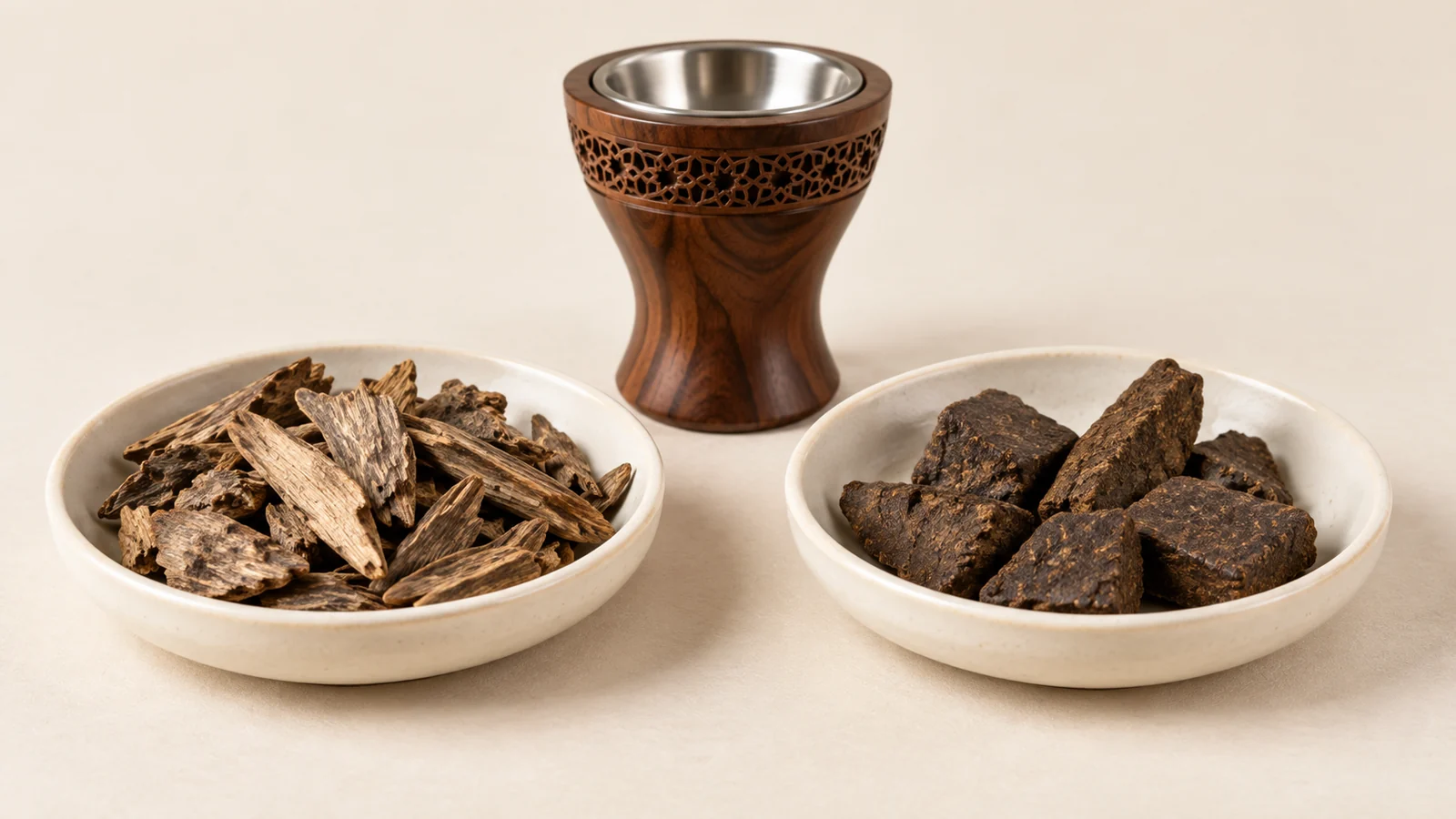

The difference between bakhoor and oud is easiest to understand by separating a prepared incense product from its possible raw material. Bakhoor commonly describes fragranced incense preparations, while oud can refer to agarwood or its extracted oil. The categories can overlap: a bakhoor blend may contain agarwood. For a gift-set buyer, the practical task is to identify the exact contents rather than treating either word as a complete specification.
A brief that says “wooden oud gift set” leaves several questions open. Does it include wood chips, a prepared incense blend, an oil bottle, a burner, or only the presentation case? Decide those contents before approving the wooden product. XRX’s wooden bakhoor burner page covers the burner and woodwork side of that project; fragrance sourcing needs its own confirmed scope.
Difference Between Bakhoor and Oud: Quick Comparison
| Term on the brief | What the buyer should distinguish | What to request |
|---|---|---|
| Bakhoor or bukhoor | A named incense preparation; its composition and physical form depend on the product | Exact supplier product reference, description, supplied form and instructions |
| Oud or agarwood chips | Wood material offered for a particular intended use | Material identity, supplier documentation and representative contents |
| Oud oil | An oil product rather than a packet of wood chips | Exact product identity, intended use, sealed bottle and its dimensions |
| Oud fragrance | A fragrance description that does not, by itself, specify the supplied material | Clarification of whether the item is incense, oil, perfume or another product |
| Oud burner or bakhoor burner | The device or vessel, not the fragrance contents | Exact burner configuration and a separate list of included consumables |
The table is a purchasing distinction, not a universal naming standard. Suppliers may use the terms differently. Where the product name and description leave room for interpretation, ask for clarification in writing instead of resolving the ambiguity from a photograph.
Oud Can Describe More Than One Supplied Form
Royal Botanic Gardens, Kew’s agarwood reference describes fragrant resinous wood associated with Aquilaria and Gyrinops, and distinguishes traded forms including chips, powder and distilled oil. That botanical distinction matters here: a bottle and a portion of wood are different items, even when both are presented under an oud-related name.
Ask the fragrance supplier to state what is actually being sold. Do not use the decorative wood species of the case as a description of its incense contents. A walnut-finished presentation box does not identify the material inside its jar, and a dark chip in a product photograph does not authenticate its botanical origin or quality grade.
Likewise, do not treat an aroma description as an ingredient declaration. If a brand wants to claim a particular material, origin or composition, the supporting information must come from the actual fragrance supply chain. The wooden-product manufacturer cannot establish those facts from the packaging brief.
Bakhoor Does Not Mean One Fixed Recipe
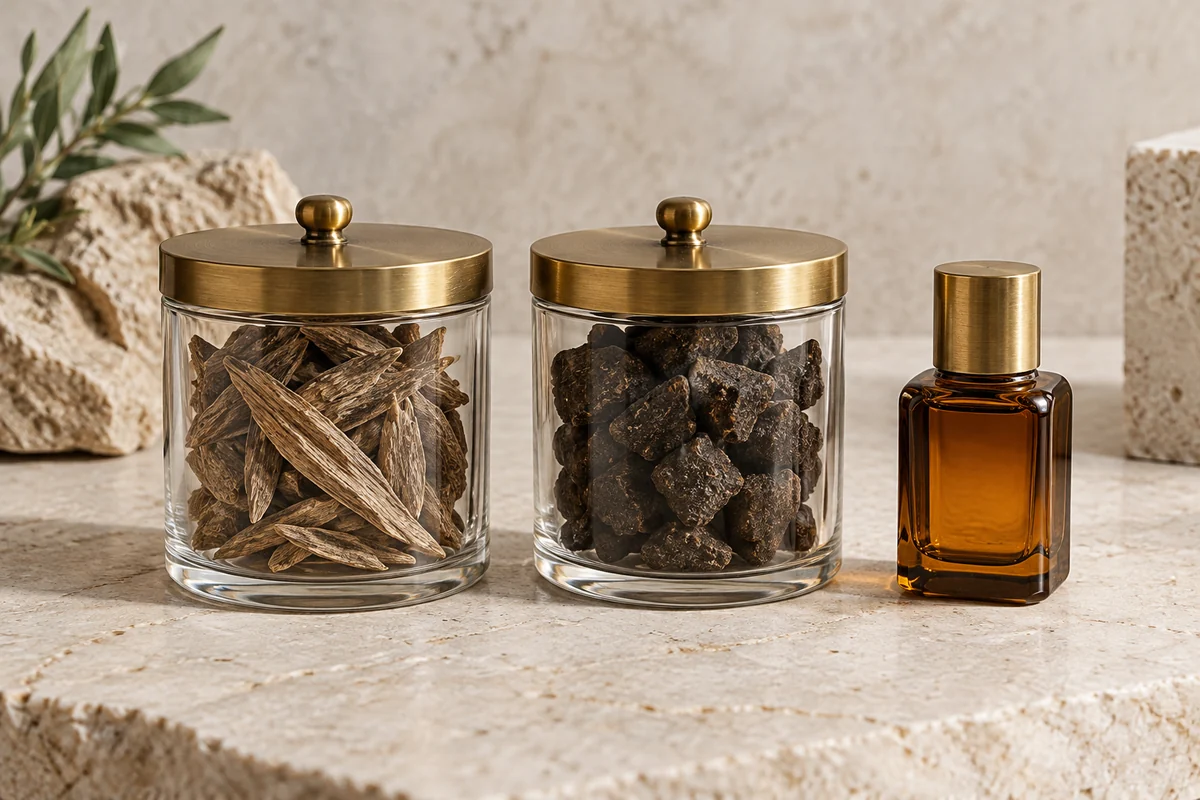
A useful manufacturer example is Ajmal’s description of two Dakhoon products. It describes one preparation in terms of powdered wood and aromatic ingredients, and another in terms of wood chips treated with fragrance oils. This supports a narrow conclusion: a bakhoor name alone does not tell a buyer the physical form or exact formulation of the contents.
Do not turn a simple comparison into the claim that all oud is untreated wood and all bakhoor is the same scented block. Instead, compare the specific products being considered. Obtain a representative sample in the container intended for delivery, with the actual product reference and description attached to the purchasing record.
For a collection with several fragrances, keep the identity of each refill separate from the appearance of the wooden case. Two jars may fit the same compartment yet contain different products. Conversely, a fragrance may keep its name while its supplier changes the jar or closure. Both kinds of change should be visible in the gift-set record.
Which Option Fits the Gift Brief?
Choose a named bakhoor preparation when the gift brief is built around a particular supplied incense blend. Approve that product by its exact reference, physical form and instructions. The word bakhoor should lead to a defined item, not permission for the assembler to select any available scented material.
Choose documented agarwood chips when the material itself is central to the offer. Let the fragrance supplier substantiate the material description. The packaging team should receive the approved container and representative contents, rather than being asked to authenticate chips or assign an incense grade.
Choose an oil or perfume format only when that is the intended gift component. State it explicitly on the contents list. Do not imply that a bottle supplied with a burner may be poured into it: compatibility and use instructions must come from the relevant product suppliers.
There is no useful universal winner on price, fragrance strength or perceived quality. An unspecified blend and an unspecified wood material are not comparable quotations. Compare the actual product, amount supplied, container, documentation and intended experience. A higher-priced decorative case does not resolve an undefined fragrance specification.
Translate the Choice into a Clear Contents Record
Before designing compartments, prepare one record for each supplied item. Give it an internal component reference so that the same name follows it through sampling, artwork and packing. The following is a suggested buyer checklist, not an existing XRX order record.
| Record field | What to capture | Why it prevents confusion |
|---|---|---|
| Product identity | Supplier and exact product or refill reference | Stops a broad word such as oud from standing in for a specific item |
| Supplied form | Chips, preparation, bottle or another identified form | Separates contents that need different containers and instructions |
| Quantity basis | Amount per container and number of containers per set | Distinguishes the fragrance quantity from the number of gifts |
| Container revision | Closed dimensions, closure and approved sample | Gives the wooden-product team a defined physical input |
| Burner relationship | Included burner model, or explicit exclusion | Avoids assuming that any burner suits the selected contents |
| Supply responsibility | Who supplies, labels and places each item | Makes exclusions and buyer-supplied components visible |
Keep the label wording aligned with this record. If the outer case says “agarwood chips” but the supplied refill is a prepared blend, stop artwork approval until the responsible supplier and brand resolve the description. A packaging proof should reproduce approved wording, not invent the missing product identity.
Keep Fragrance Selection Separate from Wooden-Product Approval
Once the contents are identified, the woodwork can be developed around the actual containers and burner. The gift-set packing guide addresses support, removal and transport preparation. Those physical packing decisions follow the contents decision; they cannot replace it.
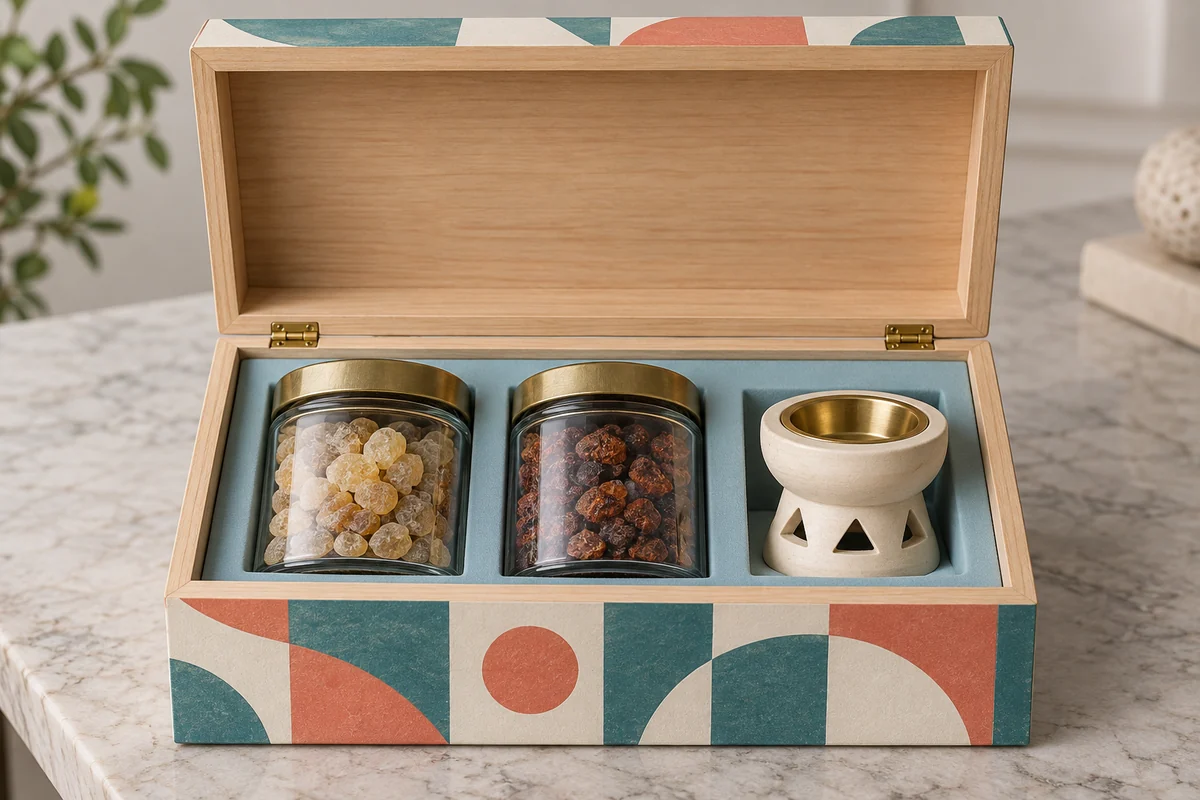
Review the finished sample with the approved components present. Confirm that the product names, contents list and visible items agree. Then check the wooden presentation, finish, component access and arrangement. If the fragrance supplier changes an item, review both its description and the consequences for the assembled set.
XRX can develop wooden burners, housings and coordinated wooden packaging within its confirmed customization scope. This does not establish that incense, oils or other consumables are included in a quotation. Send XRX the defined contents and wooden-product brief with buyer-supplied items clearly identified, so the proposal can separate woodwork from fragrance supply.
FAQ
Is bakhoor the same as oud?
Not necessarily. Bakhoor commonly describes a prepared incense product, while oud may refer to agarwood or its oil. A bakhoor preparation can include agarwood, so the terms can overlap. Confirm the exact product rather than relying on its name alone.
Does every bakhoor product contain agarwood?
Do not assume it does. The name alone does not establish the formulation. Ask the fragrance supplier for the description and supporting information for the particular product being purchased.
Is oud oil interchangeable with oud wood chips in a gift set?
No. They are different supplied forms with different containers and intended-use instructions. Identify the exact item in the contents list, and do not assume either is compatible with a burner simply because they share an oud-related name.
Can the wooden box identify the quality of the incense inside?
No. The case’s finish, wood appearance and price do not authenticate the incense material, origin or grade. Those claims require information from the actual fragrance supplier.
What should buyers provide before ordering a wooden bakhoor gift set?
Provide the exact component list, supplier product references, quantity per set, approved closed containers, any included burner configuration and supply responsibilities. Confirm the fragrance identity before approving packaging artwork or compartments.