
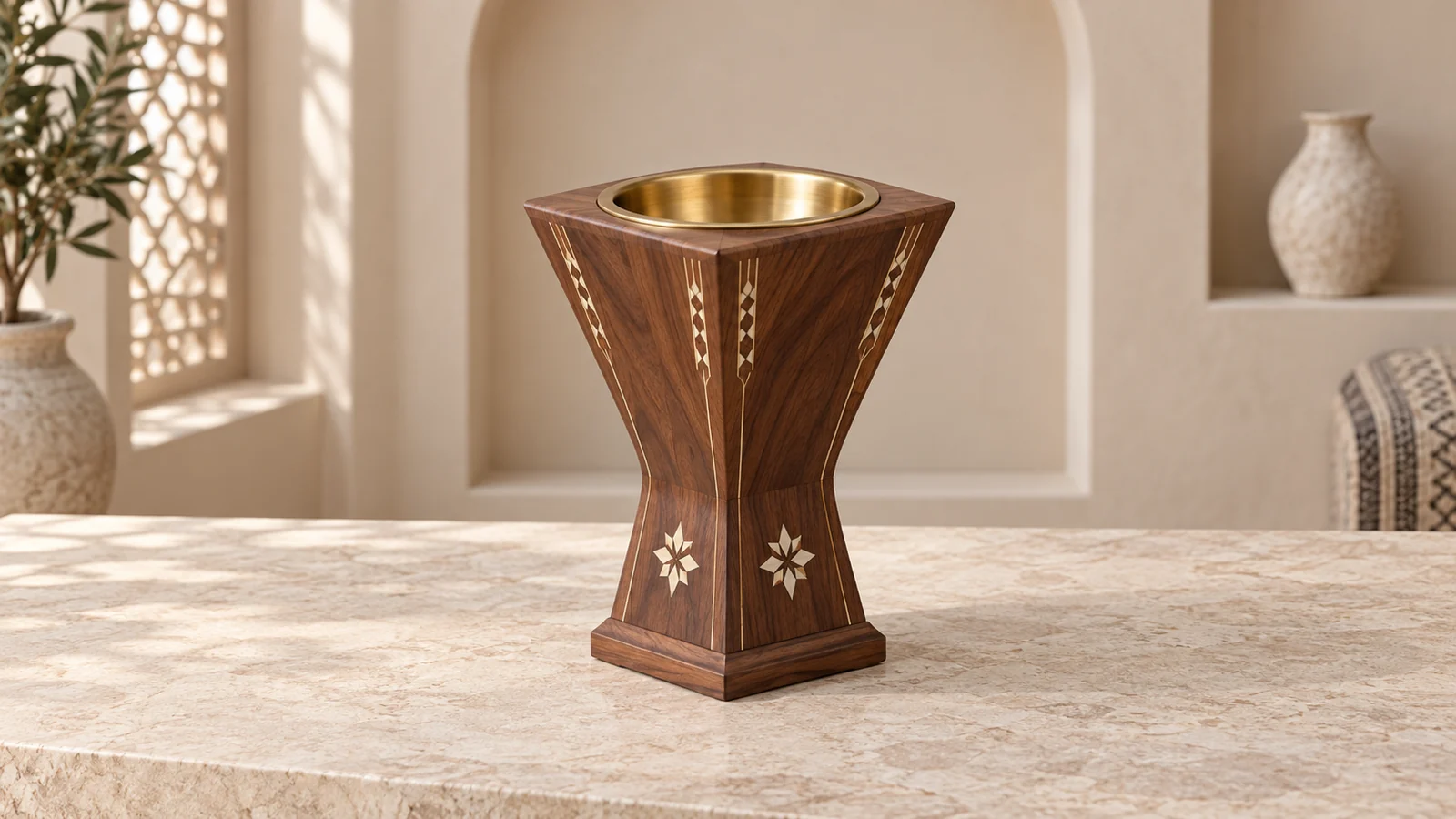

A mabkhara is an incense burner, also called a censer, associated with Arabic incense traditions. It is the object used for the incense, rather than the fragrant material itself. For a buyer reviewing a wooden-product quotation, that distinction matters: the requirement might be a complete burner, a decorative wooden housing, a fragrance storage box or a coordinated gift package. The word alone does not tell you which parts are included.
This guide explains the terminology and helps brands, importers and gift buyers identify the product they need before moving into detailed design. For XRX’s commercial range and customization scope, see wooden bakhoor burners.
Mabkhara Meaning: The Burner, Not the Fragrance
Visit Qatar’s guide to bukhoor distinguishes the incense from the mabkhara censer. It describes bukhoor as a fragrant preparation made from wood chips or powder and scented ingredients, and places its use within Qatari hospitality and daily traditions. That cultural context explains why a burner can be both a functional object and a carefully presented gift.
Keep the two purchasing categories separate. Buying the burner does not necessarily include incense. Buying a jar of bakhoor does not necessarily include the burner. Likewise, a photograph showing both items together does not establish the scope of supply.
English spellings can also differ. The British Museum uses mabkharah in its record for a pottery incense burner, while Visit Qatar uses mabkhara. A spelling difference is not a useful basis for choosing a construction. Pair the product name with a photograph or drawing and a clear description of its intended function.
Mabkhara, Bakhoor and Oud: Which Item Are You Specifying?
Use the following as a purchasing vocabulary guide. It is not a fragrance-grading system or a claim that every supplier uses identical catalog wording.
| Term in a brief | What it identifies | What the buyer still needs to clarify |
|---|---|---|
| Mabkhara or mabkharah | The incense burner or censer | Complete assembly, housing only, included components and intended heating method |
| Bakhoor or bukhoor | The incense preparation | Actual supplied product, format, container and quantity |
| Oud | Agarwood-related material or fragrance terminology, depending on context | Whether the item is wood, oil or a formulated fragrance product |
| Bakhoor storage box | A container proposed for storing incense or its packaged containers | Direct-contact requirements, primary containers and closure |
| Mabkhara gift box | Packaging proposed for a burner or set | Whether the burner, fragrance and accessories are included |
The oud distinction is especially useful when reading a short inquiry. Visit Qatar discusses both agarwood and oud oils; “oud” on a mood board therefore does not identify a physical component with a fixed size. Ask for the actual product reference before specifying a compartment or matching package.
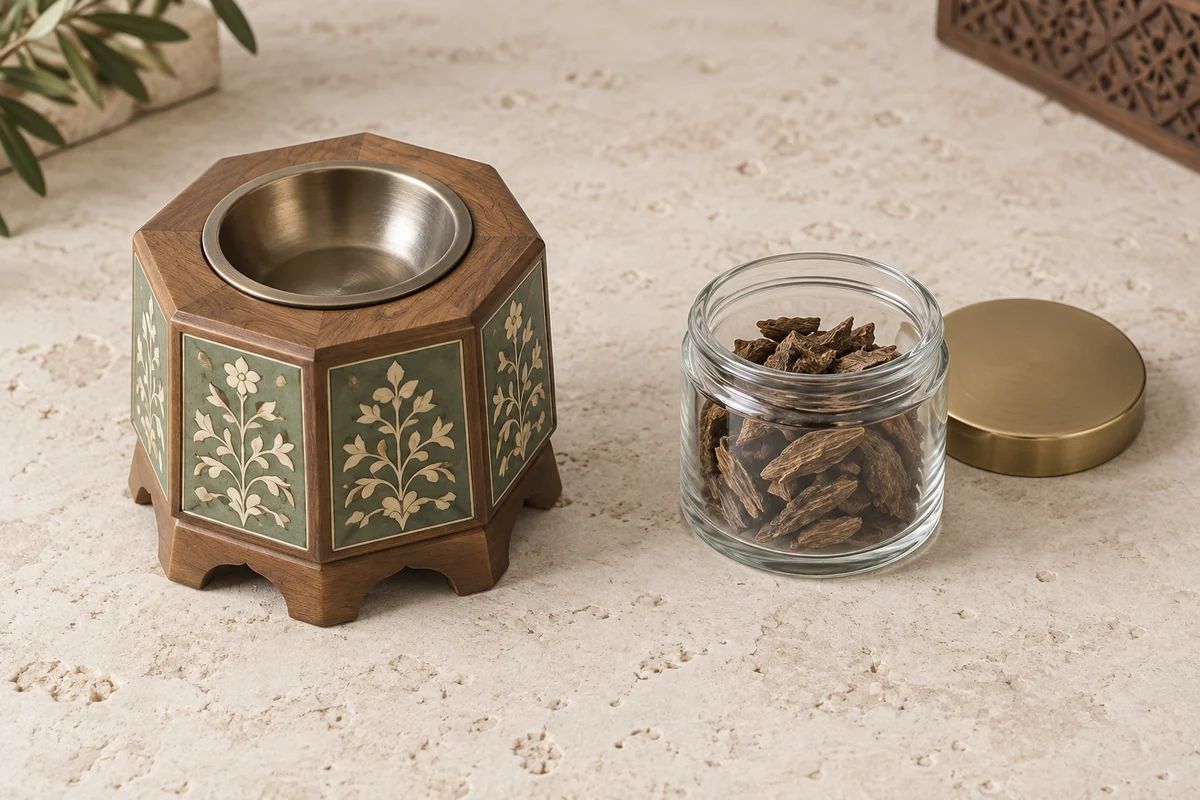
For example, “wooden oud box” could be intended as fragrance packaging, while “wooden mabkhara housing” points toward part of a burner. Treat that as an ambiguity to resolve, not a translation you can safely guess. One clarification early in the brief can prevent a supplier from quoting a different product category.
Does a Mabkhara Have to Be Wooden or a Particular Shape?
No single wooden silhouette defines the term. The British Museum’s pottery mabkharah has a hollow conical base and a bowl with a clay carrying structure above it. This documented example establishes that the name is not limited to a wooden square form. It is a historical object record, not a manufacturing specification for a modern burner.
For a new wooden-product project, separate the visual direction from the functional construction. A drawing may show a tapered pedestal, a round body or an architectural profile. It should also identify whether that form is the complete product or an outer housing developed around other components.
The same applies to finish. Natural wood grain, painted surfaces and decorative patterns can communicate different collection styles, but none of them defines what “mabkhara” means. A gold-colored cup is also not a material specification: identify the actual component rather than inferring its composition from its appearance.
XRX supports wooden incense-burner products and custom woodwork. Its confirmed customization capabilities include size, structure, material, finish and branding. The components and performance requirements for a particular burner still need project-specific confirmation.
A Burner, a Wooden Housing and a Storage Box Are Different Purchases
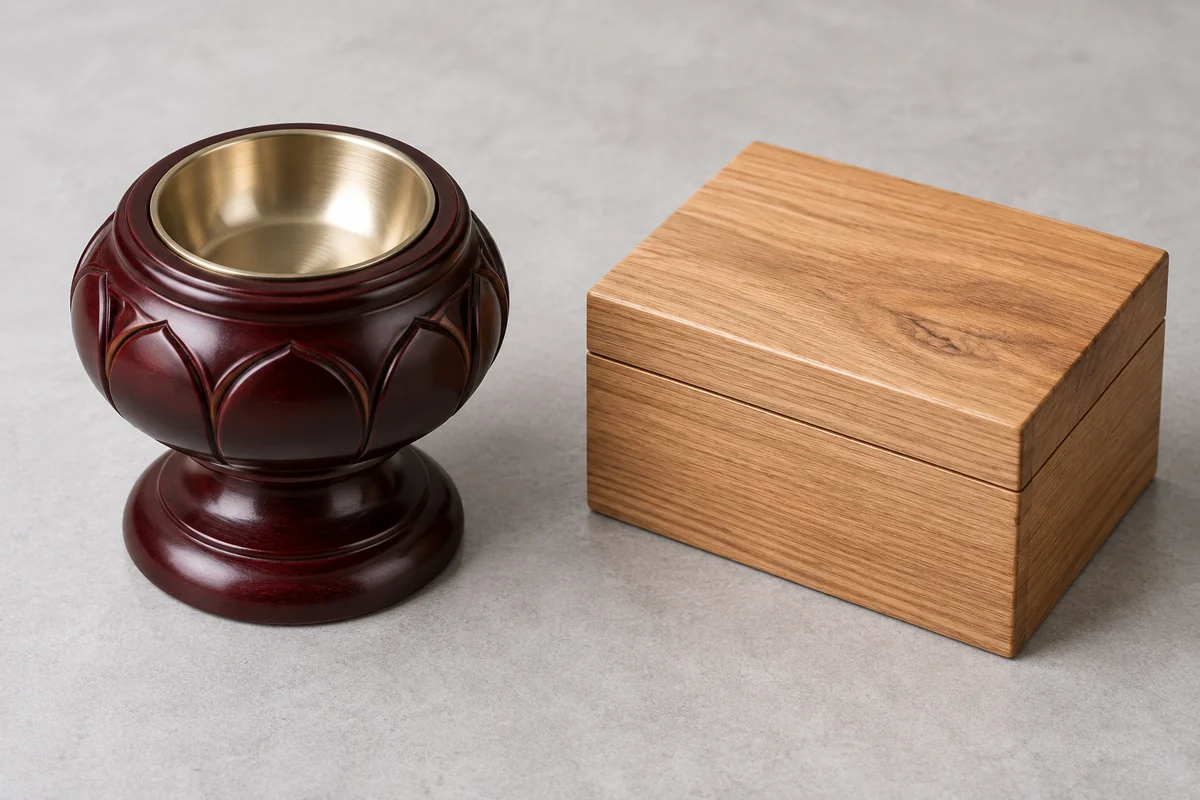
A complete burner brief should identify the intended assembly and the components supplied with it. A housing-only brief should identify the wooden part and the component around which it will be developed. A storage-box brief concerns containment and access; it does not establish that the box is intended for heating incense.
Those distinctions remain important when the products share a matching color, ornament or wood finish. A coordinated collection can contain a burner and a separate storage case without making the case part of the heating assembly.
Consider an illustrative inquiry: “We need a wooden mabkhara with our logo.” Before discussing the logo position, establish whether the buyer wants a complete burner, a replacement wooden shell or a presentation package. Ask what the supplied item must do and which components the buyer will provide. This example is a briefing exercise, not a description of an actual XRX order.
Do not use the product name as a compatibility or safety claim. “Mabkhara” does not establish that a particular assembly supports every incense format or heating method. For the detailed relationship between the wooden housing, inner vessel and intended use, continue to the wooden bakhoor burner design guide.
Turn the Name into a Clear Product Brief
Once the product category is clear, prepare a short brief that another person can interpret without seeing the original conversation. Include:
- Product function: burner assembly, wooden housing, storage container or presentation packaging.
- Scope of supply: the included components and anything provided by the buyer or another supplier.
- Reference: a drawing, annotated photograph or physical sample showing what the name refers to.
- Intended configuration: the specified heating system for a burner, or the actual contents for a storage or packaging project.
- Appearance: overall form, material direction, surface finish and branding reference.
Keep unknowns visible. If the inner component has not been selected, mark it as provisional. If the request is for packaging only, say so explicitly. Neither a familiar product name nor an attractive rendering resolves those missing inputs.
The useful result is a sentence such as: “We need the finished wooden housing around our supplied burner component; fragrance and gift packaging are excluded.” Another buyer may need the complete set instead. These are different scopes even if both inquiries begin with “mabkhara.”
After that decision, send the product brief to XRX to review the wooden-product scope. Detailed burner construction and gift packaging can then be discussed against an agreed product definition.
FAQ
What is a mabkhara in English?
A mabkhara is an incense burner or censer associated with Arabic incense traditions. The name identifies the burner, rather than the incense material. For purchasing, add a description of the actual assembly and included components.
Is mabkhara the same as bakhoor?
No. Mabkhara refers to the burner, while bakhoor or bukhoor refers to the incense preparation. A supplier may sell them separately or as part of a set, so confirm the contents of the quotation.
Does a mabkhara have to be made of wood?
No. The British Museum records a pottery incense burner as a mabkharah. The name does not prescribe one material or shape. For a wooden version, specify the woodwork and other components separately.
Is a wooden bakhoor storage box also a burner?
Not necessarily. A storage box may hold incense or its packaged containers without being designed for heating. Identify the intended function and construction rather than treating the product name or decorative style as evidence of burner capability.
What should buyers clarify when requesting a custom mabkhara?
Clarify whether the request covers a complete burner, wooden housing or packaging. Provide the intended configuration, included components, reference drawing or sample, and appearance requirements. Mark buyer-supplied and undecided items clearly.