
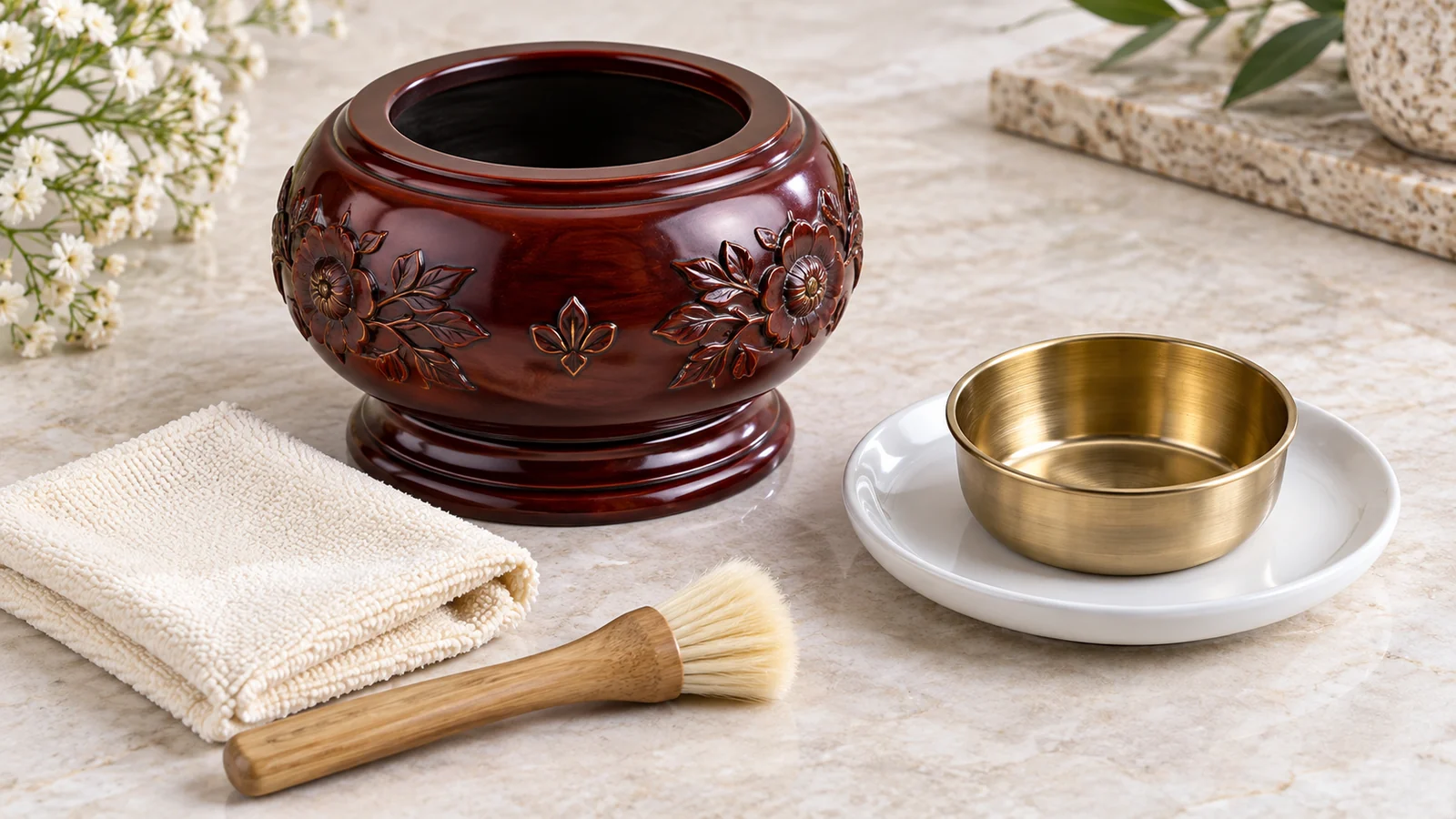

To clean a bakhoor burner with a wooden housing, let the complete unit become fully cold, follow its shutdown instructions, and treat the incense vessel and finished wood as separate parts. Remove only components designed for user removal. Use the maker’s approved method for the vessel or heating chamber, and begin ordinary exterior care with a clean, soft, dry cloth on an intact finish. Do not soak the assembled burner or assume a metal-cleaning method is suitable for its woodwork.
For brands and importers, the same sequence should inform the care instructions supplied with a custom product. The useful question is not simply which cleaner removes residue fastest, but which method works on each identified component without changing the approved finish or assembly.
Before Cleaning: Cold, Switched Off and Identified
For an electric product, follow the manufacturer’s shutdown and cooling sequence, then disconnect it from its power supply or charger before cleaning. For a charcoal product, do not begin until the fuel is fully extinguished and the vessel, residue and housing are cold. A dark-looking residue is not a reason to assume it is ready to handle. Follow the product’s extinguishing instructions and local fire-safety advice for disposal; do not improvise an ash-removal routine while heat remains.
Check which components are meant to come out. A loose-looking trim ring may be decorative rather than a removal point. Do not force a cup, pull wiring, undo the appliance housing or prise against a lacquered edge to gain access.
If no component-specific instructions are available, ask the supplier before using liquids, abrasives or chemical cleaners. A cold exterior dusting step cannot establish how the hot-zone components should be maintained.
Match the Cleaning Method to the Component
| Component | Starting point | Do not assume |
|---|---|---|
| Intact finished wooden housing | Gentle exterior dusting with a clean, soft, dry cloth | That a shiny finish is waterproof or solvent-resistant |
| Removable metal vessel | Identify its material and any coating; follow its own care instructions | That every gold-colored part is solid brass or suitable for metal polish |
| Fixed heating chamber | Follow the exact appliance manual | That it can be washed because a separate cup on another model can be washed |
| Decorative grille or removable cover | Confirm removal method and allowed cleaning tool | That force or a sharp tool is acceptable around fine details |
| Electrical body and controls | Keep cleaning within the user-maintenance instructions | That the complete device is immersible or user-serviceable |
These are care boundaries, not a cleaning-agent recipe. The same visible color can come from different materials and coatings, so appearance alone cannot identify an acceptable chemical treatment.
Care for the Finished Wood Separately
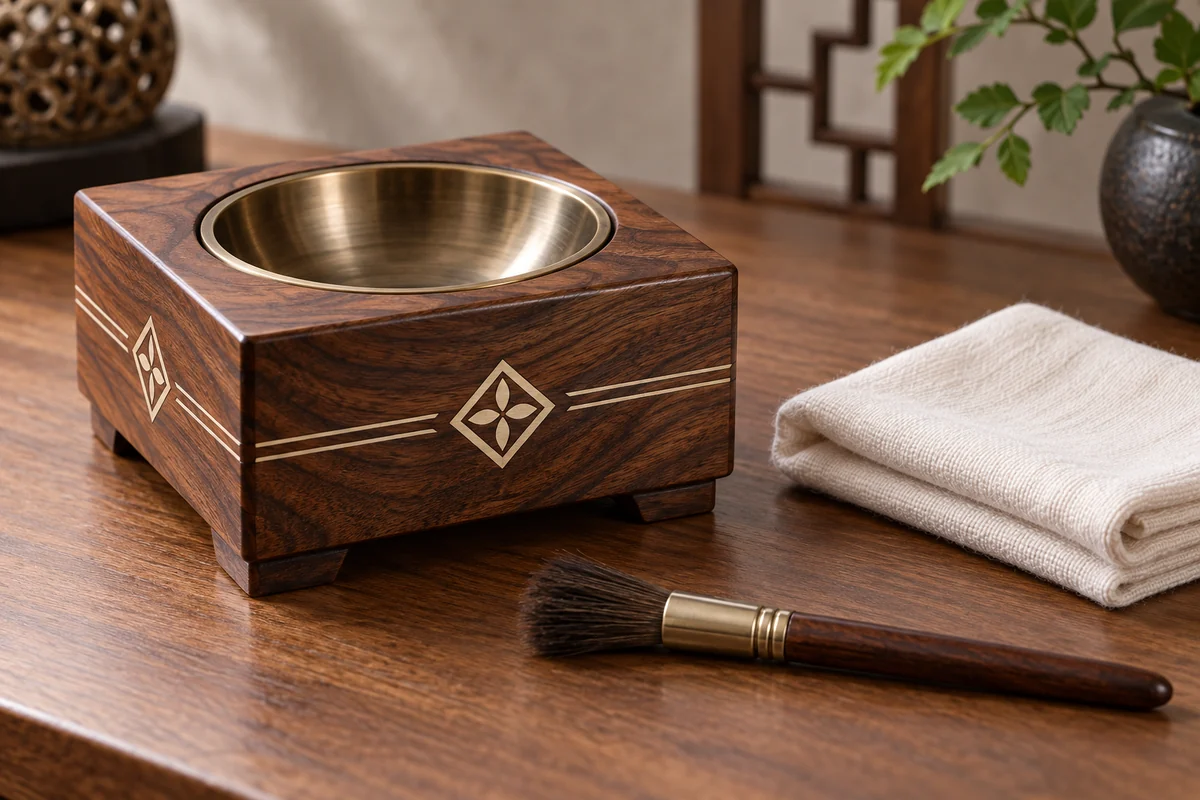
Support the cold housing on a stable surface. Check the finish before wiping: if it is lifting, cracked or shedding, stop instead of rubbing loose material away. On an intact surface, use light pressure and a clean cloth; move to a clean section rather than spreading residue across the object.
The Canadian Conservation Institute’s guidance for wooden objects explains that water and cleaning products can affect finishes, and that compounds used on metal fittings can damage adjacent woodwork. It concerns furniture and collections, not burner certification. Its relevant lesson here is to separate material-care decisions rather than applying one treatment to the whole object.
Do not reach for alcohol, acetone, household degreaser or metal polish simply because a mark resists dry dusting. First obtain the finish supplier’s approved method for that surface. Even where a cleaner is approved, confirm the concentration, application method and permitted contact area rather than borrowing a recipe intended for another finish.
XRX’s wooden-product finishes can include clear coatings, painted surfaces and veneer-based appearances. “Wooden” therefore does not describe one exposed surface that can share a universal cleaning method. A buyer should record the approved finish and care instruction together.
Treat Residue in the Vessel as a Separate Task
After the burner is cold, take out the vessel only if the product instructions identify it as removable. Place it on a separate suitable work surface so any approved cleaning treatment stays away from the wooden body. Do not use the finished housing as a support for scraping or polishing the detached part.
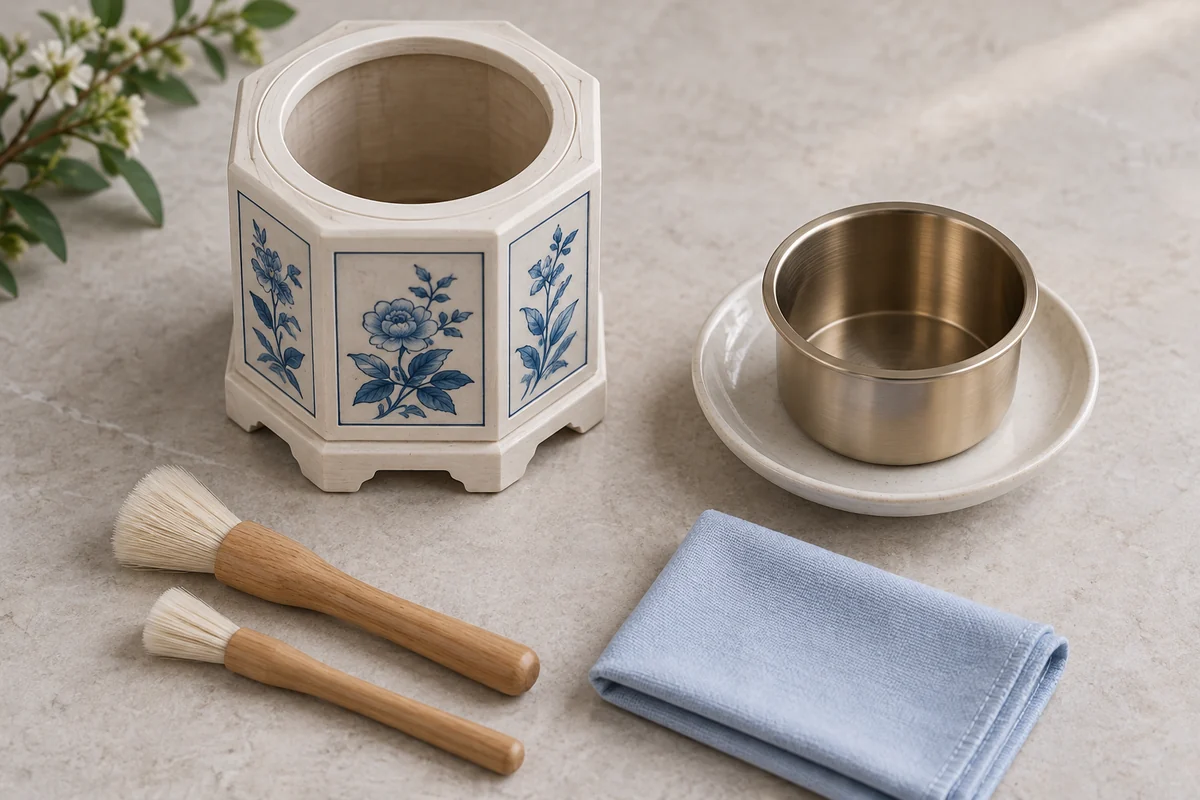
For a removable cup, ask whether washing is permitted and which tools or agents are allowed. If the maker permits a wet method, follow its drying requirements before reassembly. Do not extend that permission to a fixed chamber or the complete burner.
An electric example shows why specificity matters. The manual linked from Green Lion’s Diwan product page instructs users not to put water or detergent into that model’s incense chamber and not to clean the heating element itself. It identifies supplied tools for certain residue-removal tasks. Those instructions apply to that device; they do not authorize probing the heater of another model.
If residue remains after the approved method, stop and ask the maker for the next step. Do not burn deposits off, enlarge openings or substitute a harsher tool. Removing a stain is not worth changing a component whose fit or function has not been reassessed.
When a Mark Needs Inspection Rather Than More Cleaning
A mark may be removable residue, a change in the finish or damage to a component. A photograph alone may not distinguish them. Before escalating the treatment, note where the mark is, when it appeared and what products have already touched it.
Stop using the burner and contact its supplier if you find scorching, deformation, a loose support, damaged wiring or a heating component that no longer seats as intended. Do not disguise a suspect area with paint, polish or a replacement trim piece and return the unit to service.
For a cosmetic concern, record a clear close-up and an overall photograph under ordinary light. Include the product reference, finish reference, cleaning method used and affected component. That gives the supplier more useful information than an instruction to “make it shiny again.”
Turn Sample Review into a Usable Care Card
A custom-product buyer should ask for care instructions during sampling. Name each removable component, show its intended removal direction and distinguish the exterior-care method from the vessel or appliance method. The wooden burner design guide covers cleaning access as a construction question; this article concerns the instructions that follow that design.
Review the proposed care method on a representative finished sample. Agree what to inspect afterward: visible surface change, residue transfer, damaged decoration, altered component fit or difficulty reassembling the unit. This is a proposed approval check, not a claim that XRX has performed a particular durability test.
Keep the care card specific enough to use:
- State the required shutdown, extinguishing and cooling conditions.
- Identify removable parts and parts the user must not open or service.
- Assign the approved tool and method to each component.
- State any drying and reassembly requirements.
- Explain when to stop use and contact the supplier.
Avoid a generic instruction such as “wipe clean” if it leaves the user to guess whether it includes the incense chamber. For a wooden housing project, send the component and finish details to XRX so the woodwork can be reviewed alongside the proposed care routine. The wooden bakhoor burner page outlines the broader customization scope.
FAQ
Can I wash a wooden bakhoor burner under running water?
Do not wash the assembled burner under running water. The wooden finish, joints and any electrical parts have different care requirements. Only wash a removable component when its manufacturer explicitly permits that method, and follow the specified drying instructions.
Can I use alcohol to remove sticky residue from the wooden housing?
Do not assume alcohol is compatible with the finish. Ask for the approved cleaning method for that exact surface. If gentle dry dusting does not remove the mark, stop rather than applying an unapproved solvent or abrasive.
Can every metal burner cup be removed for cleaning?
No. Confirm the product’s intended removal method. Some chambers or trim pieces are fixed or connected to other components. Do not force removal, lever against the wood or open an electrical assembly to reach residue.
How long should a burner cool before cleaning?
Follow the model’s instructions and wait until the complete unit and residue are fully cold; charcoal must also be fully extinguished. There is no universal cooling time for different burners, fuels and operating conditions.
What should a brand include in its burner care instructions?
Specify shutdown and cooling conditions, user-removable parts, component-specific tools and cleaning methods, drying and reassembly requirements, and signs that require stopping use. Match the instructions to the approved finish and complete product configuration.