
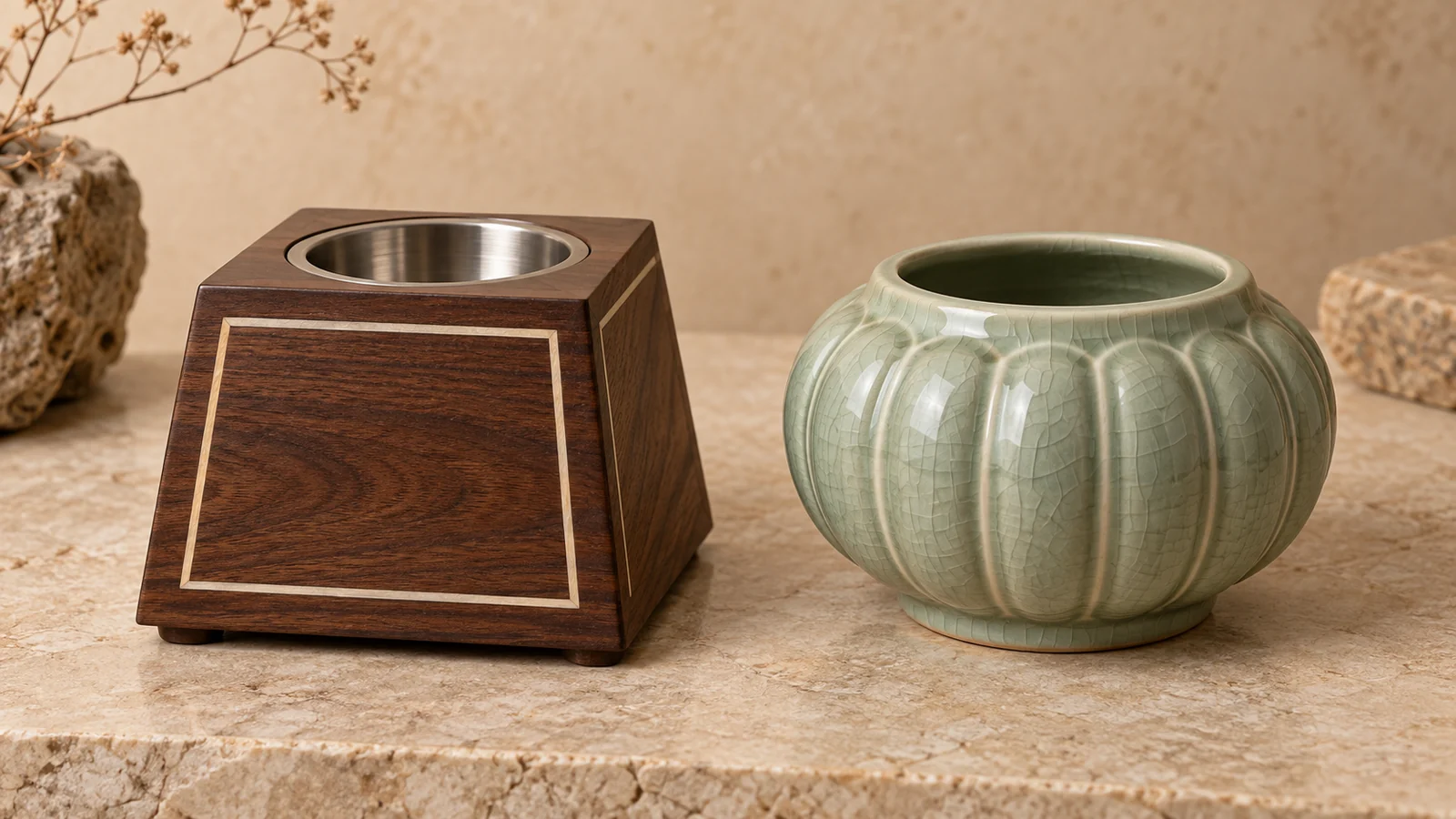

A wood vs ceramic incense burner comparison should start with the complete product, not a claim that one material is always better. A wooden design can provide a customized decorative housing and coordinated gift presentation; a ceramic design can suit a collection built around a fired vessel and its surface treatment. For bakhoor projects, neither description establishes which heat source the finished assembly accepts. Confirm that separately before comparing appearance, handling and procurement.
This guide compares product-development choices for brands and importers. It does not treat a wooden stick holder, a decorative bowl and a purpose-designed bakhoor burner as interchangeable. XRX’s wooden bakhoor burner range concerns wooden products and housings; ceramic manufacturing is not part of the confirmed capability described here.
Wood vs Ceramic Incense Burner: Quick Comparison
| Decision factor | Wooden design | Ceramic design | What buyers should compare |
|---|---|---|---|
| Product description | Identify the decorative housing, finish and separate internal components | Identify the ceramic body, surface treatment and any separate components | A complete assembly with an exact intended use |
| Appearance | Specify natural grain, veneer appearance or painted surfaces | Specify the body shape and actual glazed or decorated surface | Finished samples under the same viewing conditions |
| Branding | Review the proposed logo method on the chosen finish | Ask the ceramic supplier which decoration method suits its product | The actual design at its intended size and location |
| Handling | Review joints, edges, finish and component retention | Review body, rim and projecting details for handling vulnerability | The proposed product and its packing arrangement |
| Care | Distinguish exterior finish care from inner-vessel care | Distinguish body and decoration care from any separate inner components | Supplier-approved instructions for each component |
| Quotation | Confirm whether woodwork alone or a complete burner is included | Confirm whether a vessel alone or a complete burner is included | Equal scope, quantities and delivery requirements |
The useful comparison is between two specified proposals. A material label cannot tell you the product’s mass, surface temperature, service life or final cost.
The Exterior Material Is Only Part of the Assembly
Ask for a component drawing before choosing the exterior. In a wooden proposal, identify the housing and the intended inner vessel. In a ceramic proposal, establish whether the ceramic forms the working vessel, a decorative outer body or another part of the assembly. An attractive silhouette can conceal these differences.
Wood is combustible. The USDA Forest Products Laboratory’s Wood Handbook chapter on fire behavior discusses its thermal degradation and fire performance. That general material evidence is not an incense-burner test, but it is a clear reason not to specify bare decorative wood as an unverified charcoal-contact surface. Adding an unspecified metal cup does not, by itself, validate the whole product.
Likewise, “ceramic” is not an operating instruction. Ask the supplier to identify the intended incense and heating configuration for the exact product. Do not transfer approval from a ceramic stick holder or decorative pot to a charcoal burner simply because the material name matches.
The wooden burner design guide covers the separate heat-path development questions. Here, the purchasing rule is simpler: compare material directions only after both proposals have a defined function and supply scope.
Compare Finished Appearance, Not Material Swatches Alone
For woodwork, decide whether visible grain is part of the design or whether the brief calls for an opaque color. A clear-finished wood sample and a painted housing answer different visual briefs. Record the selected appearance and avoid changing the substrate or finish description casually between the quotation and sample.
XRX’s approved options include solid wood, veneered constructions and painted or clear-finished wooden products. Their availability for a particular burner shape still requires project review. A generic capability list is not approval for every combination of material, geometry and operating condition.
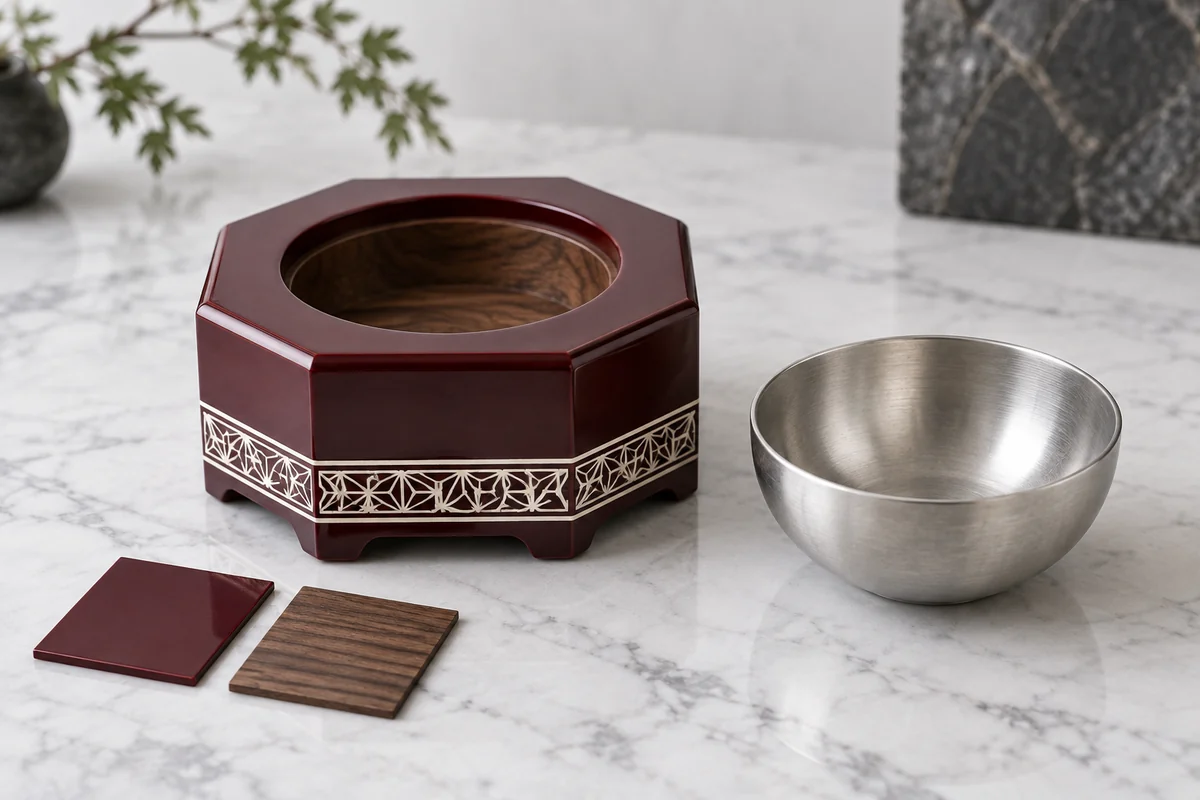
For ceramic, request the actual proposed surface, including any decoration. A color chip does not show how the finish appears around a curved wall, rim or molded detail. Use the product sample to decide whether those variations suit the collection, and agree what should remain consistent on repeat orders.
Make the comparison specific. Is the brand trying to coordinate the burner with a wooden presentation box, or does it want the burner to read as a ceramic vessel? Which areas carry the logo? Which surfaces will be prominent on the shelf? These questions give the sample review a purpose beyond selecting the more attractive photograph.
Handling and Care Need Different Checks
The Canadian Conservation Institute’s ceramics guidance describes ceramics as hard and brittle, with susceptibility to cracking or breaking on impact. It also distinguishes the body from applied decoration. This is general object-care guidance, not a shipping qualification or a burner-use approval. For a new product, it supports paying attention to the rim, projecting features and protection during handling.
For wood, the Institute’s wooden-object guidance explains moisture-related swelling and shrinkage and the vulnerability of finishes. Its furniture-care context should not be mistaken for a burner specification. Ask the woodwork supplier to review the actual construction, finish and expected storage environment.
Do not turn either observation into an unsupported ranking such as “wood never breaks” or “ceramic is maintenance-free.” Examine a cold sample for visible damage, loose components and the surfaces the user will handle. Agree the care method with the responsible supplier rather than applying one cleaner to the whole assembly.
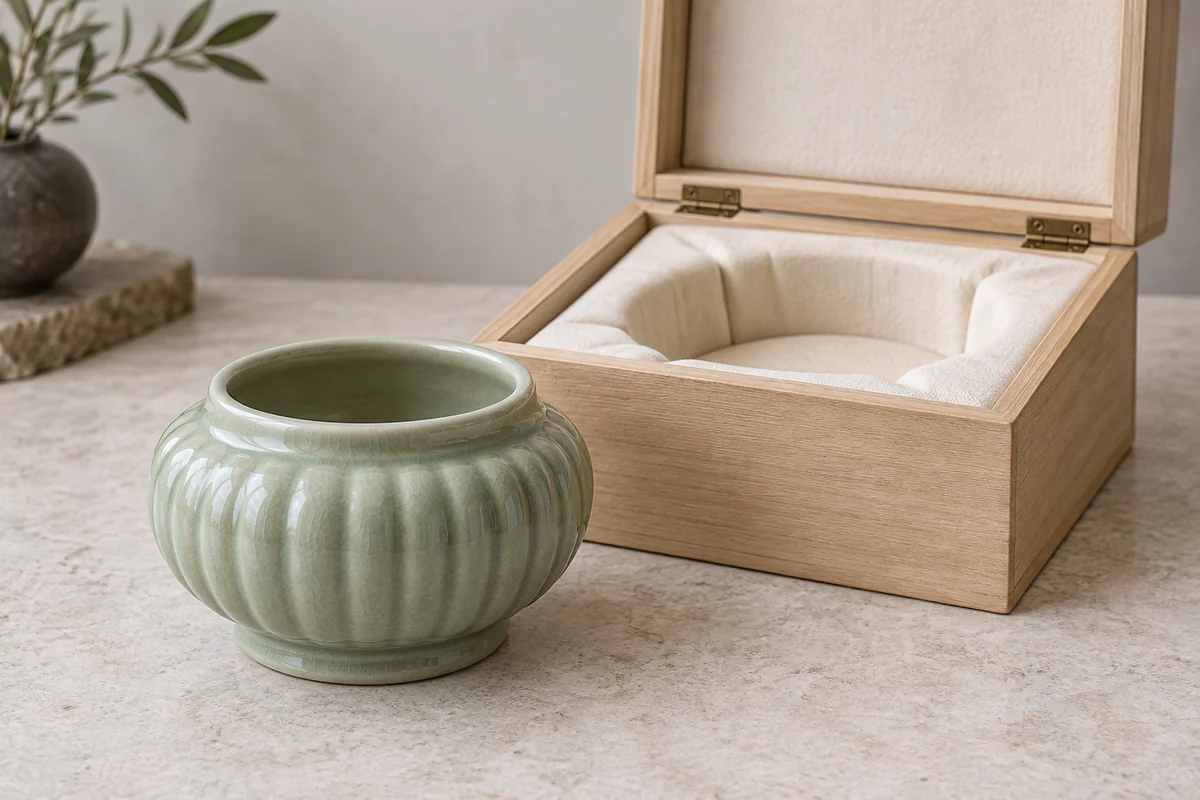
Also review the packed product. A presentation box that fits one proposal may not support another with a different rim, base or center of mass. Require a packing review for the selected assembly instead of carrying over an insert merely because the external dimensions look similar. The bakhoor gift-set packing guide explains that next step.
Compare Cost at the Same Scope
Request separate identification of the body, internal components, decoration, accessories, instructions and packaging. Then compare the total proposal at the same order quantity and finish requirements. A quote for a decorated wooden shell cannot be ranked against a finished ceramic burner that includes its accessories.
Ask each supplier which design changes affect its offer. A different silhouette, artwork method, surface treatment or component arrangement can change the production plan. Obtain project-specific answers instead of publishing a universal price difference between materials.
Use the same approach for delivery and replacement parts. State whether you need replacement cups, covers or complete units, and ask how the supplier identifies compatible versions. A visually similar substitute should not enter a repeat order without a review of the agreed assembly.
Which Direction Should Buyers Choose?
Shortlist a wooden design when a customized wooden exterior or coordinated wooden gift presentation is central to the brief. Specify the desired finish and branding, and keep the inner assembly and operating assessment explicit. This is a reason to choose a design direction, not a claim that wood improves the fragrance or eliminates heat-related risk.
Shortlist a ceramic design when the vessel’s ceramic form and surface are central to the collection. Work with a supplier that can identify the actual ceramic product and its intended use. Include handling, decoration and packing in the sample review rather than treating the body material as sufficient approval.
If both approaches meet the brief, choose between documented samples and comparable offers. If either proposal has an undefined function or incomplete supply list, resolve that gap first. Send XRX the wooden-product version of your brief with the intended assembly, finish, branding and packing requirements so the woodwork can be evaluated on a clear basis.
FAQ
Is a wooden incense burner automatically unsuitable for a bakhoor project?
Evaluate the complete design and intended use. A wooden decorative housing is different from an unverified bare-wood surface in contact with burning fuel. Ask for the specified inner assembly and evidence relevant to the finished product; a metal cup alone is not a complete approval.
Is every ceramic bowl suitable for burning bakhoor?
No. A ceramic material description does not establish that a product was designed for the intended heating configuration. Use a product with explicit supplier instructions for that purpose rather than substituting a decorative bowl or another kind of incense holder.
Which material gives a better fragrance?
Do not infer a fragrance result from the exterior material. Compare the actual incense, heating configuration and operating conditions. A wood-versus-ceramic appearance comparison cannot establish a scent-performance claim.
Which is cheaper, a wood or ceramic incense burner?
There is no reliable universal ranking for unspecified products. Compare complete quotations at the same quantity, including decoration, internal components, accessories, instructions and packaging. Confirm what each supplier has included or excluded.
Can XRX provide both wooden and ceramic burners?
XRX’s confirmed scope includes wooden burners, housings and coordinated wooden packaging. Ceramic manufacturing is not established by that scope. Identify any separately sourced ceramic or other components in the project brief rather than assuming they are included.