

This guide focuses on the decision between receiving a sample and releasing a wooden packaging project for production. The checklists below are practical buyer tools, not a prescribed certification procedure.
What should a golden sample actually approve?
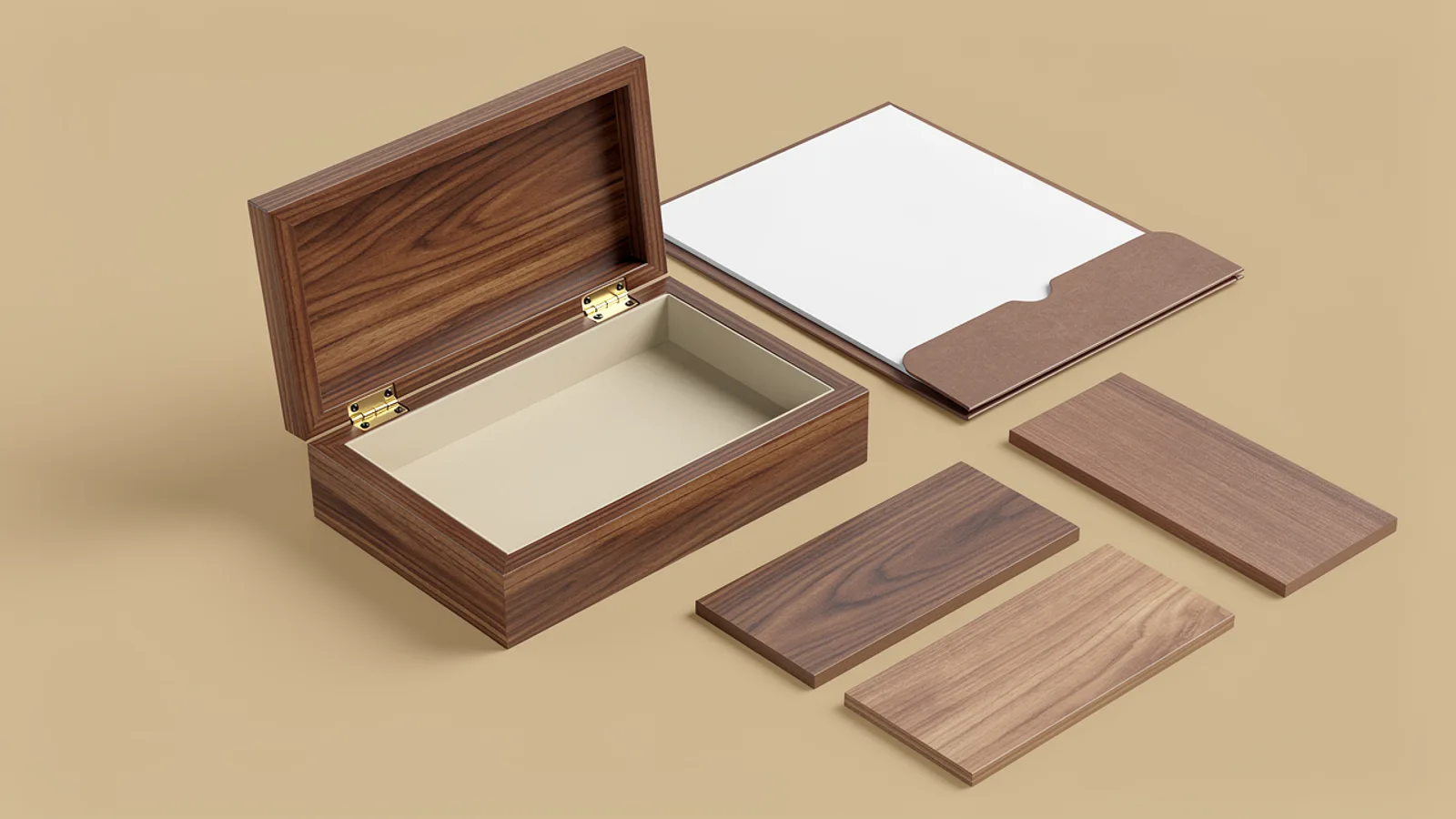
Begin with the sample’s purpose. A supplier may send a finish swatch, an unfinished shell or a complete presentation box at different stages. Calling each one an “approval sample” does not give them the same scope.
Ask what was made using the intended production materials and processes. If the sample uses temporary hardware, substitute lining or unfinished artwork, identify those differences before making a release decision.
| Sample received | What you can review | What remains separate |
|---|---|---|
| Finish swatch | The supplied surface’s color, sheen and texture | Complete-box appearance, construction and product fit |
| Empty box shell | Dimensions, assembly and installed closure components | Fit with the final insert, contents and accessories |
| Complete packed presentation sample | The assembled configuration, appearance and practical handling | Lot acceptance and any required durability or transport evidence |
Approval applies to the characteristics actually checked. Receiving a complete sample does not mean every property has been verified. For example, an attractive lining does not identify its composition or demonstrate compatibility with the product it touches.
If specifications are still being developed, use the custom wooden box RFQ checklist first. The task here is to confirm a defined configuration, rather than reopen the entire design brief.
Check the complete box with the intended contents
Review the sample as the person packing, opening and using it will encounter it. Keep the current drawing beside the physical box, and record measured results against the agreed dimensions and tolerances. Do not invent a universal clearance because another box happened to work with it.
Confirm the identity of everything inside
Use the intended product version, including its cap, sleeve, label or protective covering. List accessories and printed pieces that share the box. An earlier bottle with a different cap is a useful development aid, but it cannot establish fit for the final bottle-and-cap combination.
If genuine contents are unavailable, identify the substitute and its limitations. A dimensionally similar dummy may help review space; it does not necessarily represent weight, surface contact or handling behavior. Keep the affected checks pending until suitable evidence is available.
Review fit, access and closure together
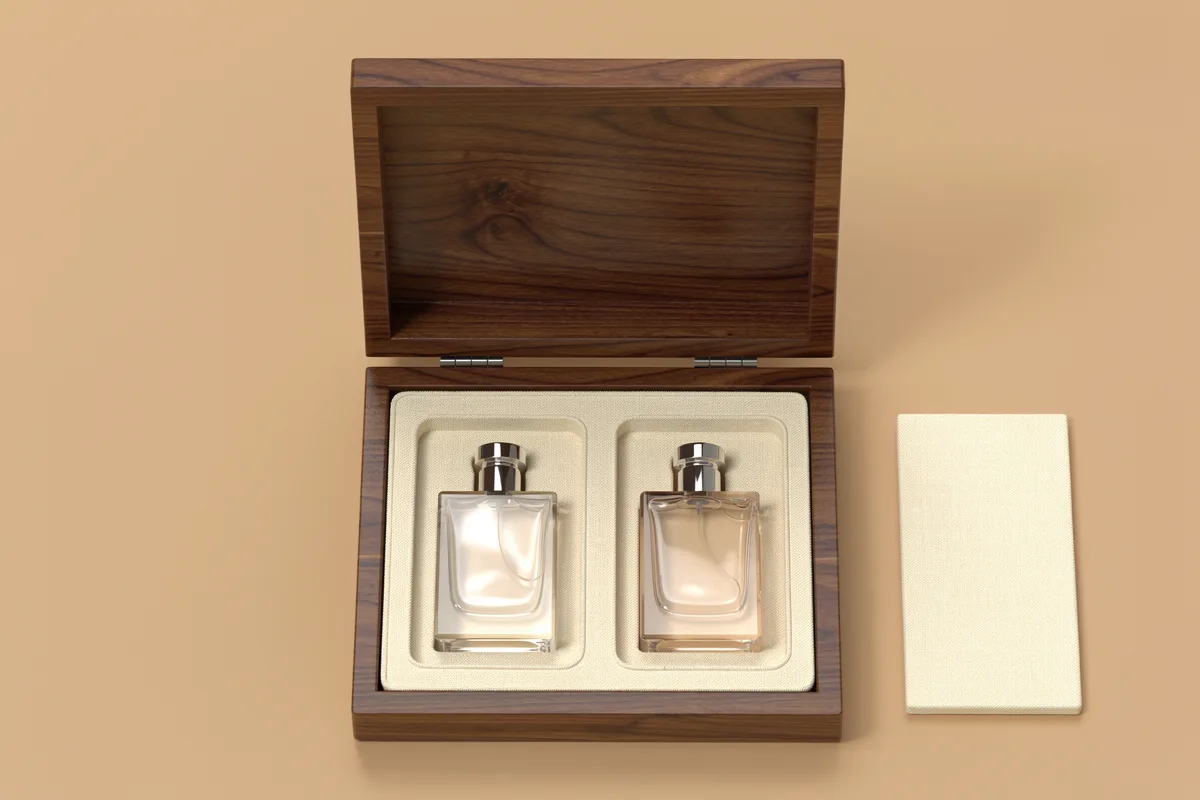
Place the contents in the insert, remove them and repeat the intended packing sequence. Check whether a user can grip the product without pulling on a vulnerable cap, label or decorative feature. Close the lid normally and investigate interference instead of forcing it shut.
Look at the relationship between the product, insert and lid. A liner substitution can change the space available around a product; a revised cap can change the height needed above it. These are reasons to repeat the affected fit checks, not predictions that every substitution will fail.
For perfume projects, the wooden perfume box insert guide covers insert selection. Sample approval should then verify the selected arrangement with the actual contents.
Record functional observations precisely
Replace “the hardware feels fine” with a description of what was checked: lid alignment, hinge movement, latch engagement or contact between neighboring components. Note the sample ID and the configuration used.
A few handling checks establish observations about that sample. They do not establish a rated opening-cycle life, load capacity or transport performance. Where those properties matter, agree the method and acceptance criteria separately.
Agree appearance limits without relying on one photograph
A reference box helps explain the desired appearance, but buyers also need boundaries for acceptable variation. Specify which surfaces matter most: the lid face, front edge, interior, underside or areas visible when the box opens.
For natural wood or veneer, describe the intended grain presentation and any unacceptable features. Do not use “natural variation” as blanket permission for scratches, glue marks or a finish outside the agreed appearance range. If one sample cannot communicate the range, agree additional reference pieces and label their purpose.
The USDA Forest Products Laboratory’s chapter on finishing wood treats appearance, wood properties and finish selection as connected considerations. For buyers, that supports reviewing the actual material-and-finish combination rather than assuming the same finish name produces the same appearance on every substrate.
Agree how visual comparisons will be made. ASTM D1729-22 addresses visual color appraisal of diffusely illuminated opaque materials. Its published scope supports a controlled approach to comparison; it does not provide a universal acceptance tolerance for your wooden box. Metallic or pearlescent effects also require separate consideration because their directional appearance falls outside that scope.
Keep photographs for identification, location of defects and communication. For an appearance dispute, compare the retained references under the agreed conditions. Do not let an edited photograph silently replace the approved physical finish reference.
Attach a short approval record to the physical sample
The most useful approval record makes it possible for someone who missed the sample discussion to understand the production decision. Use the same sample identifier on the reference label, photographs and record. Attach labels where they will not obscure an area being inspected.
| Field | What to enter | Why it matters |
|---|---|---|
| Sample ID | Project, product configuration, sample ID and revision | Separates the current reference from development samples |
| Files | Drawing, bill of materials and artwork revisions | Identifies the specification that accompanies the box |
| Finish | Finish or swatch IDs and agreed variation limits | Clarifies what a visual comparison should establish |
| Contents | Product, cap, accessory and insert versions | Makes the checked combination reproducible |
| Decision | Approved scope, unresolved items and release limits | Prevents partial approval from becoming a general release |
| Sign-off | Approver, date and reference holder | Makes the decision and physical sample traceable |
The bill of materials is the list of specified materials and components. It should identify the relevant substrate, finish, lining and hardware without relying only on broad labels such as “premium wood” or “soft insert.”
At XRX, custom wooden projects can involve choices across structure, materials, finish, branding, hardware and lining. Reviewing those choices as one configuration is therefore more useful than signing a box while leaving its component versions unclear.
Agree how document conflicts will be resolved. If the drawing and physical sample differ, record the discrepancy and obtain a clear decision before production uses either as the reference. Avoid an undefined instruction such as “follow the sample” when the sample contains a known temporary part.
Use explicit release wording: approved for the listed scope; limited approval with identified restrictions; or not approved. If an item is outstanding, name who must resolve it and what evidence is needed. A comment such as “change the logo later” leaves the final artwork and its approval unresolved.
Review changes by their effect on the approved configuration
After approval, a proposed change should identify the affected part, the reason, the applicable orders and the checks that may no longer be represented by the reference. The amount of rechecking should follow the change’s consequences.
| Proposed change | Review these relationships | Evidence to consider |
|---|---|---|
| Different lining or insert | Product contact, seating, removal and lid clearance | Updated specification and fit review using the revised assembly |
| Different hinge or latch | Mounting, lid movement, alignment and engagement | Component identification and affected assembly checks |
| Revised artwork | Content, scale, location and application method | Approved artwork revision and suitable production proof |
| Different packing arrangement | Box protection, contents and distribution configuration | Updated packing instructions and review of applicable test evidence |
Do not assume that artwork is always a low-risk change. A revised product identifier or required marking can matter more than a decorative color adjustment. Likewise, a small component change can affect an important interface.
Example: changing the lining after approval
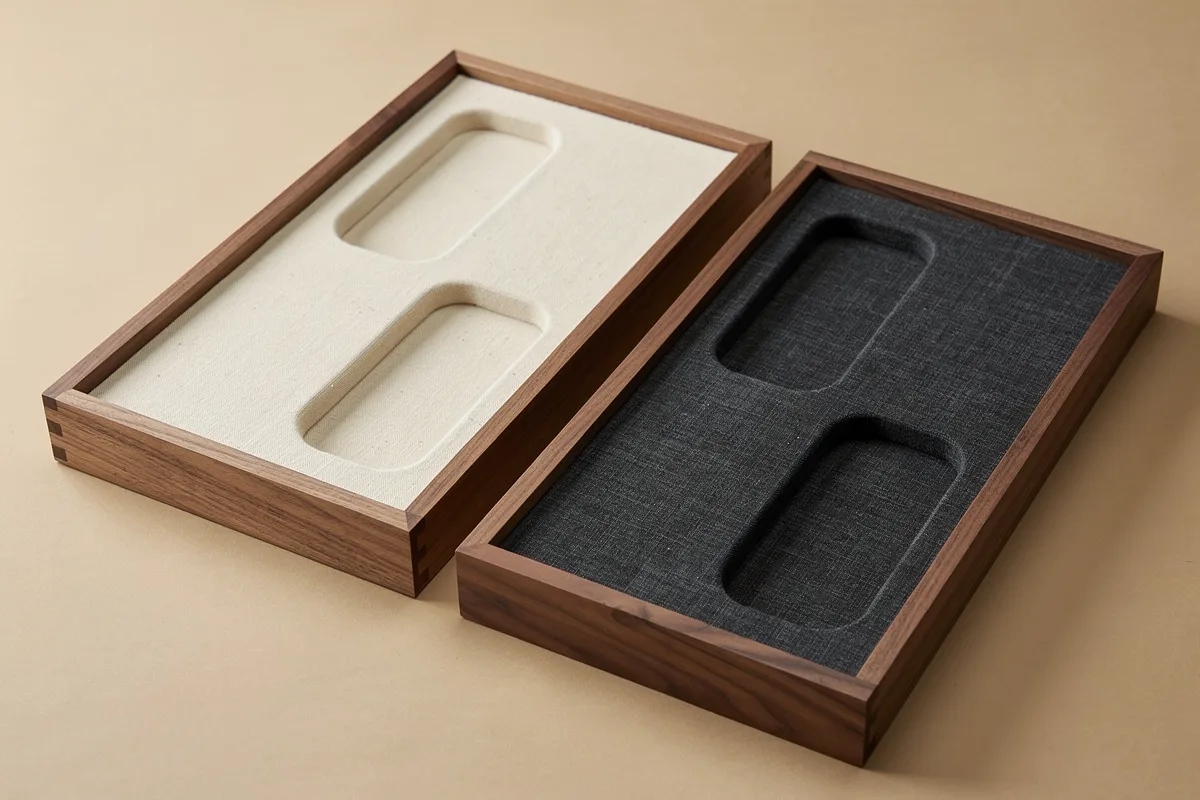
Consider a hypothetical two-bottle wooden gift box. Its cream lining has been approved, and the buyer requests a charcoal alternative. This is an illustration of a decision process, not an XRX customer case.
First establish whether only the color changes or whether the fabric, backing, thickness or insert construction also changes. If the replacement changes how the bottle sits or is gripped, review the revised insert with the intended bottles. Check removal and normal lid closure, then record the result against the new component version.
If the change affects protective performance, ask whether existing transport evidence still represents the revised configuration. Do not automatically claim that everything remains validated, or prescribe a complete retest without reviewing what changed.
Once the decision is made, identify the effective order or batch and update the reference documents. Mark superseded samples clearly so they cannot accidentally guide current inspection. Record how any components already made to the earlier revision will be handled.
Keep sample approval separate from shipment acceptance
A golden sample describes the agreed target for specified characteristics. A production inspection assesses the goods that were actually made. These are related decisions, but they use different evidence.
NIST describes lot acceptance sampling as making acceptance or rejection decisions about individual lots. Approving a selected reference box is not that process. Before production, agree the inspection scope, defect definitions, applicable sampling approach and reporting requirements with the responsible parties. This guide does not prescribe an AQL or sample quantity.
Transport performance is another separate question. ISTA distinguishes screening and simulation test procedures, with selection depending on the purpose and distribution conditions. Closing a presentation box with its contents inside does not expose it to those test conditions. Where shipping protection matters, review the complete intended product-and-package arrangement, including the outer shipping protection.
Protect the retained reference from unnecessary handling and document any damage or alteration. If it becomes unreliable for comparison, agree a replacement and link it to the same controlled records or an approved new revision. Do not quietly repair the reference and continue treating it as unchanged.
Before you release the order
Confirm that the sample, drawings, component list and approval record describe the same configuration. Make any unresolved items visible, confirm who holds the inspection reference and communicate approved changes before production or inspection relies on them.
For an XRX project, review the available custom wooden packaging options and bring the intended contents and current specification into the sample discussion. You can contact XRX with the sample revision, photographs and the specific checks or changes you need reviewed.
Frequently asked questions
Is a golden sample the same as a pre-production sample?
The terms can overlap, so define them in the project. A pre-production sample may still be under review. Treat it as the approved reference only after its identity, approval scope and linked specification are recorded.
Can I approve a wooden box from photographs alone?
Photographs can support limited visual decisions and document an identified sample. They do not replace physical fit checks, measurements or performance evidence. State what a remote approval covers and what remains unresolved.
Does the sample need the actual product inside?
Use the intended product version for final fit review, including its closure and accessories. If a substitute is used, record which characteristics it represents and which checks still require the actual contents.
Must every production box look identical to the golden sample?
Judge production against the agreed sample and written acceptance limits. Define acceptable wood and finish variation explicitly; neither perfect visual duplication nor unrestricted natural variation should be assumed.
Do changes after approval require a new sample?
Review the affected characteristics first. Update the documents and obtain the evidence needed for the changed configuration. Where the physical reference no longer represents an approved characteristic, replace or supplement it with a clearly identified approved reference.
Does golden sample approval replace final inspection?
No. Sample approval defines the reference and its scope. Production inspection assesses the goods made against the agreed requirements; transport testing, where required, addresses a separate performance question.