
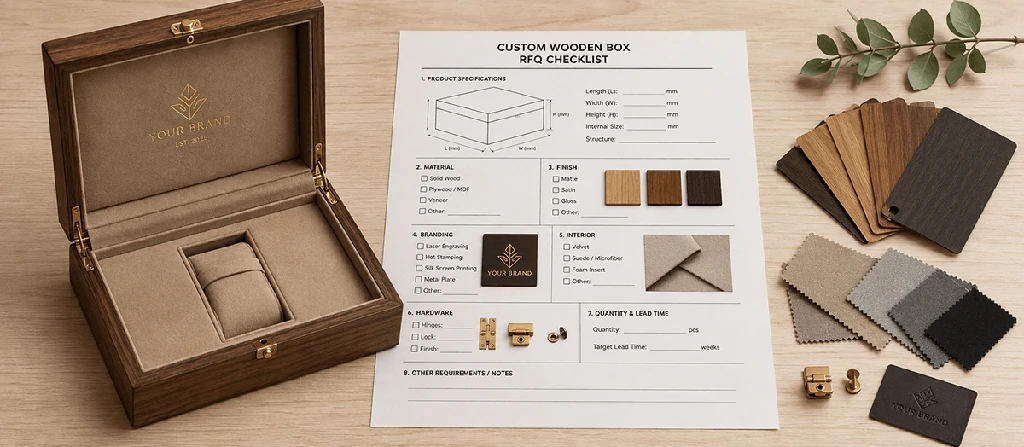

Start with the Product Going Inside the Box
Begin with the item the box must hold, not only the outside appearance. Send the product name, drawings or controlled dimensions, clear photographs, filled or assembled weight, and the smallest and largest approved variants if one box will serve more than one SKU.
Specify:
- overall product height, width, depth, or diameter;
- weight in the packed or assembled condition that matters to the box;
- fragile surfaces, labels, finishes, protrusions, closures, and no-contact areas;
- the intended orientation and whether the item must remain aligned during presentation;
- accessories, literature, tools, bottles, or components that share the package;
- the quantity of each item in one box and the quantity per outer shipping carton.
A production-representative sample is useful when fit, contact points, or removal access matter. If a physical sample is unavailable, send a controlled drawing, 3D file, or a dimensioned specification rather than asking a supplier to infer cavity dimensions from a catalog photograph. An image can support a preliminary concept, but the quotation should identify what remains assumed.
Define the Box Structure and Opening Experience
“Wooden box” is not a complete structure specification. State the preferred format or ask the manufacturer to propose alternatives. Your RFQ should identify whether the project needs a hinged presentation box, lift-off lid, slide-out drawer, book-style opening, removable tray, or another arrangement.
Then specify the internal and external dimensions you know, along with the usable space required for the product and accessories. Include lid clearance, base support, dividers, removable components, finger access, ribbon or pull-tab requirements, and the expected opening direction.
Hardware is part of the structure, not a late decoration decision. Identify the preferred hinge, clasp, magnet, handle, or other fitting if known. If the hardware is still open, ask for options with their visible finish, placement, clearance, and sample implications. The approved sample should confirm that the lid, fittings, insert, and product work together; a hardware name alone does not establish the final geometry.
Specify Material as a Project Requirement
A wooden box quotation should state the proposed material or ask for a controlled comparison. Relevant fields may include MDF, plywood, solid wood, veneer-faced board, or a combination of materials. Also identify whether the wood is visible, painted, veneered, lined, or used only for a structural component.
Do not treat the material name as a complete performance specification. The same broad material category can be used in different constructions, thicknesses, finishes, and internal layouts. Ask the supplier to state the proposed construction, visible faces, joinery or panel treatment, and any material substitutions that would require approval.
When the proposed construction uses a real-wood face over MDF or another core, use the wood veneer for wooden boxes buying guide to define species, cut, leaf matching, visible faces, edges, finish, and sample standards.
If the box will be imported into a specific market, name that market in the RFQ. For example, USDA APHIS wood packaging guidance is a starting point for market-specific review, not a substitute for checking the current rule for the exact material and shipment.
Separate Finish, Branding, Interior, and Hardware
List each visible and functional option separately instead of writing “luxury finish” or attaching one reference photograph. Specify:
- color or color references;
- matte, gloss, piano lacquer, stain, veneer, paint, or other surface direction;
- acceptable visible wood-grain direction where relevant;
- logo method, artwork file, logo position, and minimum detail requirements;
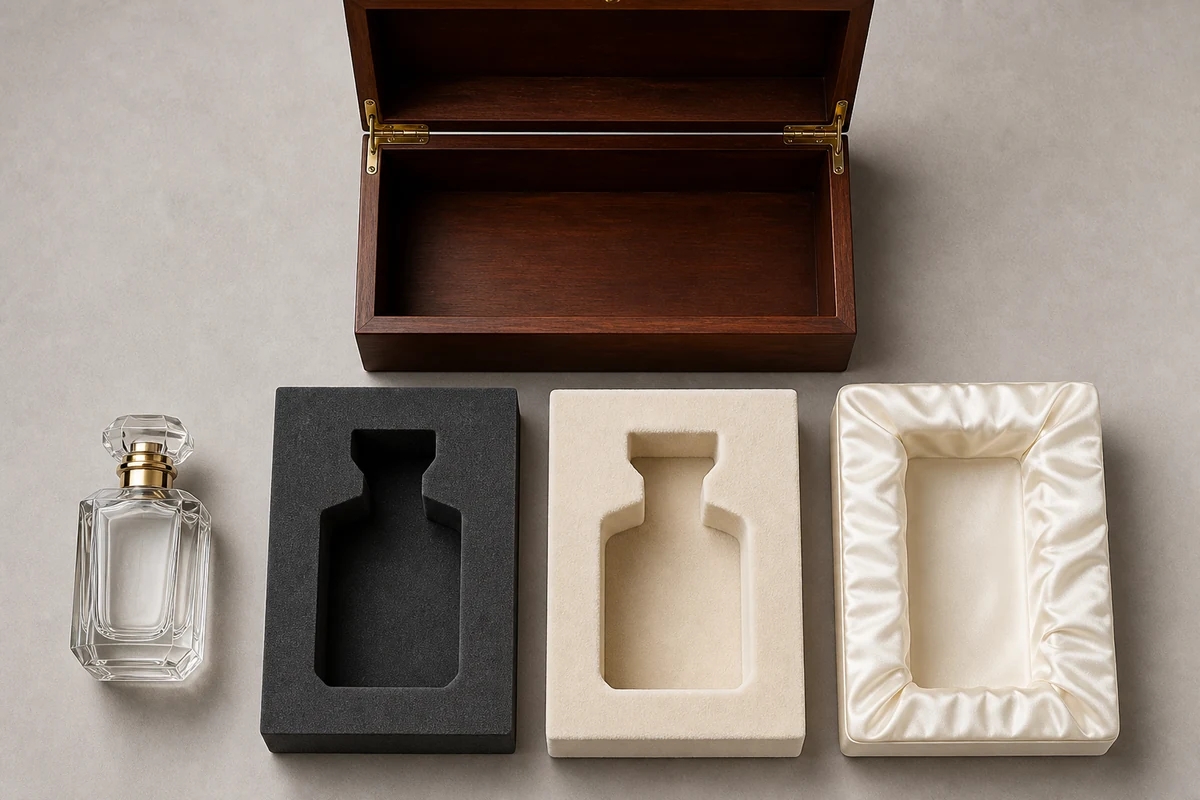
- interior lining, foam, EVA, fabric, paper, divider, tray, or accessory cavity;
- hinge, clasp, magnet, handle, ribbon, feet, or other hardware;
- any protected label, print, foil, or decoration zone.
This separation helps the manufacturer quote the actual scope and identify decisions that need a sample. It also prevents a material, finish, or insert description from being mistaken for a guarantee about durability, odor, moisture behavior, transit protection, or product safety.
Provide vector artwork when available and state which colors, logo positions, and interior materials are fixed versus optional. If the brand team has a physical color standard or approved sample, explain how it will be used during approval. Do not request a final color match from a screen image alone without acknowledging that the reference is conditional.
State the Packaging Duty: Presentation, Handover, or Distribution
The RFQ must say what the wooden box is expected to do. At minimum, distinguish:
- Presentation duty: appearance, alignment, unboxing, access, finish, and display.
- Gift handover duty: closure security, carrying orientation, accessory restraint, and expected short-distance handling.
- Distribution duty: complete pack-out, outer carton, cushioning, quantity per shipper, route, storage environment, and acceptance test.
Internal packaging materials can perform different jobs, including cushioning, void filling, surface protection, and separation. DHL’s packaging guidance is useful when breaking these functions into RFQ fields. For fragile parcel shipments, FedEx’s packaging guide recommends individual cushioning, keeping products away from container surfaces, and using an appropriate outer container.
A presentation box can organize and protect a product during expected handling without being the complete parcel-shipping system. If transport performance matters, describe the complete packed unit and intended distribution environment. ISTA’s design and testing guidance explains why shipping, handling, and storage conditions matter when selecting and interpreting tests. The public scope of ASTM D4169 concerns shipping units evaluated through anticipated distribution hazards; it does not turn one insert material into a universal shipping solution.
Include Quantity, SKU, and Sample Information
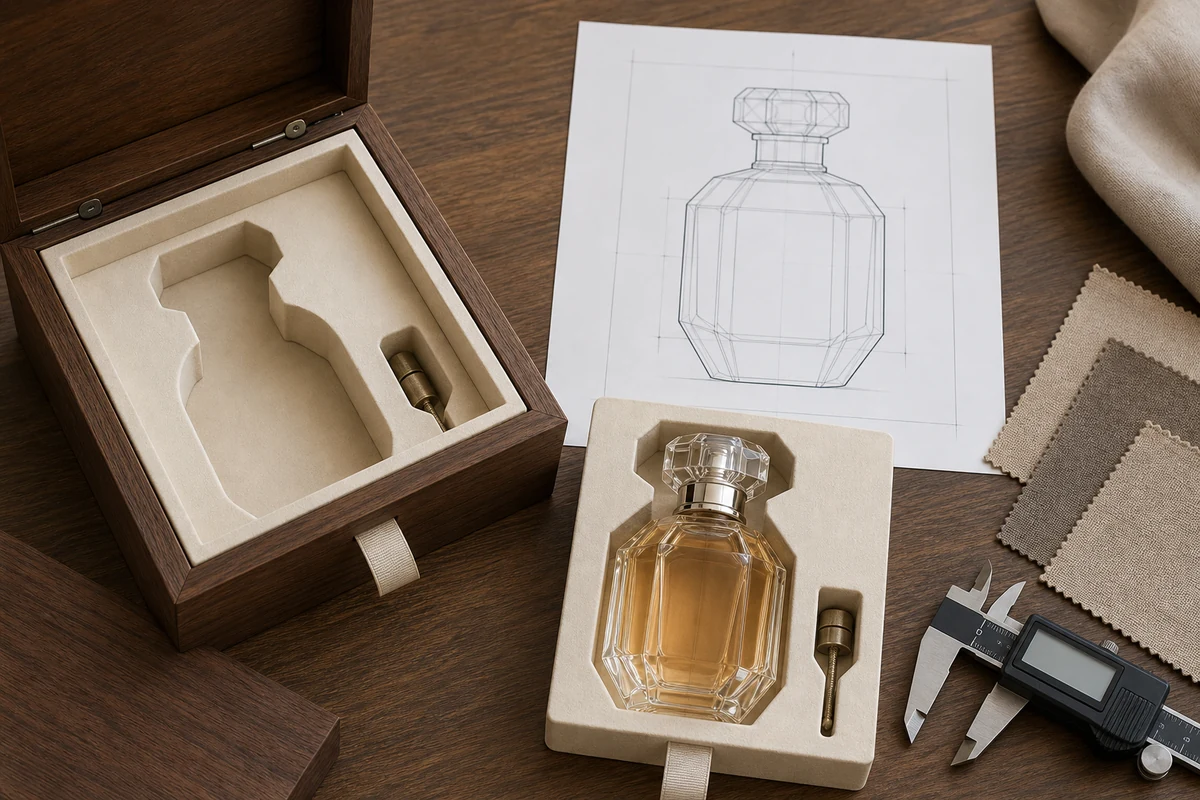
A quote request should state the estimated order quantity, number of SKUs, planned repeat orders, and whether all SKUs share a structure or require separate tooling and inserts. If the quantity is not final, provide a realistic range and label it as an estimate.
Also specify:
- requested sample quantity;
- whether the sample must use production-representative materials and hardware;
- who supplies the product, bottle, accessory, or color standard for the sample;
- which dimensions, fit points, finish details, and logo positions must be approved;
- what happens if the product, artwork, material, or insert changes later.
Do not invent or demand a universal MOQ. Ask the manufacturer to state MOQ by SKU, sample cost, tooling or development charges, repeat-order conditions, and any assumptions behind the quotation. A lower unit price is not comparable if it depends on a different material, simplified insert, higher quantity, or excluded packaging step.
Add Destination, Delivery, and Documentation Requirements
Name the destination country, delivery city or port, preferred shipping method, required delivery date, and whether the quotation should include export packing, freight, insurance, duties, or other charges. If a trade term is proposed, state the named place or port precisely. ICC’s Incoterms 2020 information explains that the rules allocate defined delivery responsibilities; the commercial term should not be left as an unexplained abbreviation.
State any destination-market requirements that may affect the project, including wood-packaging treatment or marking, labeling, documentation, or packaging-waste obligations. These requirements can change by market, material, shipment type, and date. Ask for confirmation of the assumed scope, but do not ask the manufacturer to provide a blanket legal conclusion for every destination.
Ask for a Comparable Quotation
End the RFQ by defining what the quotation must show. Request:
- unit price and currency;
- price basis and quantity breaks;
- tooling, development, and sample charges;
- material and construction assumptions;
- included insert, finish, branding, hardware, and outer packaging;
- MOQ by SKU;
- estimated sample and production lead times, clearly marked as estimates;
- packing dimensions or shipping information if available;
- delivery term and named place;
- quotation validity;
- exclusions, open questions, and information still required.
This format does not guarantee that every supplier will respond in the same template. It gives the buyer a basis for comparing what each number includes. Require the supplier to flag substitutions or assumptions rather than silently changing the brief.
Copy-and-Send RFQ Checklist
Before sending the inquiry, confirm that it contains:
- product drawings, photos, samples, dimensions, weight, and approved variants;
- box type, dimensions, opening direction, lid clearance, and internal layout;
- material, construction, finish, color, lining, logo, and hardware requirements;
- product quantity per box, SKU count, estimated order quantity, and repeat-order expectations;
- presentation, handover, and distribution duties;
- outer shipping-pack requirements and any test protocol, if transport performance is required;
- target market, destination, delivery date, shipping method, and named delivery place;
- sample quantity, approval criteria, and change-control process;
- quotation format, inclusions, exclusions, MOQ, lead-time assumptions, and validity.
The custom wooden packaging boxes Pillar page is the appropriate main internal reference for the product scope. The RFQ itself should still contain the project-specific dimensions and approval requirements rather than relying on a general product page.
Frequently Asked Questions
Can a manufacturer quote a custom wooden box from one reference image?
A manufacturer may provide a conditional concept estimate, but one image usually does not define dimensions, materials, structure, insert geometry, tolerances, quantity, or delivery scope. Label the assumptions and provide controlled product and packaging information before treating the quotation as comparable.
What dimensions should buyers include in a wooden box RFQ?
Include the product’s overall dimensions, weight, protrusions, closures, no-contact zones, orientation, and smallest and largest approved variants. Also provide known internal and external box dimensions, lid clearance, insert space, and accessory locations.
Should the RFQ specify the wood material?
Yes, either state the required material and construction or ask for clearly separated alternatives. Identify visible faces, board or wood direction where relevant, finish, lining, and any allowed substitutions. A broad material name alone does not define the complete box specification.
Do buyers need to specify the insert and lining?
Yes. State whether the insert is structural, decorative, cushioning, or a combination; identify the preferred material; and describe contact zones, removal access, protected surfaces, and accessory cavities. Do not assume decorative fill provides validated transport protection.
What should a buyer request for the sample?
Request the sample quantity, production-representative materials and hardware where required, the product or dummy used for fit checking, logo and finish references, approval criteria, and the process for recording corrections. Review the approved configuration before any later substitution.
Does a wooden presentation box need a separate shipping package?
Not always, but a presentation box should not automatically be treated as a complete parcel-shipping system. If distribution protection is required, specify the outer carton, cushioning, route, handling environment, pack-out, and acceptance test as a separate duty.
With these fields defined, buyers can send a complete custom wooden box RFQ for a structured project review instead of asking a supplier to price an undefined reference image.