
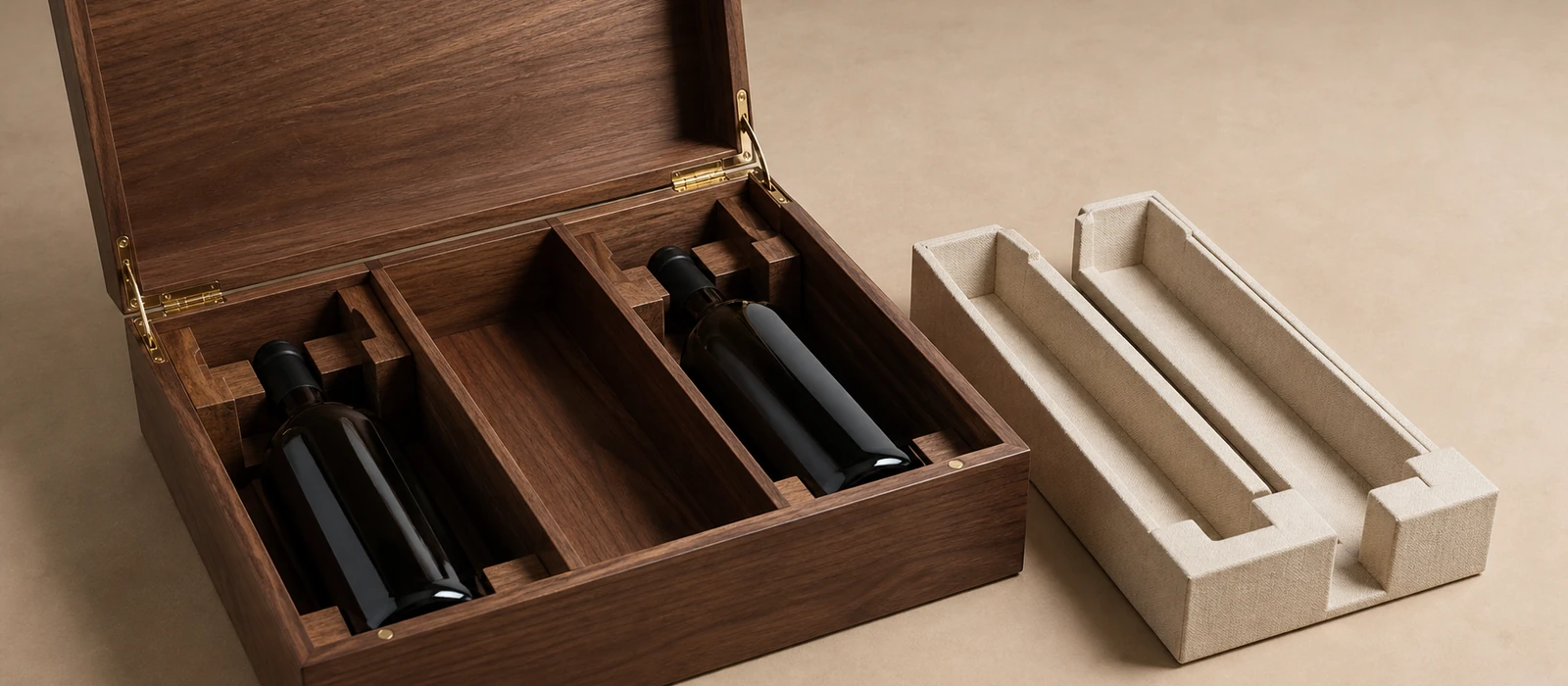

Start with the Actual Bottle, Not a Capacity Label
Nominal capacity does not define the occupied space inside a box. Two bottles with the same stated volume may have different diameters, shoulders, punt depths, neck lengths, closures, labels, and weights. Before a supplier develops the internal layout, provide:
- overall bottle height, including the closure;
- maximum body diameter or the maximum width and depth of a non-round bottle;
- base diameter and any punt or raised base features;
- shoulder position and profile;
- neck and closure dimensions;
- filled bottle weight;
- label, print, foil, embossing, or decoration zones that should not rub against the insert;
- intended orientation in the box; and
- the smallest and largest approved bottle variants if one package will serve several products.
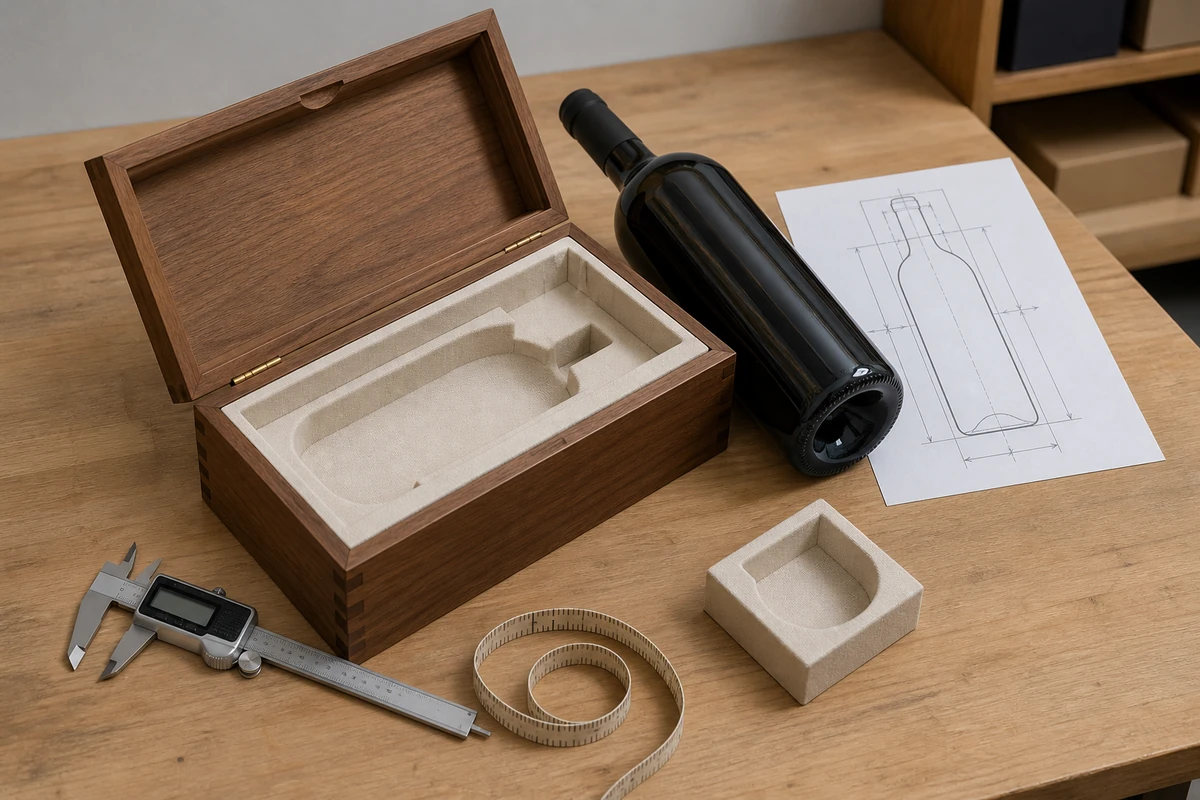
A production-representative bottle sample is preferable to measurements alone. Otherwise, send a controlled drawing or 3D file, clear photos, and the approved dimensional range. A supplier should not infer cavity dimensions from a catalog photo.
Also state whether the box will hold a bare bottle, a bottle in a bag or sleeve, or a bottle with accessories. Each added layer changes the fit. If the project includes a stopper, glass, opener, booklet, or tasting accessory, provide its dimensions and approved orientation as a separate item.
Choose the Insert by Its Job
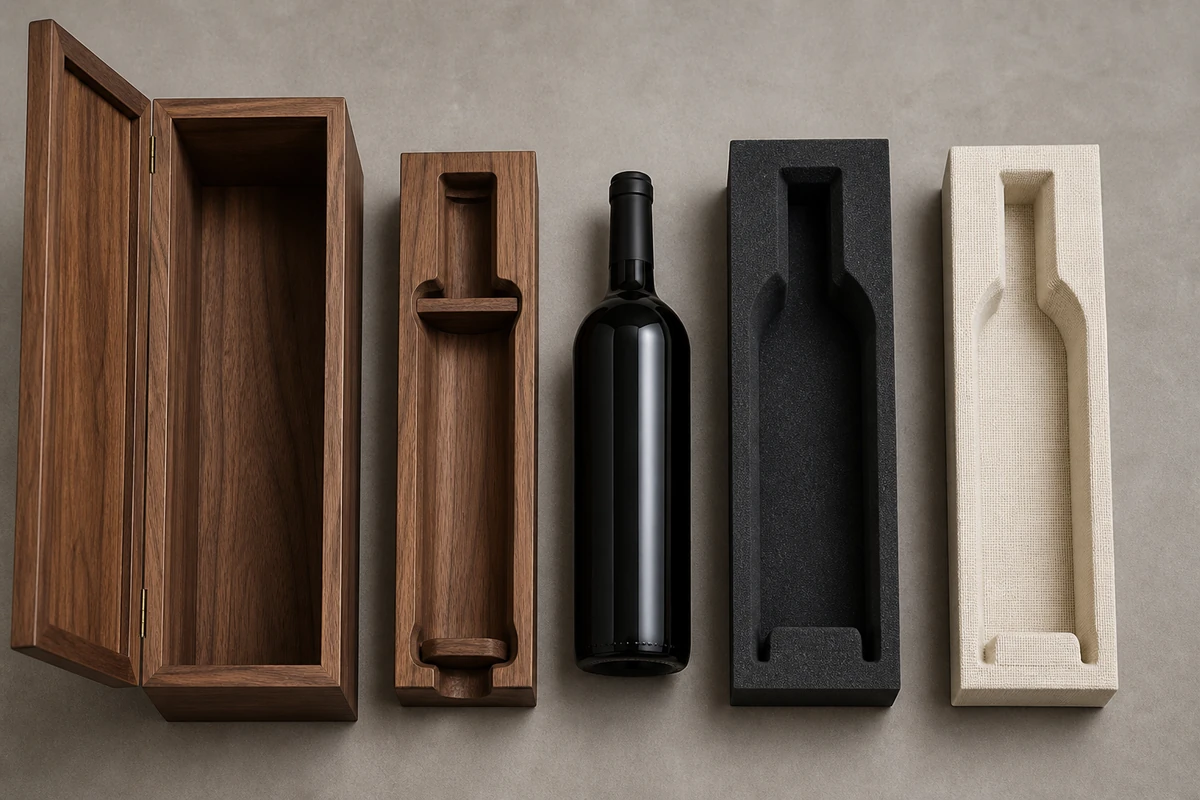
Internal packaging does not have one universal function. A wine box foam insert and a wooden wine gift box lining combine structural and visual decisions. DHL’s packaging guidance distinguishes cushioning, void filling, protection, and separation as different jobs for internal materials. In its U.S. requirements for approved wine shippers, UPS lists several inner-packaging architectures, including molded foam, folded corrugated trays, molded-fiber trays with dividers, and thermoformed trays. These examples show why buyers should specify the function first; they do not make every option suitable for a wooden presentation box.
| Insert option | Best suited to | What the buyer should approve |
|---|---|---|
| Wooden divider or fitted rail | Organizing bottles, creating a premium all-wood interior, and separating regular bottle forms | Divider position, edge finish, bottle contact points, rattle, removal access, and attachment method |
| Die-cut foam or EVA cavity | Following an irregular profile, supporting accessories, and creating controlled contact zones | Material appearance, cavity geometry, compression, odor requirement, surface covering, and removal method |
| Fabric-covered foam | Combining shaped support with a softer visual surface | Fabric color, seam and edge treatment, adhesive visibility, wrinkle control, and contact with labels or decoration |
| Molded or folded tray | Repeatable positioning where the project permits a separate tray component | Tray material, bottle orientation, retention points, assembly, and compatibility with the wooden shell |
| Decorative paper, textile, or loose fill | Visual staging and filling noncritical space | Appearance, shedding, dust, movement, and whether a separate structural restraint is still required |
A rigid wine bottle box divider can establish cells and prevent direct bottle-to-bottle contact, but rigidity is not the same as cushioning. Foam can conform around a bottle, but an over-tight cavity may make loading difficult or place pressure on labels and decoration. Decorative fill can improve presentation, but it should not be treated as validated transit protection unless the complete shipping configuration has been approved for that duty.
Single-Bottle and Multi-Bottle Layouts Need Different Restraint
A single-bottle presentation box often needs a base support, one or more body contact zones, and enough access to lift the bottle without pulling its closure. The neck may help locate the bottle, but it should not automatically become the only restraint point. The approved load path should follow the bottle geometry and handling duty.
For a horizontal layout, check whether the shoulder, body, and base are supported without concentrating contact on a label edge or decorative feature. For a vertical presentation, check the base seat, available headroom, lid clearance, and the effect of opening and closing the box. A removable ribbon or finger recess can improve access, but it must be positioned so it does not bunch under the bottle or cover branding.
Multi-bottle boxes add another requirement: each bottle needs its own controlled zone. A center divider may be sufficient for a carefully handled two-bottle gift box, while a larger set may need a cell structure, base tray, top restraint, or separate outer shipping pack. Accessories should have dedicated cavities or compartments so metal tools, glassware, or printed materials do not move against the bottles.
Do not approve the layout only while the box rests open on a table. Close the lid, lift it in the expected handling orientations, and check whether anything moves. This is not a transport test.
Build Allowance into the Approved Sample
An insert that matches one bottle with zero practical allowance may fail during routine packing. The approved cavity must account for the dimensional range of the bottles, the insert material, any fabric or sleeve, assembly variation, and the surface areas that must remain protected.
There is no universal clearance value for every wooden wine box. Foam compression, wooden-divider rigidity, fabric thickness, bottle geometry, and finish sensitivity all change the required fit. Instead of requesting an arbitrary gap, approve outcomes:
- the largest approved bottle can be loaded without forcing it;
- the smallest approved bottle does not move beyond the agreed limit during normal presentation handling;
- labels, foil, printing, and bottle decoration do not scrape against exposed edges;
- the lid closes without contacting the closure or accessories;
- the bottle can be removed without pulling the neck, tearing the lining, or using a tool; and
- the insert returns to an acceptable appearance after the agreed number of sample loading cycles.
Use the actual product range during sample approval. If the bottle supplier changes the mold, closure, label construction, or decoration, review the fit before applying the previous approval to the new configuration.
Display Packaging and Transport Protection Are Different Jobs
A wooden gift box can organize and present a bottle without being the complete parcel-shipping system. FedEx’s general packing guide advises that fragile items be individually cushioned, centered away from other items and container surfaces, and placed within an appropriate outer shipping container. UPS’s wine guidance similarly describes inner components that hold bottles toward the center of a sturdy corrugated shipper.
This distinction should be explicit in the RFQ:
- Presentation duty: approve bottle fit, visual alignment, lining quality, access, hardware, finish, and the unboxing experience.
- Gift handover duty: add the expected carrying orientation, closure security, accessory restraint, and short-distance handling assumptions.
- Distribution duty: define the complete pack-out, outer carton, cushioning, quantity per shipper, pallet or parcel route, environmental conditions, and acceptance test.
When a transport-performance claim is required, test the complete shipping unit rather than the wooden insert alone. The public scope of ASTM D4169-23e1 describes evaluation through anticipated hazards in distribution cycles. ISTA advises selecting tests with the actual shipping, handling, and storage environment in mind. Neither source establishes that one insert style protects every bottle on every route.
If comparative measurements are sensitive to environmental exposure, the plan may also need defined conditioning. ASTM D4332-22 explains that temperature and relative humidity can change packaging-material properties, especially for cellulosic materials, and that specified conditioning supports meaningful and reproducible measurements.
What Buyers Should Put in the RFQ
An actionable custom wine bottle packaging RFQ needs more than an exterior image. Send the supplier:
- bottle drawings, dimensions, filled weight, photos, and a physical sample when available;
- bottle quantity, orientation, and the smallest and largest variants using the box;
- the required duty: presentation, gift handover, transport, or a defined combination;
- preferred insert concept, such as wood dividers, fitted foam, fabric-covered foam, or a removable tray;
- protected surfaces and no-contact zones around labels, foil, print, embossing, and closures;
- accessories, literature, and their required positions;
- outer box structure, internal dimensions, lid clearance, hardware, finish, and branding method;
- surface color, lining color, fabric direction, visible seams, and acceptable exposed edges;
- intended sales and distribution channel;
- separate outer shipping-pack requirements and test protocol, if transport performance is part of the brief;
- sample quantity and the approval checks the buyer will perform; and
- change-control requirements for bottle, insert, material, or geometry substitutions.
The wooden wine box customization page can help establish the outer structure and finish direction, while the wine and spirits product archive provides physical format references. The final quotation still needs project-specific bottle and insert data.
Sample Approval Checklist
Use the intended bottle rather than an empty cavity inspection alone. During sample review:
- confirm the bottle, closure, label, accessories, and insert match the approved revision;
- load the smallest and largest approved bottle variants;
- check position, visible alignment, contact zones, lid clearance, and removal access;
- inspect dividers, cavity edges, fabric seams, adhesive marks, dust, loose fibers, and exposed substrate;
- close and lift the presentation box in the agreed handling orientations, then check for movement or contact;
- verify that accessories remain separated from glass and decorated surfaces;
- confirm the outer shipping pack separately if transport protection is required;
- record the approved sample configuration and any conditional corrections; and
- review later material, bottle, or geometry changes before mass production.
For transport claims, choose the protocol around the intended distribution channel. ISTA emphasizes that test selection and interpretation depend on how the packaged product will actually be shipped, handled, and stored. A successful visual fit check is useful, but it is not evidence of universal drop, vibration, or breakage performance.
With these inputs clear, buyers can define wooden wine box inserts and send a fit-first project brief for structural review.
Frequently Asked Questions
What bottle measurements are needed for a custom wine box insert?
Provide overall height, maximum body diameter or width and depth, base size, shoulder position, neck and closure dimensions, filled weight, protected decoration zones, and the approved dimensional range. A production-representative bottle sample is preferable when available.
Are wooden dividers enough to protect wine bottles during shipping?
Not automatically. Wooden dividers can organize bottles and prevent direct contact inside a presentation box, but a shipping claim applies to the complete packed system, including cushioning, outer carton, route, conditions, and test method.
Is foam better than a wooden wine bottle box divider?
Neither is universally better. A wooden divider provides rigid separation and an all-wood appearance, while fitted foam can create shaped contact zones. Choose according to the bottle, presentation target, handling duty, finish sensitivity, and approved sample result.
How much clearance should a wine bottle insert have?
There is no universal clearance for every bottle and material. Approve the fit using the smallest and largest allowed bottles, insert compression, surface protection, loading effort, movement limit, lid clearance, and removal access.
Can decorative paper or fabric fill replace a fitted insert?
Decorative fill can support the visual presentation and occupy space, but it should not be assumed to provide controlled positioning or validated transport cushioning. Use a separate restraint or tested shipping system when the project requires those functions.
What should buyers check when approving a wooden wine box sample?
Check bottle fit, alignment, contact points, dividers or cavity edges, accessory separation, lid clearance, removal access, lining quality, and movement during agreed presentation handling. Review the complete outer pack separately when transport protection is required.