

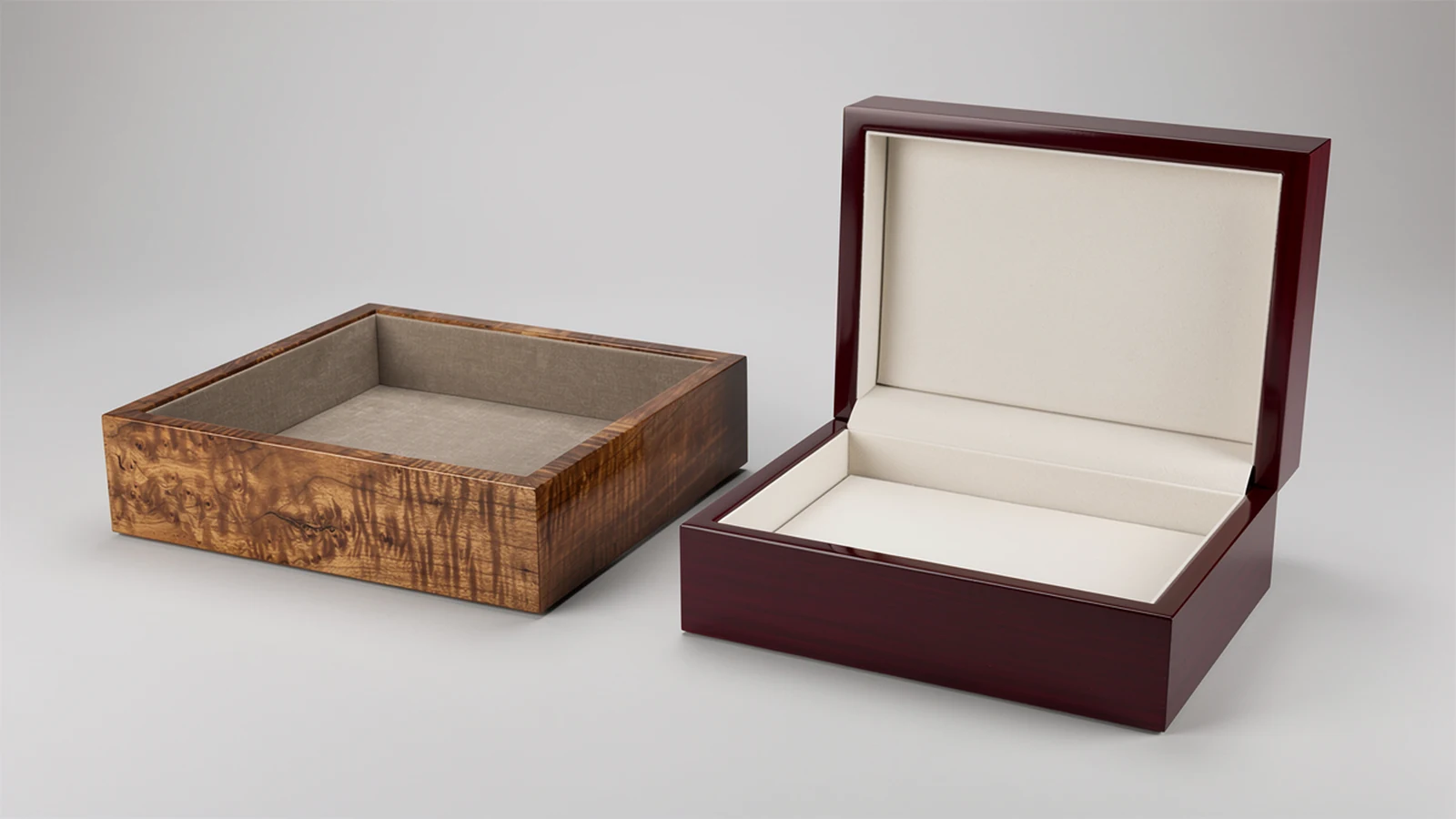

For premium packaging procurement, a useful specification explains both the construction and the space it leaves. A single number such as “10 mm walls” cannot describe the lid, base, recessed fittings and lined interior. Ask the manufacturer for a component drawing that connects those details before comparing prices or approving a change.
Start with the dimension that cannot move
Some projects begin with a product and a required internal layout. Others have an external limit because the box must fit an existing sleeve, retail fixture or shipping arrangement. Identify the controlling requirement rather than asking the supplier to guess which one takes priority.
If the product layout is fixed, a thicker wall may require a larger outside size. If the outside size is fixed, the supplier may need to change the cavity, lining or construction. If both are fixed, a proposed thickness change needs a coordinated redesign; there is no unused space created simply by changing the specification.
Give the supplier the intended product orientation, relevant protrusions and the space needed to insert and remove the item. Distinguish the product envelope from the usable cavity. A product that occupies the full nominal cavity width has no remaining allowance for removal or dimensional variation.
Define what the thickness figure includes
For the quotation, distinguish three measurements: the substrate or structural component, the finished wall build, and any separate internal lining. A nominal panel description is not necessarily the final measurement across the assembled, decorated wall.
A veneered and clearcoated panel includes layers beyond its core. An opaque lacquered wall has a different visible build. Ask the supplier to say whether the quoted dimension includes those permanent surface layers and where it will be measured. Do not count the same layer once in the wall and again in the lining allowance.
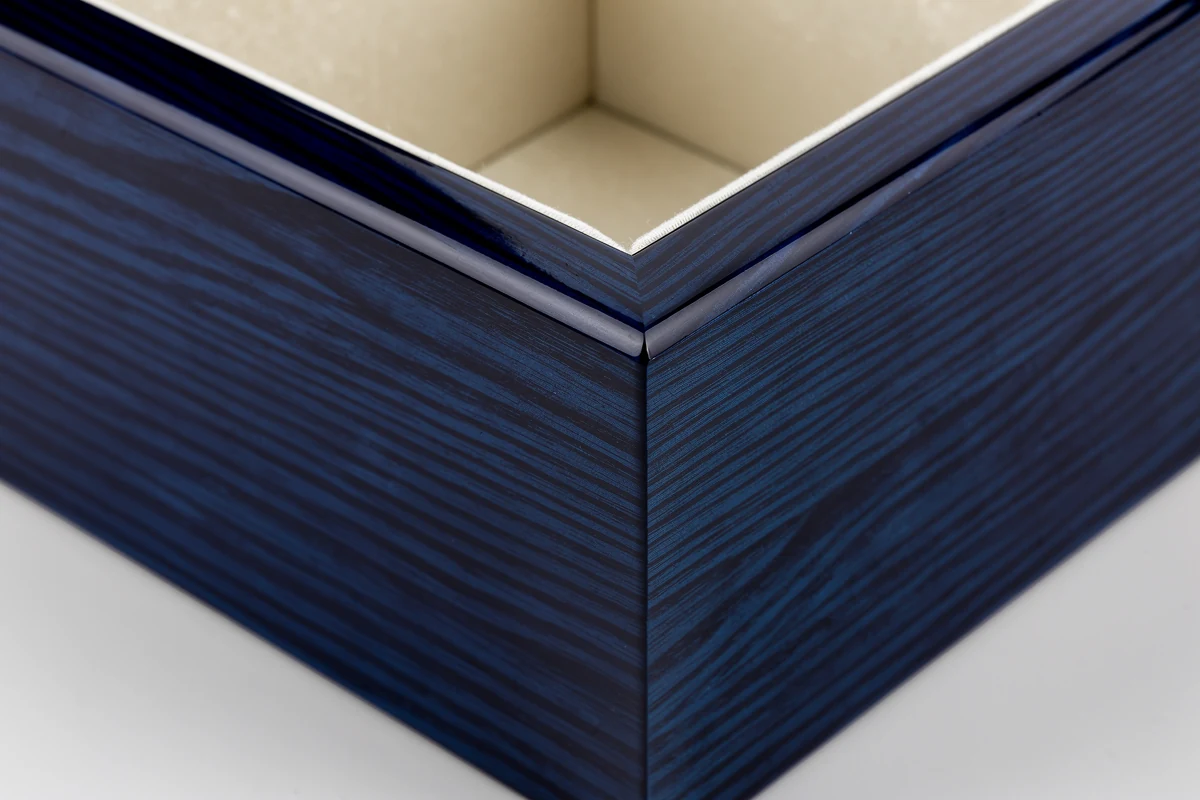
Record side walls, lid, base and dividers separately on the component schedule. They may share a thickness, but that should be an intentional design choice. A lid carrying hinges, a base supporting contents and a divider separating accessories perform different jobs.
The visible rim also needs interpretation. A decorative lip, stepped closure or internal frame can make the opening appear thicker than the wall behind it. A reference photograph can communicate the desired proportion, but it cannot establish the hidden construction.
Compare custom wooden box wall thickness with a space budget
The following simplified example is hypothetical. It compares two opposing straight walls of equal thickness, with uniform lining on their inner faces. Here, “wall thickness” means the complete finished wall before that separate lining. There are no inward-projecting fittings, corner blocks or other obstructions in the measured section.
| Dimension | Option A | Option B |
|---|---|---|
| Finished outside width | 240 mm | 240 mm |
| Finished wall thickness on each side | 8 mm | 10 mm |
| Lining on each inner side face | 2 mm | 2 mm |
| Nominal clear width after lining | 220 mm | 216 mm |
Option A gives 240 − 8 − 8 − 2 − 2 = 220 mm. Option B gives 240 − 10 − 10 − 2 − 2 = 216 mm. Increasing each wall by 2 mm removes 4 mm from the clear width because there are two opposing walls.
If 220 mm must remain available after lining, Option B instead needs 220 + 10 + 10 + 2 + 2 = 244 mm outside width under the same assumptions. This is a dimensional calculation, not a recommendation for an 8 mm or 10 mm construction.
The figures are nominal and contain no allowance for production variation. Check the narrowest relevant section of the real design, including projections and corner geometry. For upper and lower dimensional limits, use the separate guide to dimensional tolerance in wooden boxes. The wall-thickness decision and the tolerance decision should use the same drawing.
Assess the material and construction behind the number
The USDA Forest Products Laboratory’s discussion of wood mechanical properties explains that wood properties vary and are affected by growth features and manufacturing and service conditions. This material variability is one reason to avoid treating a thickness figure as a complete performance description.
For composite panels, the laboratory’s Wood Handbook chapter on mechanical properties identifies factors including wood species, adhesive, the geometry of the wood elements and final density. These are material-level considerations; the chapter does not certify a particular finished presentation box.
In the purchasing brief, name the proposed material and construction alongside thickness. Do not accept “same thickness” as the complete explanation for substituting another panel type or wood. Ask what changes in the joints, fixing details, finish preparation and sample review follow from the substitution.
The supplier should also consider the panel span and support arrangement. A short side and a wide unsupported base are different components even if cut from the same stock. Where a load or repeated-use requirement matters, state that requirement and agree how the assembled design will be evaluated. Avoid inferring a payload from wall thickness alone.
Review the wall where hardware removes material
Hinges, lock bodies and recessed magnets introduce local details that a general wall dimension can hide. Ask for sections through the relevant fittings, showing the recess or hole and its relationship to the finished outer face and internal cavity.
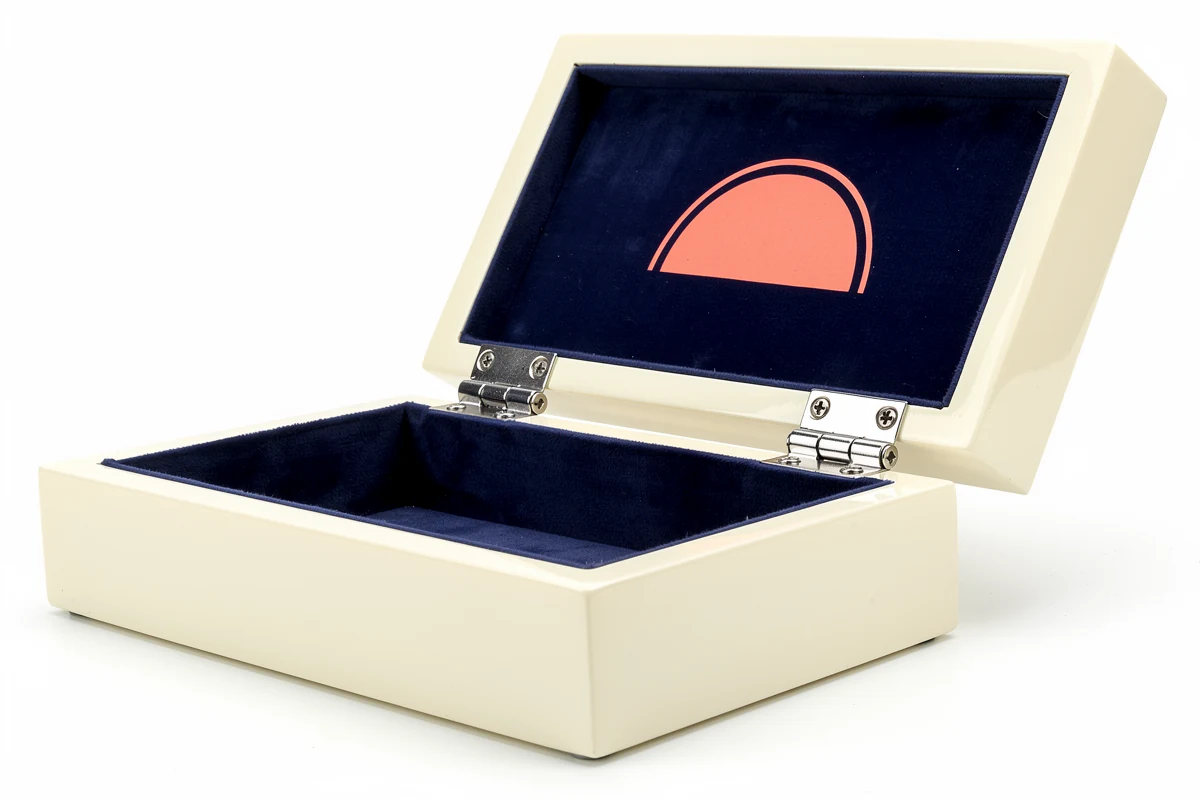
Check the proposed fixing location, attachment method and remaining material with the supplier. A dimension measured at an untouched corner does not describe a machined area elsewhere. Do not substitute a cabinet-hinge drilling rule for the requirements of the actual small-box fitting.
If a thickness change is intended to accommodate hardware, have the manufacturer identify the affected component. The solution might concern the lid edge, a local mounting area or a different fitting rather than all four walls. Compare those proposals by the finished result they must achieve.
Use the guide to box hinge types for wooden packaging for the separate hardware-selection question. Here, the acceptance point is that the chosen fitting and its attachment belong to the same approved wall and lid construction.
Compare quotations without using thickness as a quality score
A thicker-looking rim can suit one design and overwhelm another. Premium appearance also depends on the proportions, finish, edge treatment, alignment and interior. Ask for the appearance you want instead of using the largest thickness number as a shortcut for quality.
Request comparable quotations against the same usable cavity, intended contents, material specification and surface requirements. If a supplier offers a different thickness, have them show the resulting outside size and identify any change to the base, lid, hardware or lining. Otherwise, a lower price may describe a materially different box.
For weight-sensitive projects, ask for the proposed finished box weight or a representative sample measurement. Do not calculate shipping cost from side-wall thickness alone: other components and the packed configuration also matter. Similarly, a wall change does not by itself establish transport protection for the contents.
A practical comparison note should answer three questions: what changed, which required dimensions remain fixed, and what evidence will support approval? This keeps the discussion about the complete proposal rather than an isolated material saving or visual impression.
Review a thickness change through its dependencies
When a supplier proposes a change after sampling, ask for a marked drawing before approving it. Follow the change through the cavity, joints, lid alignment, hardware and lining. A change to the outside size may also affect artwork placement or an existing outer pack.
For example, consider the hypothetical move from 8 mm to 10 mm walls above. If the outside width stays at 240 mm, a previously fitted insert designed around a 220 mm lined cavity cannot simply be assumed to work in the new 216 mm cavity. The supplier needs to review the insert and product fit, or revise the outside dimension.
Focus the sample check on those affected relationships. Confirm the actual product and interior fit, access for removal, closure and the proposed hardware attachment. Agree any additional performance checks from the intended use; a visual comparison of empty boxes cannot answer every structural question.
Keep the accepted component schedule with the drawing revision. If different components use different materials or thicknesses, name them individually so a later order does not collapse the design back into a single ambiguous “box thickness.”
Give the manufacturer enough information to propose a wall
For custom wooden packaging boxes, start with the product dimensions and weight, the required cavity, any outside-size limit, the opening style and the intended finish. Include the lining and hardware preferences, plus any handling requirement that the design must meet.
Ask the supplier to return a proposed component schedule and section drawing. Where dimensions compete, request an explanation of which requirement needs to change before accepting the quotation. This is more useful than selecting an arbitrary thickness and discovering the space conflict at sampling.
You can send XRX your wooden box specification with a product sample, drawing or dimensioned layout. Highlight whether internal fit or external size is fixed, and identify any part of the construction that is still open for proposal.
Frequently asked questions
What is the best custom wooden box wall thickness?
There is no single thickness suitable for every custom wooden box. Select it with the material, dimensions, joints, hardware, contents and intended use. Ask the manufacturer to propose the construction while preserving the required usable space and any outside-size limit.
Does increasing wall thickness reduce the space inside a wooden box?
Yes, when the outside size remains fixed and the thicker opposing walls extend into the cavity. In a simple symmetrical section, adding 2 mm to each wall reduces the clear dimension by 4 mm. Actual lining, fittings and geometry must also be considered.
Should a quotation state panel thickness or finished wall thickness?
State which measurement is meant and request both where needed. Identify the structural component, included surface layers and separate lining so the finished cavity can be checked without omitting or double-counting a layer.
Can the lid, base and dividers use the same thickness as the walls?
They can if the design calls for it, but specify each component explicitly. Their support, attachment and fit requirements may differ, so one general thickness figure should not replace the approved component schedule.
Is a thicker wooden presentation box automatically stronger in shipping?
Thickness alone does not establish the performance of the complete packed product. Material, joints, base, closures, contents, internal fit and outer packaging also need consideration. Agree any required transport evaluation for the actual configuration rather than treating thickness as proof.