
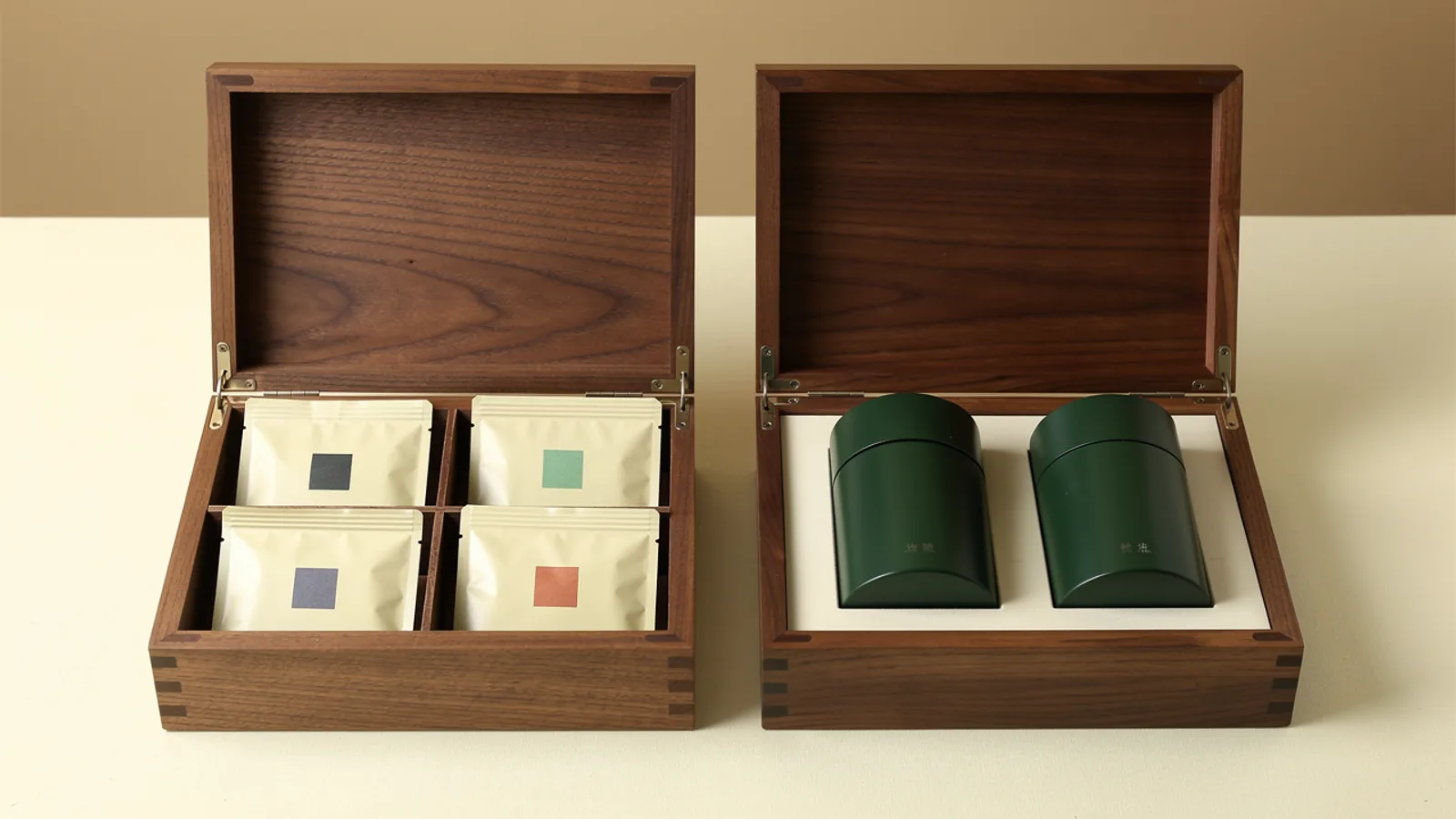

Tea Bag Box vs Tea Tin Box: Quick Comparison
Here, “tea bag box” means a wooden presentation box for individually enveloped tea bags or sachets. “Tea tin box” means a wooden outer gift box holding tea tins. This is a comparison of presentation formats, not a claim that one tea tastes better or stays fresh longer.
| Decision | Wrapped tea bag layout | Closed tea tin layout |
|---|---|---|
| What users select | An individual envelope from the assortment. | A container, then the tea inside it. |
| Gift composition | Specify varieties and envelope quantities. | Specify tin references and contents per tin. |
| Information after removal | Check what remains identifiable on the envelope. | Check the tin label and any information accompanying its contents. |
| Replenishment | Agree the compatible envelope supply. | Decide between replacing a tin and refilling the existing container. |
| Wooden structure | Organizes the approved packets. | Supports the approved closed containers. |
| Quotation scope | Separate the wooden box from tea, envelopes and filling work. | Separate the wooden box from tins, tea and assembly work. |
These are choices to resolve in the project brief. They are not fixed rules about how every tea brand uses either format.
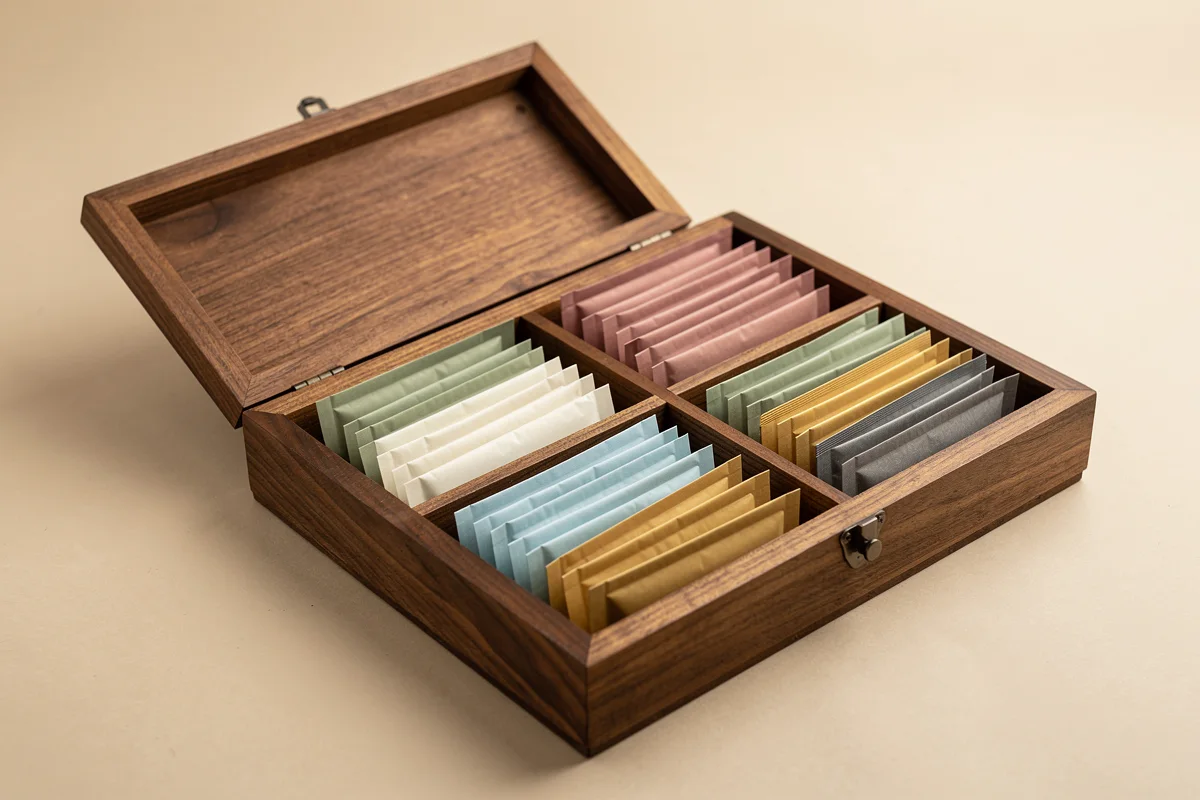
A Tin Can Hold Tea Bags Too
Do not treat “tin” as a synonym for loose-leaf tea. For example, Harney & Sons sells Earl Grey in a tin containing sachets. Meanwhile, Twinings offers a compartmented selection box with individually wrapped pyramid envelopes. These are examples of packaging formats, not XRX customer projects.
Write two separate lines in the brief: tea format and package presented inside the wooden box. The first might be loose tea or a tea bag; the second might be an individual envelope or a filled, closed tin. This avoids asking the wooden-box supplier to infer the contents from the container shape.
In this article, the envelope option assumes the tea supplier has approved the individual package for its intended use. An unwrapped filter bag taken from a larger pack is a different brief. Do not substitute it simply because it fits the same compartment.
Choose the Assortment Before Choosing the Number of Spaces
For a discovery gift, decide whether the recipient should try several varieties in small quantities. For a gift centered on selected blends, decide whether each blend should arrive as its own container. These goals can lead to different layouts even when the wooden exterior shares the same finish and branding.
Consider two illustrative briefs:
- Discovery assortment: six varieties, with four wrapped servings of each. The gift contains 24 envelopes, and the composition is described by variety and envelope count.
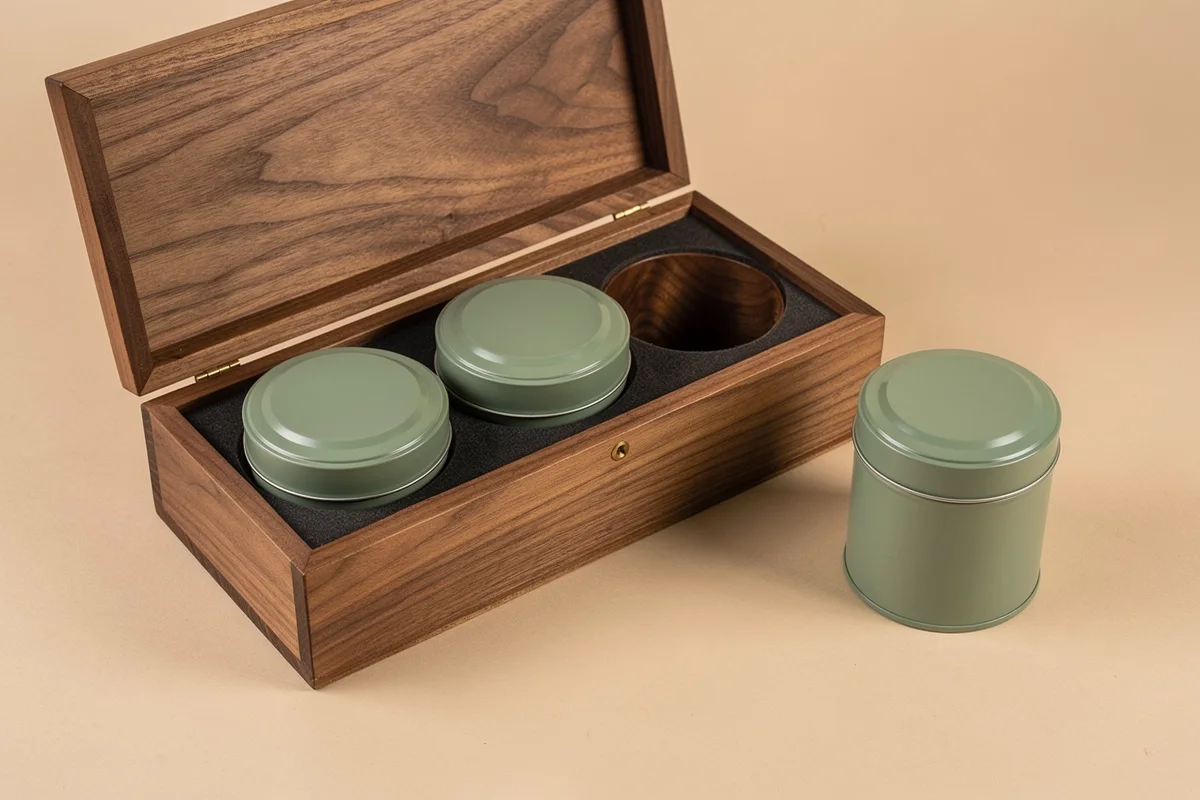
- Container collection: three filled tins, each representing one selected blend. The tea brand defines the contents of each tin; the packaging brief identifies three complete container references.
These quantities are examples, not recommended capacities. The two gifts are also not automatically equivalent in tea mass, servings or value. Do not compare their packaging quotations as if “one wooden tea box” describes the same product.
Once the assortment is agreed, use the existing tea box dimensions guide to develop the fit. It covers measuring actual packages and calculating the layout; those calculations should follow the format decision.
Match the Box to What Happens After Opening
Choose direct envelope access for individual selection
If the intended action is “open the box, choose a tea and take one envelope,” a compartmented presentation is a sensible starting point. Agree how the varieties are named and how the user identifies a packet after it leaves the box.
This can suit a hospitality selection or a take-home tasting assortment, but those uses still have different ownership routines. A staff member may replenish the hospitality box; the gift recipient may simply consume the original assortment. Confirm which routine you are designing for rather than assuming every reusable box needs a refill program.
Choose tins when complete containers are the presentation units
If the intended action is “choose a tin, remove it and use it elsewhere,” design the gift around the container identities. Decide whether the wooden box is primarily the initial presentation or will remain part of everyday use.
The serving method still depends on the contents. A tin of sachets does not create the same preparation task as a tin of loose tea. If accessories are proposed, check that they serve the actual product rather than adding them because a tea gift is expected to include a scoop or infuser.
Use a mixed layout only for a clear reason
A tin of a featured blend plus wrapped samples of other teas can be a coherent proposal. It also creates two supply formats and two ways to replenish the set. Before choosing it, write one sentence explaining why the recipient benefits from that combination.
Define Refill and Replacement as Different Tasks
“Refillable” is incomplete without a supply plan. For the envelope layout, identify the approved replacement packets and whether the assortment will remain fixed. A future pack change should be reviewed against the existing organizer.
For tins, distinguish replacing the complete container from putting new tea into the existing container. A replacement tin may need to retain the agreed external format. Refilling an existing tin instead requires the tea brand to define an appropriate refill product and instructions; the wooden-box design does not establish that process.
Ask who owns this decision after launch: the tea brand, a hospitality operator or the recipient. If there is no planned refill offer, describe the wooden box’s intended secondary use accurately instead of promising a supported refill system.
Compare Costs Using the Same Supply Boundary
Neither format name establishes the lower cost. A quote for an empty wooden organizer cannot be compared directly with a quote that includes decorated tins, filled tea, printed information and final assembly.
Prepare a short scope list covering the wooden shell, internal supports, finish, logo, supplied tea packages, loading work and shipping pack. Mark each item as included, supplied by the buyer or quoted separately. Use the same order quantity and delivery scope for the comparison.
Then identify the format-specific work. The envelope proposal needs an agreed assortment and loading arrangement. The tin proposal needs the complete container specification and responsibility for sourcing and filling it. Request actual prices for those defined proposals rather than applying a generic “tins cost more” assumption.
Keep Presentation Approval Separate from Tea Protection
A well-presented wooden box does not establish freshness, shelf life or a particular moisture or aroma barrier. Ask the tea brand to verify its actual primary packaging. Likewise, the appearance of a lid or envelope is not evidence of sealing performance.
Evaluate the completed gift with its approved contents and outer shipping pack. A successful tabletop presentation review is not a substitute for the transport checks required by the distribution route.
XRX manufactures custom wooden boxes and can discuss structure, material, finish and internal layout. For this project, use the custom wooden tea boxes page to develop the outer presentation. Confirm tea sourcing, tins, filling and related responsibilities separately rather than assuming they are included.
Which Format Should You Brief?
Start with the wrapped tea bag layout when direct individual selection is the central experience. Start with the tin layout when complete containers define the gift and its subsequent use. Keep both proposals open if the assortment or refill offer is still undecided.
Before requesting samples, record the intended recipient, assortment, selection unit, package references, refill plan and quotation scope. Once a format is selected, connect the accepted construction to a sample approval record.
To review a proposal, send XRX your tea assortment and package references, together with the intended gift or service routine.
Frequently Asked Questions
Is a tea tin box only for loose-leaf tea?
No. Tins can contain tea bags or sachets as well as loose tea. Specify what is inside each tin and how it is packed; the outer container does not determine the tea format.
When should a brand choose a compartmented tea bag box?
Choose it when users should see an assortment and select individual wrapped tea bags directly from the box. Confirm the displayed varieties, refill packs and information needed after each envelope leaves its compartment.
When is a wooden gift box with tea tins a better fit?
Consider it when the gift is organized around complete containers that recipients will remove, keep or replace. Confirm whether each tin is used outside the wooden box and whether future replacements will retain the same external format.
Does a wooden tea box keep tea fresh?
The wooden presentation box alone does not establish freshness or shelf life. The tea brand must verify the actual primary packaging and its intended use. Do not assume that a closed tin or a wrapped-looking sachet provides a particular barrier performance.
Can one wooden box hold both tea bags and tins?
Yes, a mixed layout can be proposed, but it needs a clear purpose and separate support for each package format. Confirm what users remove, how the set is replenished and whether the combination still fits the intended sales and serving routine.